

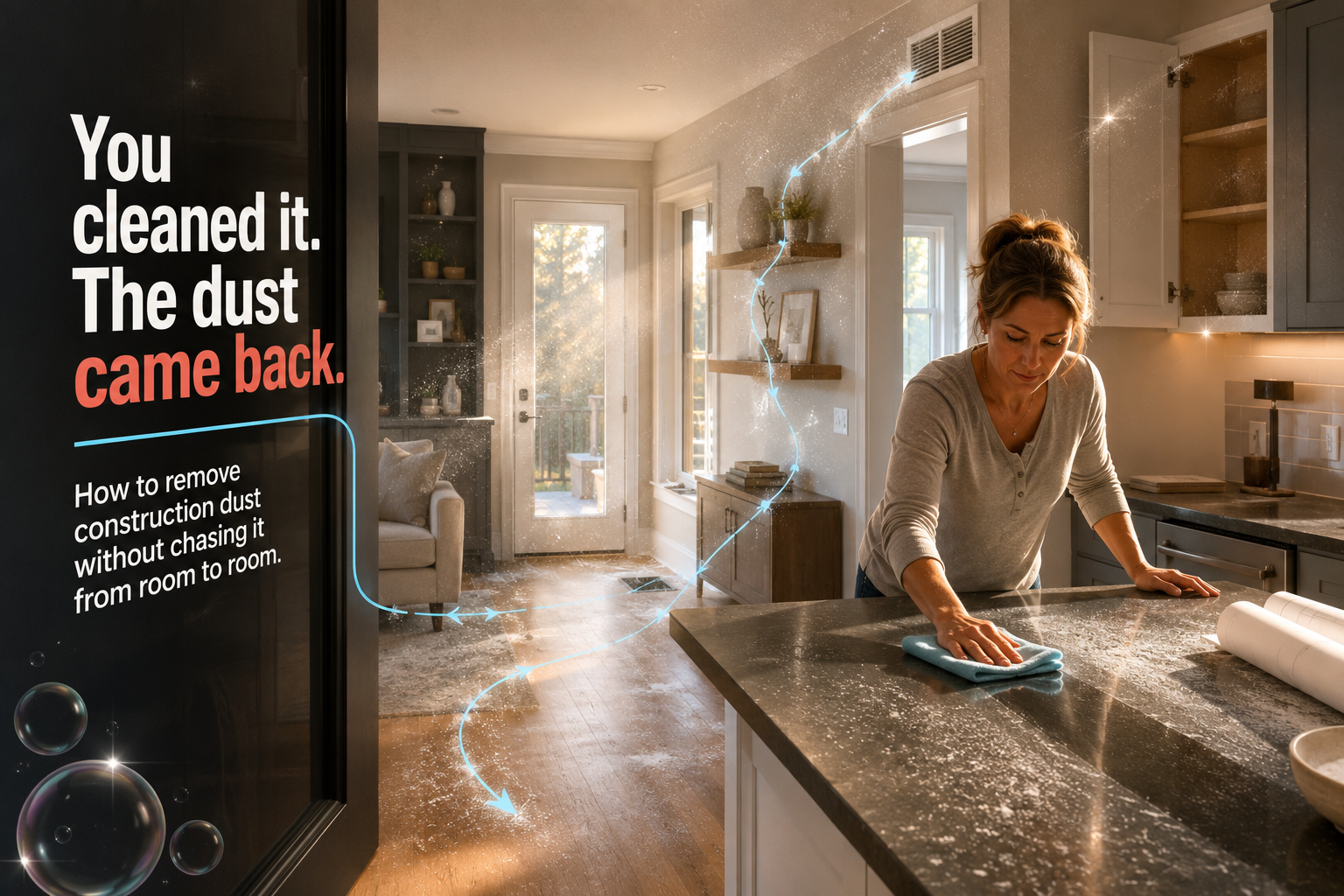
You wipe the counter. Ten minutes later, the dust is back.
That is the part of renovation nobody brags about. The new floors look beautiful, the fresh paint feels exciting, and the room finally looks close to finished. Then sunlight hits the air and you see it floating. Fine white dust on the baseboards. Grit on the floor. A chalky film inside cabinets. Dust tucked into vents, window tracks, light fixtures, and corners you swear nobody touched.
So, how to clean construction dust without chasing it for days?
Start with the right order: remove debris, vacuum with a HEPA-filtered vacuum, wipe surfaces with damp microfiber cloths, clean from top to bottom, replace or clean air filters, then wet mop floors. Avoid dry sweeping fine dust because it can push particles back into the air instead of removing them.
For homeowners, landlords, property managers, real estate agents, contractors, and business owners in Joliet, IL and nearby areas, this guide explains what to clean, what to avoid, when DIY is enough, and when a local post construction cleaning service is the safer, faster choice.
Key Takeaways
- Construction dust spreads farther than normal household dust and often settles more than once.
- HEPA vacuuming, damp wiping, and wet mopping work better than dry sweeping.
- Vents, filters, walls, floors, trim, cabinets, and soft surfaces all need attention.
- If dust may contain lead, asbestos, or heavy silica, do not treat it like ordinary dirt.
Why Construction Dust Keeps Coming Back
Construction dust is not just “a little dust.” It can come from drywall sanding, plaster, sawdust, tile cutting, concrete, cement, grout, paint preparation, demolition, and finishing work. That mix creates very fine particles that land everywhere and move easily when doors open, fans run, or the HVAC system kicks on.
This is why a room can look clean after the first pass, then feel dusty again the next morning. Dust may still be settling from shelves, ceiling fans, vents, window frames, cabinet tops, light fixtures, and textured surfaces.
The mistake many people make is cleaning too fast. A broom feels productive, but fine construction dust often needs to be captured, not pushed around. OSHA’s silica standard for construction says dry sweeping and dry brushing should not be used where they may contribute to respirable crystalline silica exposure unless wet sweeping, HEPA-filtered vacuuming, or other dust-minimizing methods are not feasible. You can review OSHA’s housekeeping guidance under its respirable crystalline silica standard.
That does not mean every dusty living room is dangerous. It does mean the cleanup method matters, especially after drywall, concrete, tile, masonry, or demolition work.
What Is the Best Way to Clean Construction Dust?
The best way to clean construction dust is to work from high to low, vacuum with a HEPA-filtered vacuum first, wipe hard surfaces with damp microfiber cloths, clean vents and filters, then wet mop floors last. For heavy dust, plan on a second pass after the remaining particles settle.
Think of the process in three parts:
- Control the dust so it does not spread into clean rooms.
- Capture the dust with HEPA vacuuming and damp wiping.
- Finish the space with detailed mopping, vent cleaning, and final checks.
This simple order works for homes, rental properties, offices, retail spaces, and new builds. It also keeps the cleanup from turning into a loop where the same dust keeps moving from one surface to another.
Step 1: Prep the Space Before You Start Cleaning
Before wiping anything, remove what does not belong in the room. Take out plastic wrap, scraps, packaging, tape, nails, loose debris, sawdust piles, and leftover materials. If there are large pieces of construction debris, handle those before fine dust cleanup begins.
Open windows if the weather allows and outdoor air is clean. Close doors to nearby rooms. If furniture or fixtures must stay in place, cover them until the dusty work is under control.
Wear basic protection when dust is visible. Gloves, eye protection, and a properly fitted N95 or P100 respirator may be appropriate when dealing with fine dust. This is especially important if sanding, concrete work, tile cutting, or demolition created the mess.
If the property is older and lead-based paint or asbestos could be present, pause before cleaning. The EPA recommends lead-safe renovation cleanup practices such as HEPA vacuuming, damp wiping, and wet mopping in work areas where lead dust may be a concern. Their homeowner guidance on lead-safe renovations for DIYers is a helpful safety reference.
Step 2: Clean From Top to Bottom
If the floors are cleaned first, dust from higher surfaces will fall onto them later. That is how one cleanup turns into three.
Start high and move down:
- Ceiling corners, ceiling fans, light fixtures, and high shelves
- Walls, doors, trim, window frames, and cabinet tops
- Countertops, sinks, appliances, built-ins, and shelves
- Baseboards, stair edges, vents, and floor corners
- Hard floors, carpets, rugs, and final touchpoints
For cleaning dust from walls, use a HEPA vacuum with a soft brush attachment first. Then wipe gently with a lightly damp microfiber cloth if the paint or wall covering can handle moisture. Always test a small area first, especially with flat paint, fresh paint, wallpaper, or textured finishes.
For cabinets and drawers, do not only wipe the outside. Construction dust often settles inside shelves, drawer tracks, hinges, and corners. This matters a lot before move-in, listing photos, tenant turnover, or reopening a business.
When the dust is part of a larger reset, a deep cleaning service can help address areas that standard weekly cleaning often does not cover, such as baseboards, ceiling fans, vents, cabinet fronts, appliance exteriors, and hidden dust buildup.
Step 3: Vacuum Before You Mop
Vacuum first. Mop second.
That one rule saves a lot of frustration. If fine construction dust is mopped too early, it can turn into a gray, chalky paste. On tile and grout, it may settle into lines. On hardwood, laminate, or vinyl, it can leave streaks. On textured floors, it can cling to low spots.
Use a HEPA-filtered vacuum if available. Move slowly. Use crevice tools around baseboards, corners, stairs, vents, window tracks, cabinet edges, and floor transitions.
For carpets, rugs, and upholstery, vacuum in more than one direction. Dust can settle deep into fibers. A quick pass may make the surface look better, but slower passes remove more hidden dust.
After vacuuming, wet mop hard floors with clean water and the right cleaner for the floor type. Rinse the mop often. Change the water before it looks like a bucket of gray soup. If the floor still feels gritty after drying, vacuum and mop again.
What to Clean After Renovation
| Area | Best cleaning method | Simple cue | Common mistake |
| Walls and trim | HEPA vacuum, then damp microfiber wiping | Work from top to bottom | Scrubbing fresh paint too hard |
| Hard floors | HEPA vacuum, then wet mop | Change mop water often | Mopping before vacuuming |
| Cabinets and drawers | Vacuum corners, wipe shelves and tracks | Open every door and drawer | Cleaning only the visible fronts |
| Windows and tracks | Vacuum tracks, wipe frames, clean glass last | Tracks before glass | Making clean glass dusty again |
| Vents and filters | Remove covers, vacuum, wash covers, replace filters | Check return vents closely | Running HVAC before cleanup |
| Carpet and upholstery | Slow HEPA vacuum passes | Vacuum in two directions | Rushing over dusty fibers |
| Light fixtures and fans | Dry dust carefully, then wipe if safe | Clean before floors | Forgetting blades and bulbs |
This table is simple, but it solves the biggest post-renovation problem: cleaning in the wrong order.
Step 4: Clean Vents and Replace Filters
Construction dust does not stop at the floor. It can move into return vents, settle on registers, and travel through the HVAC system. Even a small remodel can affect air quality if dust is pulled through the system.
Turn off the HVAC system during heavy dust cleanup if possible. Remove vent covers, vacuum around the openings carefully, wash the covers with mild soap and water, dry them completely, and replace them. Change the HVAC filter after the dusty work is done. If the renovation involved sanding, drywall, flooring, or demolition, check the filter again soon.
Air purifiers may help with airborne dust, but they do not replace surface cleaning. Dust on trim, shelves, cabinets, floors, and window tracks still has to be physically removed.
For offices, storefronts, shared workspaces, and rental properties, dust in vents and common areas can affect the way people feel when they walk in. That is where a trained commercial cleaning service can help prepare the space before staff, customers, or tenants return.
Do This, Not That
Post-renovation cleaning is full of small choices. Some help. Some make the dust travel.
Do this
- Use a HEPA-filtered vacuum for fine dust.
- Wipe with damp microfiber cloths.
- Work from the ceiling area down to the floor.
- Clean vents and replace filters.
- Wet mop hard floors after vacuuming.
- Wait a few hours, then check for resettled dust.
Not that
- Do not dry sweep clouds of fine dust through the room.
- Do not use compressed air to blow dust out of corners.
- Do not run fans while dust is still loose.
- Do not mop before vacuuming.
- Do not use harsh chemicals on fresh paint, natural stone, hardwood, or specialty surfaces without checking compatibility.
- Do not treat suspected lead dust, asbestos, or heavy silica dust like normal dirt.
As Benjamin Franklin said, “An ounce of prevention is worth a pound of cure.” With construction dust, that means controlling the dust before it spreads and cleaning in the right sequence.
When DIY Construction Dust Cleanup Is Enough
DIY cleanup may be enough when the project was small, the dust is light, and the mess is limited to one room. Examples include a small wall repair, light fixture installation, minor trim work, or a simple paint touch-up.
A homeowner can usually handle light dust with patience, microfiber cloths, a good vacuum, and careful mopping.
DIY is usually more realistic when:
- Dust is only in one small area
- No heavy sanding, demolition, concrete, or tile cutting occurred
- Vents and carpets were protected
- No one needs the space ready immediately
- There is no concern about lead, asbestos, or heavy silica exposure
The key word is patience. Fine dust often needs more than one pass.
When to Hire Cleaners After Renovation
Professional cleaning makes sense when the dust is widespread, the property needs to be ready quickly, or the cleanup has to look right the first time.
Consider hiring help when:
- Dust has spread into several rooms
- Drywall sanding left a white film everywhere
- Floors still feel gritty after vacuuming and mopping
- Cabinets, drawers, vents, and fixtures need detailed cleaning
- The property is being prepared for buyers, tenants, guests, or employees
- A business needs to reopen clean and presentable
- A new home needs final construction clean before move-in
- The dust may involve hazardous materials
For homeowners preparing to settle into a newly renovated space, a move-in cleaning service can make the home feel ready before boxes, clothing, dishes, and furniture arrive.
For regular homeowners who need help after smaller projects or want ongoing support once the dust is gone, a residential cleaning service can keep the space fresh without turning every weekend into a cleaning marathon.
Why Local Experience Matters in Joliet, IL
Post-construction cleaning is not only about wiping surfaces. It is about understanding how real homes and businesses are used after the work is done.
A landlord may need a rental ready for new tenants. A real estate agent may need a clean space before showings. A family may need the kitchen usable again before Monday morning. A business owner may need dust removed before staff and customers walk back in.
Lajas Cleaning Services is locally owned, fully insured, and has served the community since April 2008. The team provides supplies and equipment, works with trained professional staff, offers flexible cleaning options with no contracts, and backs service with a 24-hour warranty. You can read more about the company on the Lajas Cleaning Services homepage.
That kind of local trust matters because post-renovation cleaning often happens at a stressful moment. The project already took time, money, and patience. The cleaning should make the next step easier.
Room-by-Room Construction Dust Checklist
Use this checklist before calling the space finished.
Kitchen
- Vacuum cabinet tops, shelves, drawer tracks, and toe kicks.
- Wipe counters, backsplash, appliance exteriors, sink, faucet, and cabinet fronts.
- Clean light fixtures, range hood exterior, and window tracks.
- Vacuum and mop the floor last.
Bathroom
- Wipe walls, trim, vanity, mirrors, sink, tub, shower, and fixtures.
- Clean dust from exhaust fans and vent covers.
- Rinse surfaces well if dust mixed with moisture.
- Mop carefully around corners and behind the toilet.
Bedrooms and Living Areas
- Vacuum baseboards, window frames, closet shelves, and floors.
- Wipe doors, trim, ceiling fans, light fixtures, and furniture.
- Vacuum carpet and upholstery slowly.
- Check under cushions and along furniture edges.
Office or Commercial Space
- Dust desks, shelves, counters, fixtures, and shared surfaces.
- Vacuum flooring, corners, and baseboards.
- Clean restrooms, break areas, entryways, and waiting areas.
- Replace filters if dust entered HVAC returns.
Final Answer: How to Clean Construction Dust the Right Way
The right way to clean construction dust is to slow down and follow the correct order. Remove debris first. Vacuum with a HEPA-filtered vacuum. Wipe surfaces with damp microfiber cloths. Clean from high areas to low areas. Wash vents and replace filters. Mop hard floors last. Then inspect again after the dust settles.
That is the difference between making the room look clean and making it feel ready to use.
If the dust is light and contained, DIY can work. If it is heavy, spread through multiple rooms, stuck in vents, or holding up a move-in, sale, rental turnover, or business reopening, professional post-construction cleaning is usually the better choice.
Need help getting a renovated space ready? Lajas Cleaning Services offers post-construction, deep, residential, commercial, move-in, move-out, new home pre-delivery, and special event cleaning. Call 1 (815) 325-2365 or 1 (708) 704-0706, email [email protected], or Book Online to schedule your cleaning.
FAQ
1. How to clean construction dust after renovation?
Start by removing debris, then HEPA vacuum walls, trim, vents, cabinets, and floors. Wipe hard surfaces with damp microfiber cloths, then wet mop floors last.
2. What is the best way to clean construction dust?
The best method is top-to-bottom cleaning with HEPA vacuuming, damp wiping, vent cleaning, filter replacement, and wet mopping.
3. Should you vacuum or mop construction dust first?
Vacuum first. Mopping before vacuuming can turn fine dust into a chalky paste that spreads across the floor.
4. How do you remove drywall dust from walls?
Use a HEPA vacuum with a soft brush attachment, then gently wipe with a lightly damp microfiber cloth if the wall finish allows moisture.
5. How do you clean fine construction dust from floors?
Vacuum slowly with a HEPA-filtered vacuum, especially along edges and corners. Then wet mop with clean rinse water and repeat if the floor still feels gritty.
6. Is construction dust dangerous?
Some construction dust is mainly irritating, but dust from silica, lead, asbestos, demolition, or older paint can require special precautions. When unsure, follow official safety guidance or hire qualified help.
7. Can construction dust stay in the air?
Yes. Fine dust can remain airborne and resettle later, especially if fans, vents, dry sweeping, or foot traffic keep moving it around.
8. Can a regular vacuum clean drywall dust?
A regular vacuum may clog or release fine dust back into the room. A HEPA-filtered vacuum is a better choice for drywall dust removal.
9. When should someone book post construction cleaning in Joliet, IL?
Book post-construction cleaning when dust covers several rooms, the space must be ready for move-in, or the property needs to look clean for tenants, buyers, employees, or customers.
10. Does Lajas Cleaning Services bring supplies and equipment?
Yes. Lajas Cleaning Services provides supplies and equipment, uses trained professional staff, and offers local cleaning support for homes and businesses.