

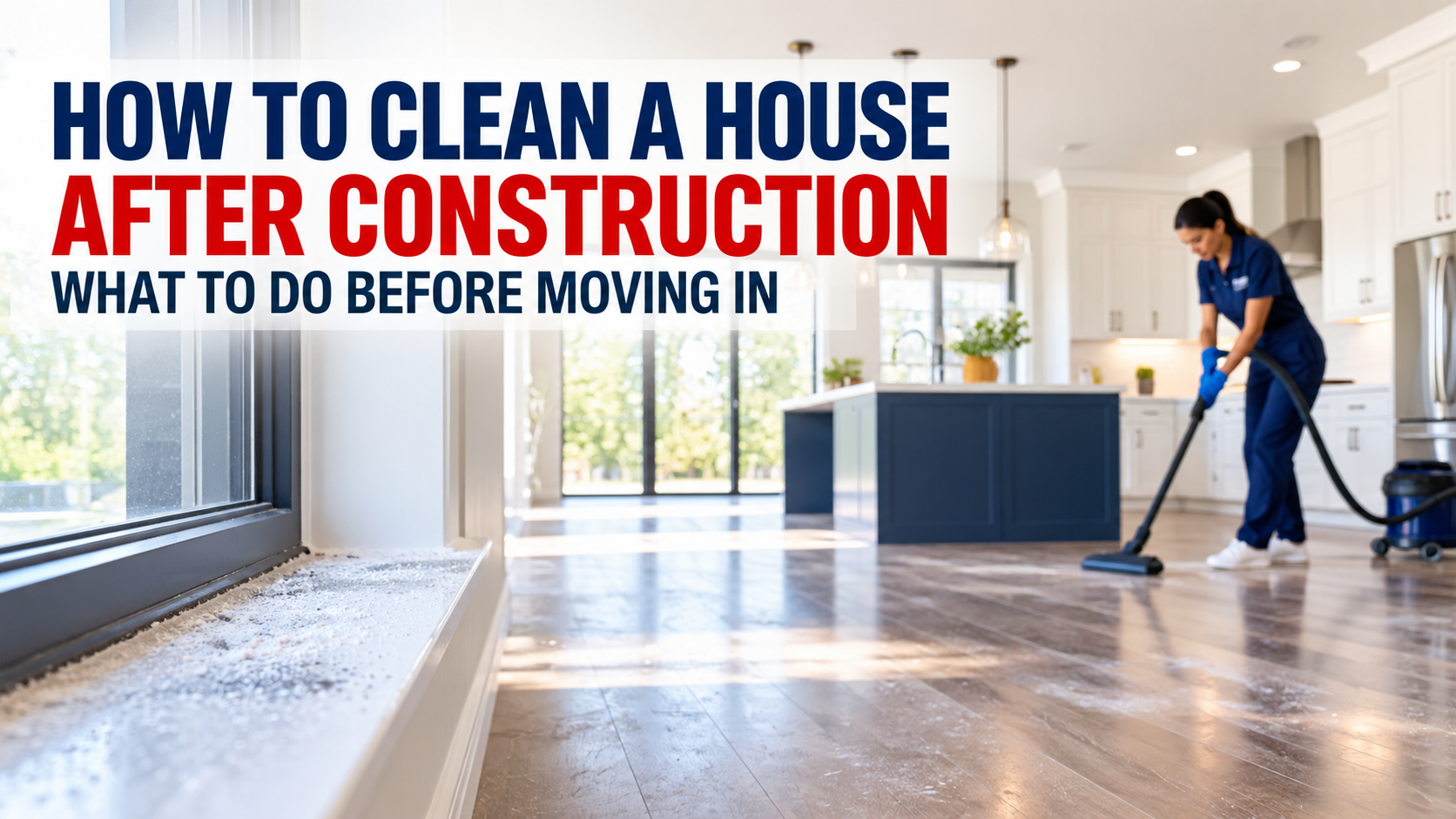
The contractors have finally left.
The new floors are in. The cabinets look great. The bathroom is finished. Fresh paint is on the walls, and everything appears ready for move-in.
Then the sunlight hits the room.
Suddenly, there is dust on the windowsills, fine grit around the floors, residue on the counters, and a layer of construction dust sitting on surfaces that looked perfectly clean from across the room.
That is why knowing how to clean a house after construction is so important.
A newly renovated or newly built home is not automatically move-in ready just because the construction work is complete. Construction can leave behind dust, debris, fingerprints, packaging, residue, and fine particles throughout the property. Lajas Cleaning Services describes post-construction cleaning as a detailed process designed to remove dust, debris, and leftover residue after renovations or new construction and prepare the space for occupancy.
The good news is that post-construction cleanup becomes much easier when you approach it in the right order.
Instead of randomly wiping whatever looks dirty, work from the largest mess to the smallest detail.
Key Takeaways
- Start by removing construction debris before detailed cleaning begins.
- Clean from high surfaces down toward the floors so dust does not have to be removed twice.
- Pay special attention to baseboards, cabinets, bathrooms, floors, windows, tracks, and other areas where construction residue tends to collect.
- Avoid spreading fine construction dust through careless dry sweeping or aggressive cleaning.
- A final inspection is essential before furniture, belongings, or occupants move into the home.
How to Clean a House After Construction
The first thing to understand is that post construction house cleaning is different from normal weekly housekeeping.
Routine cleaning deals with everyday dust, crumbs, fingerprints, and household mess.
Cleaning after construction deals with the leftovers from the construction process itself.
That can include:
- Drywall dust
- Sawdust
- Packaging
- Small pieces of debris
- Paint or adhesive residue
- Grout residue
- Dust inside cabinets
- Dust around vents
- Dirt in floor edges and window tracks
Lajas’ post-construction service specifically lists sweeping and vacuuming floors, wiping baseboards, scrubbing bathrooms, cleaning sinks and countertops, cleaning kitchen appliances, dusting, and cleaning patio door glass among its included tasks.
The difference matters because construction dust is often much finer than normal household dust.
It can settle in places you would never think to check.
Step 1: Remove Construction Debris First
Before worrying about shining surfaces, remove everything that does not belong in the finished home.
Look for:
- Cardboard
- Plastic wrap
- Tape
- Packaging
- Wood scraps
- Loose materials
- Nails
- Screws
- Empty containers
- Other leftover construction debris
Clear hallways, stairs, rooms, closets, and entryways first.
This gives you a safer and more open workspace for the detailed cleaning that follows.
It also prevents you from accidentally vacuuming or mopping around debris that should have been removed by hand.
Step 2: Capture Construction Dust Instead of Spreading It
This is one of the most important parts of how to remove construction dust.
Fine dust can easily move from one surface to another.
If you use a dry broom aggressively, you may simply put particles back into the air and allow them to settle somewhere else.
A better approach is to work carefully with appropriate vacuuming, microfiber cloths, and damp cleaning methods where the surface allows it.
The goal is simple:
Capture the dust instead of relocating it.
This matters especially after drywall sanding, flooring work, tile installation, or other dusty construction activities.
Step 3: Clean From Top to Bottom
One of the easiest ways to make post-renovation cleaning harder is to clean in the wrong order.
Imagine mopping the entire floor and then dusting the ceiling fan.
The dust has nowhere to go except back onto the floor.
Instead, work from the highest surfaces toward the lowest.
Start High
Check:
- Ceiling fans
- Light fixtures
- Tops of cabinets
- Door frames
- High shelves
- Vents
Move to Mid-Level Surfaces
Then clean:
- Walls where appropriate
- Countertops
- Cabinet fronts
- Appliances
- Doors
- Fixtures
- Furniture surfaces
Finish Low
Finally address:
- Baseboards
- Floor edges
- Corners
- Stairs
- Floors
- Thresholds
This simple sequence reduces repeat work.
Step 4: Give Cabinets and Drawers Extra Attention
A newly renovated kitchen can look perfect on the outside while still containing construction dust inside.
Open every cabinet and drawer.
Check:
- Shelf surfaces
- Corners
- Drawer tracks
- Cabinet hardware
- Interior edges
- Lower cabinet areas
- Pantry shelving
- Toe kicks
Dust can settle inside during installation, sanding, drilling, and finishing work.
This is one reason cleaning house after renovation requires more detail than simply wiping the most visible surfaces.
Step 5: Deep Clean the Kitchen
The kitchen often needs careful attention because it contains many different surfaces and fixtures.
Start with the upper areas and work downward.
Clean:
- Countertops
- Backsplash
- Sink
- Faucet
- Cabinet fronts
- Cabinet interiors
- Appliance exteriors
- Appliance handles
- Pantry shelves
- Floors
- Baseboards
Depending on the condition and agreed scope, the inside of empty appliances may also need attention.
Be careful with cleaning products.
Stone, stainless steel, painted cabinets, wood, and flooring materials can react differently to cleaners. Always use products appropriate for the specific surface.
Step 6: Clean Bathrooms Before Move-In
A newly remodeled bathroom can collect a surprising amount of dust and residue.
Focus on:
- Sink
- Countertop
- Toilet
- Shower
- Bathtub
- Shower glass
- Mirrors
- Faucets
- Fixtures
- Vanity areas
- Tile
- Grout
- Baseboards
- Floor edges
Do not just clean what you can see from the doorway.
Look behind the toilet. Check around the vanity. Inspect corners and floor edges.
These hidden areas can still contain construction residue even when the bathroom looks finished.
Step 7: Clean Baseboards and Door Frames
Baseboards are one of the easiest places to notice leftover construction dust.
The same is true for door frames and trim.
Run your attention along:
- Baseboards
- Trim
- Door frames
- Window trim
- Stair edges
- Corners
- Thresholds
Wiping these surfaces can make a dramatic difference because fine dust tends to collect along edges.
Lajas includes baseboard wiping as part of its post-construction cleaning service.
Step 8: Pay Attention to Windows and Glass
New or newly renovated homes often contain more glass surfaces than homeowners realize.
Check:
- Window glass
- Window sills
- Tracks
- Frames
- Patio doors
- Glass doors
- Mirrors
Patio door glass is specifically listed among the surfaces included in Lajas Cleaning Services’ post-construction service.
Be careful with stubborn paint, adhesive, grout, or other residue on glass.
Improper scraping can scratch a surface, so difficult residue may be better handled by someone experienced with post-construction cleanup.
Step 9: Give Floors a Final Detailed Cleaning
Floors often receive the most construction traffic.
Even after sweeping, fine dust can remain in:
- Corners
- Edges
- Under cabinets
- Around baseboards
- Stair corners
- Door thresholds
Vacuum carefully before mopping where appropriate.
Different floors require different treatment. Hardwood, tile, vinyl, laminate, and concrete should not automatically be cleaned using the same products or methods.
The objective is not simply to make the floor look wet and shiny.
It is to remove the remaining construction dust and residue without damaging the finished surface.
Post Construction Cleaning Checklist by Room
| Area | What to Check | Priority |
| Kitchen | Cabinets, counters, appliances, sink, backsplash, floors | High |
| Bathrooms | Fixtures, shower, tub, mirrors, tile, grout, floors | High |
| Bedrooms | Floors, baseboards, closets, shelves, windows | High |
| Living Areas | Fans, fixtures, trim, floors, doors, glass | High |
| Hallways & Stairs | Dust, debris, railings, edges, floors | High |
| Windows | Glass, tracks, frames, sills, patio doors | High |
| Closets | Shelves, corners, floor areas | Medium |
| Vents | Dust around covers and nearby surfaces | Medium |
Use this as a general guide and compare it with the actual condition of the property and the cleaning provider’s agreed scope.
What to Clean After a Home Renovation That People Often Miss
The most frustrating part of post-renovation cleanup is usually not the obvious dirt.
It is the stuff you discover later.
A few commonly missed areas include:
Tops of Door Frames
Dust collects along horizontal edges where it is easy to overlook.
Cabinet Interiors
Even when cabinets look clean outside, construction dust can remain inside.
Window Tracks
A newly installed window can still have grit and dust in the track.
Baseboards
These often collect a thin layer of dust that becomes very visible in natural light.
Behind Doors
Construction workers move through rooms constantly, but areas behind doors may receive little attention.
Closet Shelves
Closets can collect fine dust even though they are empty.
Air Vents and Returns
These should be checked after especially dusty projects.
Creating a renovation cleanup checklist around these overlooked areas can help prevent the “Why is the house dusty again?” problem after move-in.
What Most Homeowners Get Wrong
One major mistake is assuming the contractor’s final cleanup means the entire house has received a detailed move-in clean.
Construction teams may remove their materials and leave the project presentable, but that does not necessarily mean every surface has been cleaned to a home’s final occupancy standard.
Another mistake is mopping too early.
If upper surfaces still contain dust, that dust will eventually find its way onto the floor again.
A third mistake is using aggressive cleaning products on brand-new finishes.
Fresh materials can be more vulnerable to scratching, streaking, or chemical damage than homeowners expect.
Do This, Not That
Do this: Remove debris before detailed cleaning.
Not that: Try to vacuum or mop around loose construction materials.
Do this: Work from high surfaces down to floors.
Not that: Clean floors first and create more work later.
Do this: Use the right cleaner for each finished surface.
Not that: Use one strong cleaner on everything.
Do this: Inspect hidden areas such as cabinet interiors and window tracks.
Not that: Assume a surface is clean because it looks clean from across the room.
A Simple Three-Stage Cleaning Process
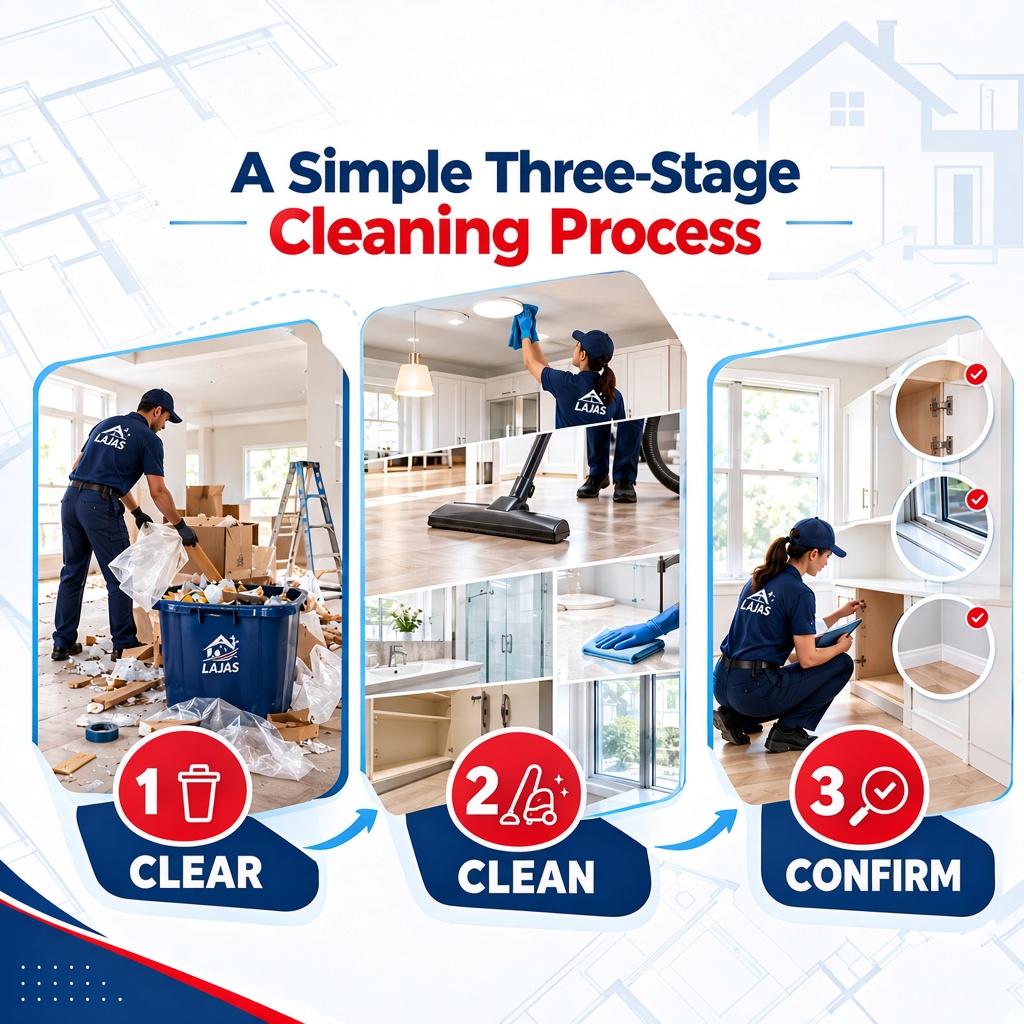
A useful way to organize the job is:
Stage 1: Clear
Remove debris, packaging, scraps, tape, and anything that does not belong in the finished home.
Stage 2: Clean
Work top to bottom through the rooms, capturing dust and cleaning surfaces, fixtures, glass, cabinets, bathrooms, and floors.
Stage 3: Confirm
Walk through the home again.
Look at the property in natural light.
Open the cabinets.
Check the tracks.
Look along the baseboards.
Inspect corners.
That final walkthrough is what catches the details you missed during the first pass.
How to Know the House Is Actually Move-In Ready
A home should not be considered finished simply because it looks good from the entrance.
Try this simple test:
Walk slowly through every room.
Run a clean finger along a baseboard.
Look at the top of a door frame.
Open a cabinet.
Inspect a window track.
Look at the floor from a low angle.
Check the bathroom behind the fixtures.
If you repeatedly find dust or residue, the cleaning is not finished yet.
This kind of final review is especially important before furniture, clothing, kitchenware, or children enter the space.
Should You Clean a Newly Constructed House Yourself?
A small renovation may be manageable as a DIY project.
A whole-home remodel is a different story.
Professional post-construction cleaning becomes more useful when there is:
- Heavy drywall dust
- Large amounts of debris
- Multiple renovated rooms
- Extensive flooring work
- Tile or stone work
- Large amounts of glass
- Difficult-to-reach areas
- A short move-in deadline
- Delicate or expensive finishes
Lajas Cleaning Services states that its post-construction cleaning can be used after both renovation and new-build projects and is intended to leave spaces polished and ready for occupancy.
Professional help can also be useful when you simply do not want to spend several days cleaning after spending weeks or months dealing with construction.
When to Schedule Post-Construction Cleaning
Timing matters.
A detailed final cleaning is generally most useful once the major construction work is complete and the space is ready for final detailing.
If contractors are still cutting materials, sanding, painting, or installing fixtures, more dust will simply be created.
For larger projects, the cleanup may happen in stages, with a final touch-up after the last workers leave.
That is one reason a new construction house cleaning plan should be coordinated around the actual construction timeline.
Ready to Make the Move-In Cleanup Easier?
Once the construction crew is finished, the home should feel like a finished home, not an extension of the job site.
Lajas Cleaning Services provides Post Construction Cleaning for spaces left with dust, debris, and residue after renovations or new construction. Its service includes tasks such as floor cleaning, baseboards, bathroom scrubbing, kitchen and appliance cleaning, dusting, and patio door glass cleaning.
For a large renovation or new build, professional cleanup can save homeowners the time and effort of trying to find every last trace of construction dust themselves.
Final Thoughts
Learning how to clean a house after construction is really about understanding that the final cleanup is part of finishing the project.
A newly renovated or newly built home can look complete while still carrying dust inside cabinets, along baseboards, in window tracks, around fixtures, and across floors.
The simplest strategy is to remember three things:
Clear the debris. Capture the dust. Confirm the details.
Work from top to bottom, clean every room methodically, and give special attention to the places that are easiest to miss.
Once the last layer of construction dust is gone, the transformation finally feels complete.
Frequently Asked Questions
How do you clean a house after construction?
Start by removing debris, then clean from high surfaces downward. Dust and vacuum carefully, clean kitchens and bathrooms, wipe baseboards and trim, clean windows and tracks, and finish with detailed floor cleaning and a final inspection.
How do you remove construction dust from a house?
Use careful vacuuming, microfiber dusting, and appropriate damp cleaning methods instead of aggressively spreading fine dust with dry sweeping.
What is included in post-construction house cleaning?
Common tasks include floor cleaning, baseboards, bathroom fixtures, sinks, countertops, appliances, dusting, and glass cleaning. Exact services vary by provider.
How long after construction should I clean the house?
Detailed cleanup is generally best scheduled once major construction work is finished so new dust and debris are not immediately created again.
Should I clean cabinets after renovation?
Yes. Construction dust can settle inside drawers, shelves, pantry areas, and cabinet corners even when the outside looks clean.
How do I clean floors after remodeling?
Remove loose debris first, vacuum carefully, and then use a flooring-appropriate cleaning method. Avoid using the same products on every type of flooring.
Should windows be cleaned after construction?
Yes. Windows, sills, frames, and tracks can collect dust, grit, adhesive, and other residue during construction.
What should I check before moving into a newly renovated home?
Inspect baseboards, cabinets, closets, window tracks, floors, vents, bathrooms, door frames, and other areas where fine dust tends to settle.
Is post-construction cleaning different from regular house cleaning?
Yes. Regular cleaning focuses on everyday household maintenance, while post-construction cleaning addresses construction dust, debris, residue, and areas affected by renovation or building work.
Should I hire a professional for post-renovation cleaning?
Professional help can be useful when the project created heavy dust or debris, involved multiple rooms, includes difficult surfaces or access points, or needs to be ready for occupancy quickly.