


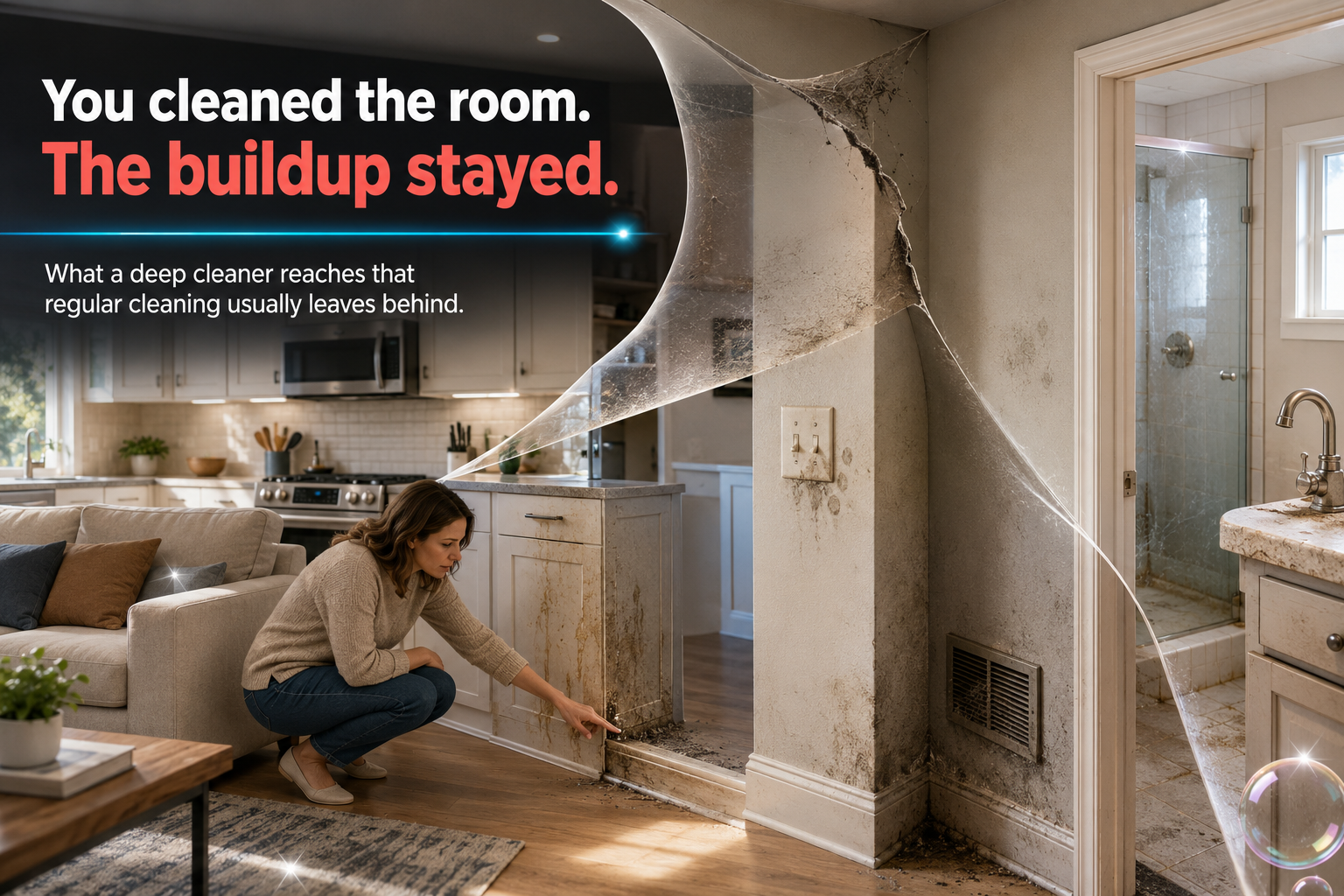
You wiped the counters yesterday, vacuumed the floors this morning, and the house still does not feel fully clean.
The bathroom smells fresh for about ten minutes. The kitchen looks fine until the afternoon sun hits the cabinet fronts. The baseboards have a gray line that was definitely not there when you moved in. And somehow, dust keeps coming back like it pays rent.
That is the moment most homeowners realize the problem is not laziness. It is buildup.
A deep cleaning house service handles the detailed, easy-to-miss areas that regular cleaning usually does not reach, including baseboards, soap scum, appliance surfaces, cabinet fronts, high-touch spots, corners, trim, and hidden dust. Regular cleaning keeps a home presentable. Deep cleaning resets it.
Key Takeaways
- Deep cleaning targets buildup that weekly cleaning often misses.
- Kitchens, bathrooms, baseboards, appliances, and high-touch areas usually need the most attention.
- A deep clean is helpful before moving, hosting, selling, renting, or starting recurring service.
- Cleaning and disinfecting are different. Cleaning should usually happen first.
What Does a Deep Cleaner Do?
A deep cleaner gives the home a more detailed reset than a standard visit. Instead of only focusing on visible surfaces, they work through the spots where dust, grease, soap film, crumbs, and grime slowly collect.
That usually means more hand-wiping, more edge work, more bathroom and kitchen detail, and more attention to areas people walk past every day without noticing.
A regular clean may cover the floors, counters, toilets, sinks, and general dusting. A deep clean goes further. It may include wiping baseboards, scrubbing shower buildup, cleaning cabinet exteriors, detailing the microwave, wiping light switches, cleaning appliance fronts, removing cobwebs, and dusting vents or ceiling fans within safe reach.
The cleaning notes provided for this article make the same practical distinction: deep cleaning is often used to reset a home before ongoing maintenance, with extra attention to areas such as door frames, window frames, light switches, ceiling fans, light fixtures, baseboards, kitchens, bathrooms, reachable furniture areas, and high-touch surfaces.
For homeowners comparing a deep cleaning service, the simplest answer is this: deep cleaning is the service to choose when the house looks clean enough but still feels dusty, sticky, stale, or unfinished.
Deep Cleaning vs Regular Cleaning: What Is the Difference?
Regular cleaning maintains a home. Deep cleaning restores it.
That difference matters because most homes do not get dirty all at once. They collect small layers over time. A little grease near the stove. A little soap scum in the shower. A little dust along the trim. A few fingerprints around doors and switches. None of it feels urgent on Monday, but after a few months, the whole home feels harder to clean.
Here is a simple comparison:
| Area | Regular Cleaning Usually Handles | Deep Cleaning Usually Adds | Why It Matters |
| Kitchen | Counters, sink, floors, appliance fronts | Cabinet fronts, backsplash, microwave detail, grease-prone areas | Grease grabs dust and makes surfaces feel sticky |
| Bathroom | Toilet, sink, mirror, tub surface | Soap scum, grout edges, fixtures, floor around toilet | Moisture and residue build up fast |
| Floors | Vacuuming and mopping open areas | Corners, edges, stairs, reachable under-furniture areas | Dust collects where traffic does not reach |
| Trim and doors | Light dusting or spot cleaning | Baseboards, door frames, switch plates | These areas show hand marks and settled dust |
| High areas | Basic dusting if visible | Ceiling fans, vents, cobwebs, light fixtures within safe reach | Dust falls back down if high spots are skipped |
Regular cleaning is not wrong. It is simply not designed to chase every hidden detail every time.
That is why many homeowners start with deep cleaning, then move into recurring cleaning to keep the reset from disappearing.
What Does Deep Cleaning Include in the Kitchen?
Kitchen buildup can be sneaky. Grease does not stay near the stove. It travels, sticks, and turns dust into a thin film on cabinets, backsplashes, light switches, appliance handles, and nearby surfaces.
A detailed kitchen deep clean may include:
- Wiping countertops and backsplash
- Cleaning cabinet and drawer exteriors
- Scrubbing and polishing the sink and faucet
- Cleaning appliance exteriors
- Detailing the microwave inside and out
- Cleaning stovetop, range hood, and drip pans
- Wiping chairs, tables, and nearby baseboards
- Sweeping, vacuuming, and mopping floors
This is the room where deep cleaning often creates the biggest “before and after” feeling. Not because the kitchen was terrible, but because kitchen grime hides in plain sight.
A quick cue: run a finger across the cabinet above or beside the stove. If it feels tacky, the kitchen needs more than a regular wipe-down.
For renters, landlords, realtors, and homeowners preparing for a handoff, this is also where move-out cleaning becomes important. Empty rooms reveal everything. Grease, crumbs, baseboard dust, cabinet marks, and bathroom buildup are much easier to see when furniture and personal items are gone.
What Does Deep Cleaning Include in the Bathroom?
Bathrooms are small rooms with big cleaning problems.
Water, soap, toothpaste, hair products, humidity, and daily traffic create buildup faster than most people expect. A bathroom may be cleaned every week and still need deeper attention around the shower, toilet base, faucets, grout, and vanity.
A bathroom deep clean often includes:
- Scrubbing showers and bathtubs
- Cleaning soap scum from tile, glass, and corners
- Scrubbing and sanitizing sinks and faucets
- Cleaning toilets inside and out
- Wiping vanity tops and cabinet fronts
- Shining mirrors
- Dusting reachable light fixtures
- Cleaning floors and bathmats
This is also where cleaning and disinfecting get confused.
The CDC explains that cleaning removes most germs, dirt, and impurities from surfaces, while sanitizing and disinfecting are separate steps. The CDC also advises cleaning surfaces before sanitizing or disinfecting because dirt can make chemicals less effective.
In plain English: do not skip the scrub and jump straight to the spray.
The 3-Part Deep Cleaning Framework
Deep cleaning is not just “regular cleaning, but longer.” A better way to understand it is the Top, Touch, and Trouble Spot Framework.
1. Top Areas
These are places dust falls from: ceiling fans, vents, cobwebs, light fixtures, high shelves, and door frames. Cleaning high areas first helps prevent dust from landing on freshly cleaned floors and counters later.
2. Touch Areas
These are the surfaces hands hit all day: light switches, doorknobs, handles, railings, appliance pulls, cabinet knobs, faucets, and remote-control zones. These areas may not always look dirty, but they collect fingerprints and residue quickly.
3. Trouble Spots
These are the places where buildup hides: baseboards, grout, shower corners, behind small countertop items, around toilets, appliance edges, backsplash seams, window sills, and floor edges.
This framework works because it follows how homes actually get dirty. Dust falls. Hands leave marks. Moisture and grease create buildup.
For families using residential cleaning on a regular basis, deep cleaning helps create a better starting point so maintenance visits can do their job more effectively.
When Should You Book a Deep Cleaning House Service?
You do not need to wait until the home feels out of control.
A deep clean makes sense when:
- The bathroom still feels grimy after regular cleaning
- Dust returns quickly after dusting
- Kitchen cabinets or appliances feel sticky
- Baseboards, vents, or door frames look gray
- You are moving in or moving out
- Guests, holidays, or special events are coming up
- A property is being listed, rented, or turned over
- Construction or renovation dust has settled
- You want to start recurring cleaning on the right foot
EPA notes that Americans spend about 90% of their time indoors, which is one reason indoor cleanliness, dust control, and surface care matter beyond appearance.
Deep cleaning cannot fix every indoor air concern, and it should not be treated like a medical solution. But it can remove visible dust, grime, residue, and buildup that make a home feel stale or harder to maintain.
What Most People Get Wrong About Deep Cleaning
The first mistake is thinking deep cleaning means every single inch of the home will be restored to brand-new condition. That is not realistic, especially when stains, damage, old grout, hard water marks, or neglected areas are involved.
The second mistake is assuming every company includes the same tasks. Some services include appliance interiors. Some treat them as add-ons. Some move small items but not heavy furniture. Some clean inside cabinets only when requested. Always ask what is included before booking.
The third mistake is booking regular cleaning when the home really needs a reset. Regular cleaning can maintain cleanliness, but it is not always enough to undo months of buildup.
A deep cleaning service is usually the better fit when the home feels like it needs a fresh start.
Do This, Not That Before Your Appointment
| Do This | Not That |
| Pick up clutter before the team arrives | Leave every surface covered and expect detail cleaning underneath |
| Share your top priorities | Assume cleaners know your biggest concern |
| Ask what is included | Guess whether appliances, cabinets, or windows are covered |
| Mention pets, access notes, or special surfaces | Wait until the appointment starts |
| Plan maintenance after the deep clean | Let buildup return for another year |
This does not mean the house has to be perfect before cleaning. It simply means cleaners can do better detail work when they can reach the areas that need attention.
Is Professional Deep Cleaning Worth It?
Professional deep cleaning is worth considering when time, detail, or consistency is the problem.
Busy parents may not have three free Saturdays to scrub bathrooms, degrease the kitchen, dust ceiling fans, and clean baseboards. Landlords may need a rental ready quickly. Realtors may need a home to feel fresh before photos or showings. Business owners may need a clean space without pulling staff away from work.
The value is not only in the finished look. It is in the time saved, the clearer scope, and the easier path back to maintenance.
Lajas Cleaning Services was established in April 2008 and has more than 15 years of local cleaning experience. The company offers residential, deep, recurring, commercial, move-in, move-out, post-construction, special event, and new-home pre-delivery cleaning services, with trained staff and a local service model built around reliable scheduling and practical cleaning support.
That kind of trust signal matters because people are not just booking a cleaner. They are letting a team into their home, rental, office, or property.
How Much Does Deep Cleaning House Cost?
Deep cleaning house cost depends on several factors:
- Home size
- Number of bathrooms
- Current condition
- Pets and heavy dust
- Move-in or move-out needs
- Add-ons such as inside appliances or cabinets
- Frequency of future service
- Special requests or priority rooms
A one-bedroom apartment and a multi-level family home should not be priced the same. A maintained home and a post-renovation home should not be scoped the same either.
The safest way to get accurate pricing is to request an estimate based on the actual space and cleaning goals.
What Should You Expect From a Deep Cleaning Service?
A good deep cleaning service should feel clear, organized, and practical.
You should expect the company to explain what is included, what may cost extra, how long the visit may take, what supplies are used, and how to prepare. You should also feel comfortable asking about access, pets, special surfaces, timing, and follow-up service.
EPA’s Safer Choice program can also be helpful when discussing cleaning product safety because it helps consumers and businesses find products that perform and contain ingredients safer for human health and the environment.
If disinfectants are used, EPA says users should follow label directions and pay attention to contact time, which is how long the surface must remain wet.
That is the kind of detail that separates guesswork from professional cleaning.
Quick House Deep Cleaning Checklist
Use this checklist to understand what a detailed visit may cover:
- Dust high and low surfaces
- Wipe door frames, switch plates, and handles
- Clean kitchen counters, sink, backsplash, and appliance fronts
- Detail microwave inside and out
- Scrub bathroom sinks, toilets, tubs, showers, and fixtures
- Wipe baseboards and reachable trim
- Remove cobwebs and dust vents or ceiling fans within safe reach
- Vacuum carpets, sweep hard floors, and mop
- Empty trash and replace liners
- Review priority areas before the team leaves
Exact tasks can vary by home condition, service package, and customer request. That should be clear before the appointment starts.
Final Answer: What Does a Deep Cleaner Do That Regular Cleaning Misses?
A deep cleaner handles the buildup that regular cleaning usually leaves behind. That includes dust on baseboards and vents, soap scum in bathrooms, grease on kitchen surfaces, grime near appliances, fingerprints on high-touch areas, cobwebs, trim, reachable furniture areas, and detailed kitchen and bathroom work.
Regular cleaning keeps a home livable. Deep cleaning makes it feel reset.
For homeowners, renters, landlords, realtors, property managers, and business owners, the right time to book is usually when the space looks mostly clean but still feels dusty, stale, sticky, or hard to maintain.
Need help choosing the right cleaning service? Call 1 (815) 325-2365 or 708-704-0706, email [email protected], or book online to schedule your cleaning.
FAQ
What does deep cleaning include that regular cleaning misses?
Deep cleaning usually includes detailed work like baseboards, cabinet fronts, soap scum, appliance surfaces, high-touch areas, corners, trim, grout edges, and hidden dust.
How often should you deep clean your house?
Many homes benefit from deep cleaning every few months, but timing depends on pets, kids, foot traffic, dust, allergies, moving plans, and regular cleaning habits.
Is deep cleaning good before moving in?
Yes. Deep cleaning before moving in helps remove old dust, bathroom buildup, kitchen grease, cabinet residue, and hidden grime before furniture and belongings are placed.
Does deep cleaning include baseboards and appliances?
Often, yes. Many deep cleaning services include baseboards and appliance exteriors, but appliance interiors may need to be requested or added separately.
Should I get recurring cleaning after a deep clean?
Yes, if you want easier upkeep. A deep clean resets the home, while recurring service helps keep dust, grime, and buildup from returning quickly.
What does a deep cleaner do?
A deep cleaner focuses on detailed cleaning tasks that remove buildup from kitchens, bathrooms, baseboards, high-touch areas, floors, fixtures, and hard-to-reach spots.
What does deep cleaning include?
Deep cleaning commonly includes kitchen deep cleaning, bathroom deep cleaning, dusting, vacuuming, mopping, baseboard cleaning, fixture wiping, and detailed surface cleaning.
How do you deep clean a house?
Start high, clean room by room, focus on kitchens and bathrooms, wipe high-touch surfaces, scrub buildup, clean edges and baseboards, then finish with floors.
Is professional deep cleaning worth it?
It can be worth it when the home feels hard to catch up on, when time is limited, or before moving, hosting, renting, selling, or starting maintenance cleaning.
What should you expect from a deep cleaning service?
Expect a more detailed visit than regular cleaning, with clear scope, priority areas, kitchen and bathroom focus, reachable detail work, and guidance on what is included.