

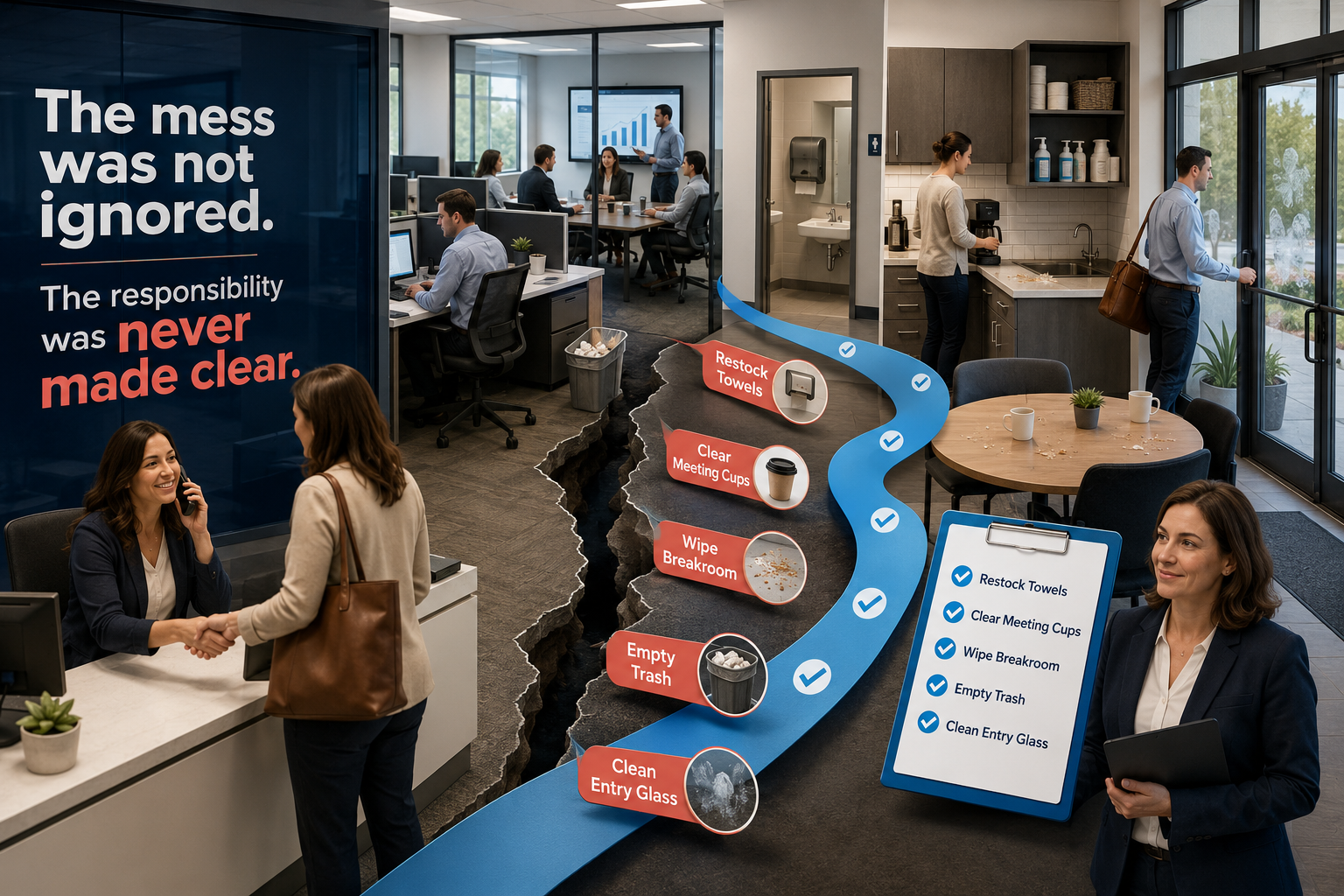
The restroom is out of paper towels again. The breakroom counter is sticky. The conference room still has coffee cups from yesterday’s meeting. Nobody meant to ignore it, but in a busy small office, cleaning tasks can quietly fall through the cracks.
That is exactly why an office cleaning checklist matters.
For small businesses, a checklist is not just a cleaning reminder. It is a simple system that shows what needs to be cleaned, how often it should happen, and when it may be time to bring in professional help. A good checklist keeps the workplace fresh, safer, more comfortable, and ready for employees, clients, and visitors.
Lajas Cleaning Services helps local homes and businesses keep their spaces clean with trained teams, flexible service options, and practical cleaning plans built around real needs.
Key Takeaways
- An office cleaning checklist helps small businesses stay consistent without guessing.
- Daily, weekly, and monthly tasks should be separated clearly.
- Restrooms, breakrooms, desks, shared equipment, and high-touch surfaces need the most attention.
- A professional cleaning service can help when office cleaning becomes inconsistent, rushed, or too much for staff.
What Is an Office Cleaning Checklist?
An office cleaning checklist is a clear list of cleaning tasks organized by area and schedule. It helps a business track what should be cleaned daily, weekly, and monthly so important spaces do not get missed.
The best checklists are simple. They do not read like a manual. They tell a team exactly what to do.
For example:
- Empty trash bins.
- Wipe high-touch surfaces.
- Clean and restock restrooms.
- Vacuum or sweep busy areas.
- Clean breakroom counters and tables.
That short list already covers the places most people notice first. It also creates accountability. If something is missed, the business can look at the checklist and fix the system instead of blaming whoever happened to be nearby.
This is especially useful for small offices, where employees often wear multiple hats. One person may answer phones, manage scheduling, greet clients, order supplies, and somehow become responsible for the microwave. A checklist removes the guesswork.
Why Small Businesses Need an Office Cleaning Checklist
Small businesses need an office cleaning checklist because cleaning is easy to overlook when the day gets busy. A checklist keeps cleaning tasks visible, repeatable, and easier to manage.
Without a clear system, offices usually run into the same problems:
- Trash is emptied, but desks and shared surfaces are skipped.
- Restrooms are cleaned, but supplies are not restocked.
- The breakroom is wiped down sometimes, but not on a schedule.
- Floors look fine in the middle, but corners collect dust.
- Nobody knows who handled what.
That creates tension. Employees may feel uncomfortable. Clients may notice details the business hoped they would not. Office managers may spend more time chasing tasks than running the day.
A checklist gives the office a rhythm. Daily tasks protect the first impression. Weekly tasks handle buildup. Monthly tasks keep the deeper cleaning from being forgotten.
Benjamin Franklin’s well-known line, “An ounce of prevention is worth a pound of cure,” fits here. A little structure now can prevent a bigger cleaning problem later.
There is also a practical indoor air concern. The EPA says concentrations of some indoor pollutants are often 2 to 5 times higher than typical outdoor concentrations, which makes routine dust control, floor care, and general facility maintenance worth taking seriously.
What Should Be on an Office Cleaning Checklist?
A complete office cleaning checklist should include workstations, floors, restrooms, breakrooms, shared spaces, high-touch surfaces, trash removal, and supply restocking.
A small office can use this simple framework:
1. Map the office by zone
Break the workplace into clear areas:
- Reception or lobby
- Desks and workstations
- Private offices
- Conference rooms
- Breakroom or kitchen
- Restrooms
- Hallways and entryways
- Storage or supply areas
2. Match tasks to frequency
Not every task needs to happen every day. Some tasks are daily, some are weekly, and some are monthly.
Daily cleaning keeps the office presentable. Weekly cleaning handles buildup. Monthly cleaning takes care of deeper details.
3. Measure completion
Add a checkbox, date, initials, or notes section. This helps the office know what was done and when.
This matters because a checklist should not just exist. It should be used.
If a small business already uses commercial cleaning services, this checklist can also help explain expectations clearly. It gives both the business and the cleaning team the same standard to follow.
Daily Office Cleaning Checklist
A daily office cleaning checklist should focus on the spaces people touch, use, and notice every day.
Daily office cleaning tasks should include:
- Empty trash and recycling bins.
- Replace trash liners when needed.
- Wipe desks, counters, and shared tables.
- Clean door handles, light switches, phones, and shared equipment.
- Vacuum or sweep high-traffic areas.
- Mop visible spills or sticky spots.
- Clean and restock employee and guest restrooms.
- Wipe breakroom counters, sinks, tables, and appliance handles.
- Remove food trash from kitchen or breakroom areas.
- Straighten chairs, reception areas, and meeting spaces.
The CDC recommends cleaning high-touch surfaces regularly and cleaning other surfaces when they are visibly dirty. It also explains that surfaces should be cleaned before sanitizing or disinfecting because dirt can make those products less effective. CDC facility cleaning guidance
That is a small detail many offices miss. Cleaning, sanitizing, and disinfecting are not the same thing.
Cleaning removes dirt and many germs. Sanitizing lowers germs to a safer level. Disinfecting kills many remaining harmful germs after cleaning. In most offices, regular cleaning is the foundation. Disinfecting may be added where needed, especially in high-traffic areas or after someone has been ill.
Weekly Office Cleaning Checklist
A weekly office cleaning checklist should handle dust, buildup, floors, glass, and details that do not need daily attention but still affect how the workplace feels.
Weekly office cleaning tasks may include:
- Dust shelves, vents, baseboards, window ledges, and office furniture.
- Vacuum carpet edges and under desks.
- Mop hard floors more thoroughly.
- Clean glass doors, partitions, and interior windows.
- Wipe chair arms and conference room furniture.
- Clean shared equipment such as printers and copiers.
- Detail restroom fixtures, partitions, and corners.
- Sanitize breakroom appliance handles and cabinet pulls.
- Check supply closets for paper goods, soap, liners, and cleaning products.
This is where consistency begins to show. A visitor may not notice a freshly dusted baseboard, but they will notice when dust builds up for weeks.
For businesses that do not want cleaning to become a constant internal chore, recurring cleaning can help keep the office on a predictable schedule without starting over every week.
Monthly Office Cleaning Checklist
A monthly office cleaning checklist should focus on deeper cleaning tasks that protect the condition of the space over time.
Monthly office cleaning tasks may include:
- Deep clean carpets or schedule carpet care.
- Wash interior windows.
- Dust high corners, ceiling vents, and light fixtures.
- Clean baseboards and door frames.
- Detail storage areas and supply rooms.
- Clean under furniture where possible.
- Review restroom supply usage.
- Check for stains, odors, or recurring problem areas.
- Refresh the office cleaning checklist based on what changed.
Monthly cleaning is also a good time to ask a useful question: What keeps getting missed?
Maybe the conference room needs cleaning after every client meeting. Maybe the front entrance needs extra floor attention during rainy weeks. Maybe the office kitchen needs a stronger end-of-day routine.
The checklist should change with the office. A growing business will not have the same cleaning needs forever.
When dirt, buildup, or neglected details are already noticeable, deep cleaning may be the better starting point before moving into a maintenance schedule.
Office Cleaning Checklist by Room
A room-by-room office cleaning checklist helps small businesses avoid vague instructions like “clean the office.” That sounds simple, but it leaves too much room for missed details.
Use this table to organize the most important office cleaning tasks.
| Office Area | What to Clean | How Often | Common Mistake |
| Reception area | Entry glass, chairs, counters, floors, trash | Daily | Cleaning the desk but ignoring fingerprints on doors |
| Workstations | Desks, phones, chair arms, bins, nearby surfaces | Daily or weekly | Only cleaning visible clutter |
| Conference room | Table, chairs, screens, whiteboards, floors | After use or daily | Waiting until the room looks messy |
| Breakroom | Counters, sink, tables, microwave handle, trash | Daily | Forgetting food-related surfaces |
| Restrooms | Toilets, sinks, mirrors, fixtures, floors, supplies | Daily | Cleaning surfaces but not restocking supplies |
| Floors | Carpets, hard floors, corners, entry mats | Daily to monthly | Cleaning walkways but missing edges |
| Storage areas | Shelves, supplies, dust, expired products | Monthly | Letting supply areas become cluttered |
Reception and lobby
The reception area sets the tone. It should feel clean before anyone says a word.
Clean glass, counters, seating, floors, trash bins, and visible fingerprints. Keep the space simple, tidy, and ready for walk-ins.
Desks and workstations
Desks collect dust, crumbs, paper, and coffee marks. Employees can manage personal items, but shared cleaning standards still matter.
Clean phones, chair arms, nearby surfaces, and wastebaskets. Use approved products for electronics.
Conference rooms
Meeting rooms need quick resets. A clean conference room helps a business look prepared.
Wipe tables, straighten chairs, remove cups, check floors, clean boards, and make sure presentation tools are ready.
Office kitchen and breakroom
An office kitchen cleaning checklist should focus on food areas, counters, appliance handles, sinks, tables, and floors.
Food trash should not sit overnight. Spills should be cleaned quickly. Refrigerator checks should happen on a set schedule, not only when someone notices a smell.
Restrooms
An office restroom cleaning checklist should cover toilets, sinks, counters, mirrors, floors, fixtures, partitions, trash, soap, toilet paper, and paper towels.
Restrooms shape trust quickly. If the restroom feels ignored, people may assume the rest of the office is ignored too.
Office Cleaning Supplies to Keep on Hand
A small office should keep basic cleaning supplies available, even when it hires professional cleaners. Spills, crumbs, and restroom supply checks cannot always wait.
Useful supplies include:
- Trash bags and recycling liners
- Paper towels
- Toilet paper
- Hand soap
- Microfiber cloths
- Gloves
- Mop and bucket
- Broom and dustpan
- Vacuum
- Surface cleaner
- Glass cleaner
- Disinfectant products when appropriate
- Safety Data Sheets for hazardous products
OSHA explains that employers must keep Safety Data Sheets for hazardous cleaning products and make them accessible to workers. These sheets include information on hazards, protective measures, and safe handling.
OSHA also warns that cleaning chemicals should be handled safely, products should not be mixed, containers should be labeled, and proper protective equipment should be used when needed. OSHA cleaning chemical safety guidance
In plain language: read the label, use the right product, and do not play chemistry lab in the breakroom.
How to Create an Office Cleaning Schedule for a Small Office
An office cleaning schedule for a small office should be simple enough to follow during a busy week.
Use this five-step process:
- List every office area.
Include restrooms, desks, breakroom, lobby, conference room, floors, and storage areas. - Choose the cleaning frequency.
Mark each task as daily, weekly, or monthly. - Assign ownership.
Decide whether employees, a manager, or a cleaning team handles each task. - Set a time.
Some tasks work best before opening, after lunch, or after closing. - Review the checklist monthly.
Adjust the plan when foot traffic, staffing, or office use changes.
This simple system works better than a long office cleaning checklist template nobody wants to open.
If the office needs a printable version, create an office cleaning checklist PDF from the daily, weekly, and monthly lists above. Keep it to one or two pages. A checklist that is too long often gets ignored.
What Most Small Offices Get Wrong
Most small offices do not fail at cleaning because people are lazy. They fail because the instructions are too vague.
“Clean the breakroom” can mean five different things to five different people.
A better instruction sounds like this:
“Wipe counters, clean sink, remove food trash, wipe microwave handle, clean tables, sweep floor, and restock paper towels.”
Specific tasks create better results.
Do this, not that
- Do write “wipe door handles, light switches, and shared appliance handles daily.”
Do not write “clean surfaces.” - Do write “clean and restock restroom sinks, counters, mirrors, and supplies.”
Do not write “check bathroom.” - Do write “vacuum entry rugs and high-traffic walkways.”
Do not write “do floors.” - Do review problem areas monthly.
Do not assume last month’s checklist still fits.
The goal is not to make cleaning harder. The goal is to make it easier to repeat.
When Should a Small Business Hire Office Cleaners?
A small business should hire office cleaners when cleaning becomes inconsistent, takes employees away from their work, or requires a level of detail the team cannot maintain.
Signs it may be time include:
- Restrooms are not staying clean.
- Breakroom messes keep returning.
- Employees are unsure who is responsible.
- Clients or visitors come in regularly.
- Floors need more than quick vacuuming.
- Cleaning supplies are always running out.
- The office looks fine in the morning but worn down by afternoon.
- The business needs a consistent commercial office cleaning checklist.
There is no prize for doing everything in-house. If cleaning is taking time away from customers, staff, or operations, professional help may be the more practical choice.
If the business is relocating, preparing a suite for a new tenant, or cleaning after a busy transition, services such as move-out cleaning can also support the bigger plan.
If recent repairs, remodeling, or buildout work left dust behind, post-construction cleaning may be needed before normal office cleaning begins.
Why Local Experience Matters
A cleaning company should make the customer feel comfortable before the first visit. That means clear services, trained staff, proof of reliability, and easy scheduling.
Lajas Cleaning Services has served the community since April 2008, with more than 15 years of experience. The company is locally owned, fully insured, highly rated, and provides supplies and equipment. It also notes no contracts and a 24-hour warranty on its About Us page.
Those details matter because office cleaning is built on trust. A business is giving someone access to its workspace, restrooms, desks, shared areas, and sometimes after-hours entry. The cleaning team should be reliable, trained, and clear about what is included.
For office managers, that reduces hesitation. For business owners, it makes booking feel easier.
Final Office Cleaning Checklist for Small Businesses
Use this compact checklist as a starting point.
Daily
- Empty trash and recycling.
- Wipe desks, counters, and tables.
- Clean high-touch surfaces.
- Clean and restock restrooms.
- Wipe breakroom counters and appliance handles.
- Vacuum or sweep busy areas.
- Check reception and meeting rooms.
Weekly
- Dust shelves, vents, ledges, and office furniture.
- Mop hard floors thoroughly.
- Clean glass doors and partitions.
- Detail restroom fixtures and corners.
- Clean shared equipment.
- Check cleaning and restroom supplies.
Monthly
- Deep clean carpets or schedule floor care.
- Wash interior windows.
- Dust high corners and light fixtures.
- Clean baseboards and door frames.
- Organize supply areas.
- Review and update the checklist.
This checklist is a general guide for small business office cleaning. Every workplace is different, and cleaning needs may vary based on office size, foot traffic, industry, employee count, and health or safety requirements. Always follow product label directions, workplace policies, and applicable safety guidelines when using cleaning or disinfecting products.
Ready for a Cleaner, Easier-to-Manage Office?
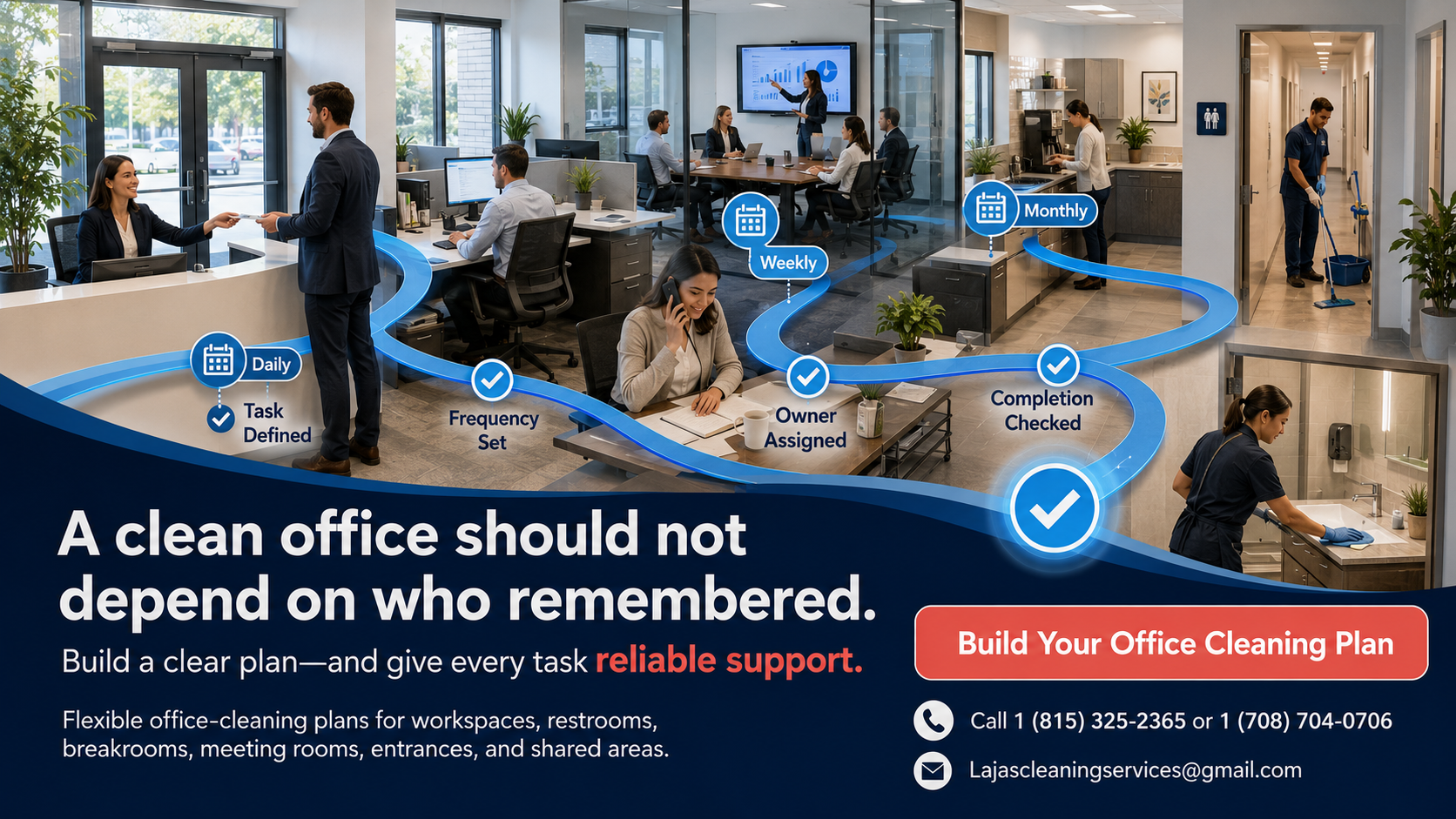
A clean office does not happen by accident. It happens when the business has a clear plan and the right support behind it.
An office cleaning checklist gives small businesses a practical way to protect their workspace, reduce missed tasks, and keep restrooms, breakrooms, floors, desks, and shared spaces ready for the day.
Need help choosing the right cleaning service? Lajas Cleaning Services offers residential, deep, recurring, commercial, move-in, move-out, post-construction, and special event cleaning. Call 1 (815) 325-2365 or 1 (708) 704-0706, email [email protected], or Book Online to schedule your cleaning.
FAQs
How do small businesses create an office cleaning checklist?
Start by dividing the office into zones, such as desks, restrooms, breakroom, lobby, and floors. Then assign each cleaning task as daily, weekly, or monthly.
What should be on an office cleaning checklist?
It should include trash removal, restroom cleaning, breakroom cleaning, desk wiping, floor care, high-touch surface cleaning, shared equipment, and supply restocking.
What are daily office cleaning tasks?
Daily office cleaning tasks usually include emptying trash, wiping shared surfaces, cleaning restrooms, restocking supplies, vacuuming busy areas, and cleaning breakroom counters.
How often should an office be cleaned?
Most small offices need daily light cleaning, weekly detail cleaning, and monthly deep cleaning. The exact schedule depends on foot traffic, office size, and how the space is used.
What areas should be cleaned in an office?
The most important areas are reception spaces, desks, conference rooms, restrooms, kitchens, breakrooms, floors, doors, and shared equipment.
What are high-touch surfaces in an office?
High-touch surfaces are areas people touch often, such as door handles, light switches, phones, keyboards, appliance handles, counters, elevator buttons, and restroom fixtures.
What does professional office cleaning include?
Professional office cleaning often includes dusting, vacuuming, mopping, restroom cleaning, trash removal, breakroom cleaning, high-touch surface cleaning, and scheduled detail work.
When should a small business hire office cleaners?
A small business should hire office cleaners when cleaning is inconsistent, employees are losing work time, restrooms need better care, or clients visit the office regularly.
Does Lajas Cleaning Services provide office cleaning for small businesses?
Yes. Lajas Cleaning Services provides office and commercial cleaning support for small businesses that need reliable cleaning for workspaces, restrooms, shared areas, and common areas.
How can a business book Lajas Cleaning Services?
A business can call 1 (815) 325-2365 or 1 (708) 704-0706, email [email protected], or use the online booking page to schedule cleaning.