

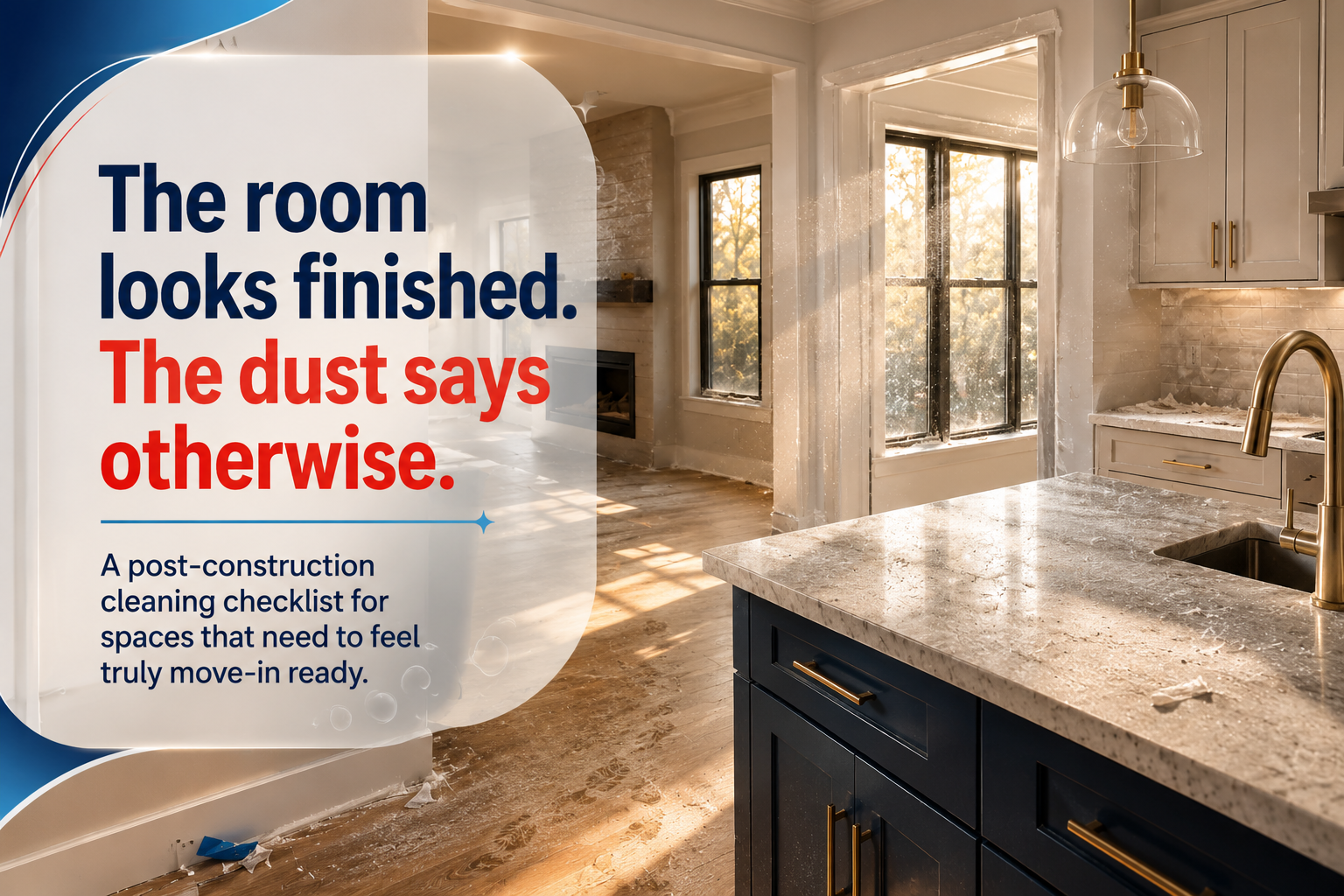
The contractor leaves. The floors are installed. The cabinets look beautiful. Then the afternoon light hits the room and suddenly every surface tells the truth.
Dust on the windowsills. A faint gray film on the counters. Grit in the window tracks. Drywall dust sitting on top of door frames like it paid rent.
That is the part of construction nobody puts in the “after” photos.
A finished build or remodel is not always ready for living, working, or showing. It needs the right kind of cleaning, done in the right order. This post construction cleaning checklist helps homeowners, property managers, real estate investors, contractors, and local businesses understand what to clean before anyone moves in, opens the doors, or signs off on the space.
The goal is simple: make the property feel clean, safe, comfortable, and truly usable.
Key Takeaways
- Post-construction cleaning usually happens in three stages: rough clean, final clean, and touch-up clean.
- Construction dust should be captured carefully, not pushed around with dry sweeping.
- Windows, vents, floors, cabinets, bathrooms, and baseboards often hide the most residue.
- Professional help is worth considering when dust is heavy, finishes are delicate, or the property is commercial.
What Is a Post Construction Cleaning Checklist?
A post construction cleaning checklist is a step-by-step guide for removing dust, debris, smudges, residue, labels, paint marks, and leftover construction mess after a new build, renovation, or remodel.
It is different from regular house cleaning.
Regular cleaning handles everyday dirt. Post-construction cleaning handles the aftermath of work crews, tools, drywall, tile, paint, caulk, flooring, sawdust, and packaging. The mess is finer, heavier, and easier to spread if it is handled the wrong way.
A good checklist also prevents one of the most common mistakes: cleaning in the wrong order. Floors should not be the first thing cleaned if ceiling fans, cabinet tops, vents, and door frames still have dust on them. That only means the floors get cleaned twice.
For homeowners who want a simple next step after reading, a local post construction cleaning services page can show what professional cleanup typically includes, such as floor vacuuming, baseboard wiping, bathroom cleaning, appliance cleaning, dusting, and patio door glass cleaning.
Why Post-Construction Dust Deserves More Attention
Construction dust is not the same as the dust that lands on a coffee table during a normal week.
It can come from drywall sanding, wood cutting, tile work, concrete, mortar, insulation, grout, paint, and adhesive residue. Some dust is harmless clutter. Some dust needs more care.
OSHA currently states that about 2.3 million people in the U.S. are exposed to respirable crystalline silica at work, often from tasks involving concrete, brick, stone, mortar, and similar materials. That does not mean every dusty remodel is dangerous, but it does show why construction dust should be taken seriously.
The CDC and NIOSH recommend avoiding dry sweeping or compressed air during silica-related housekeeping tasks and using controls such as water, ventilation, and filter replacement when needed. For a homeowner, that practical lesson is easy to understand: do not just kick the dust back into the air.
The smarter goal is to capture it.
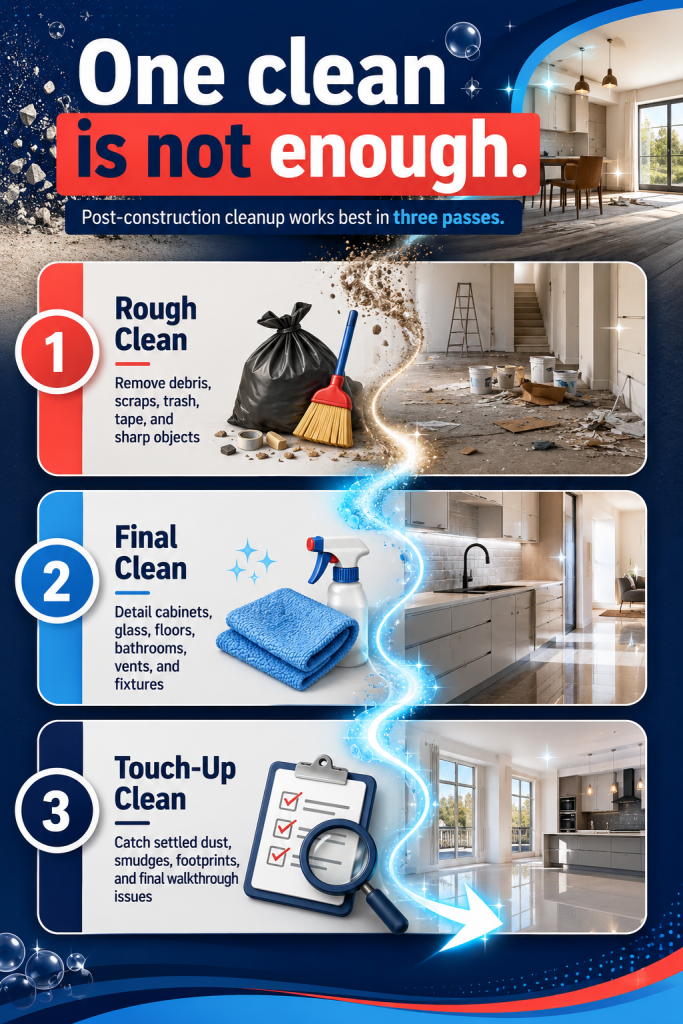
The Three Cleaning Phases: Rough Clean, Final Clean, and Touch-Up Clean
Post-construction cleaning usually works best in three passes.
Rough Clean
The rough clean happens first. This is where the obvious mess gets removed.
It can include:
- Picking up trash, packaging, scraps, tape, and plastic
- Removing nails, screws, and sharp debris
- Clearing walkways, stairs, closets, and storage areas
- Sweeping or vacuuming large dust piles
- Removing leftover materials that do not belong in the finished space
This stage makes the property safer and easier to work in. OSHA’s construction housekeeping standard says debris should be kept cleared from work areas, passageways, and stairs, and combustible scrap should be removed at regular intervals. That idea applies well to final cleanup too. Clear the clutter before focusing on shine.
Final Clean
The final clean is the detailed pass. This is where the space starts to look and feel finished.
It includes cleaning:
- Walls, trim, and baseboards
- Cabinets and drawers
- Countertops and appliances
- Bathrooms and fixtures
- Windows, sills, and tracks
- Floors and floor edges
- Vents, light fixtures, and touch points
This is the heart of any final construction cleaning checklist.
Touch-Up Clean
The touch-up clean happens after the punch list is done. Contractors may come back to adjust doors, install hardware, fix paint, or handle small repairs. That often means more fingerprints, dust, and debris.
Touch-up cleaning handles:
- Smudges on glass
- Dust that settled overnight
- Footprints on floors
- Marks around switches and handles
- Last-minute debris from repairs
- Final walkthrough issues
Skipping this step is why many new spaces look clean at first, then feel dusty again two days later.
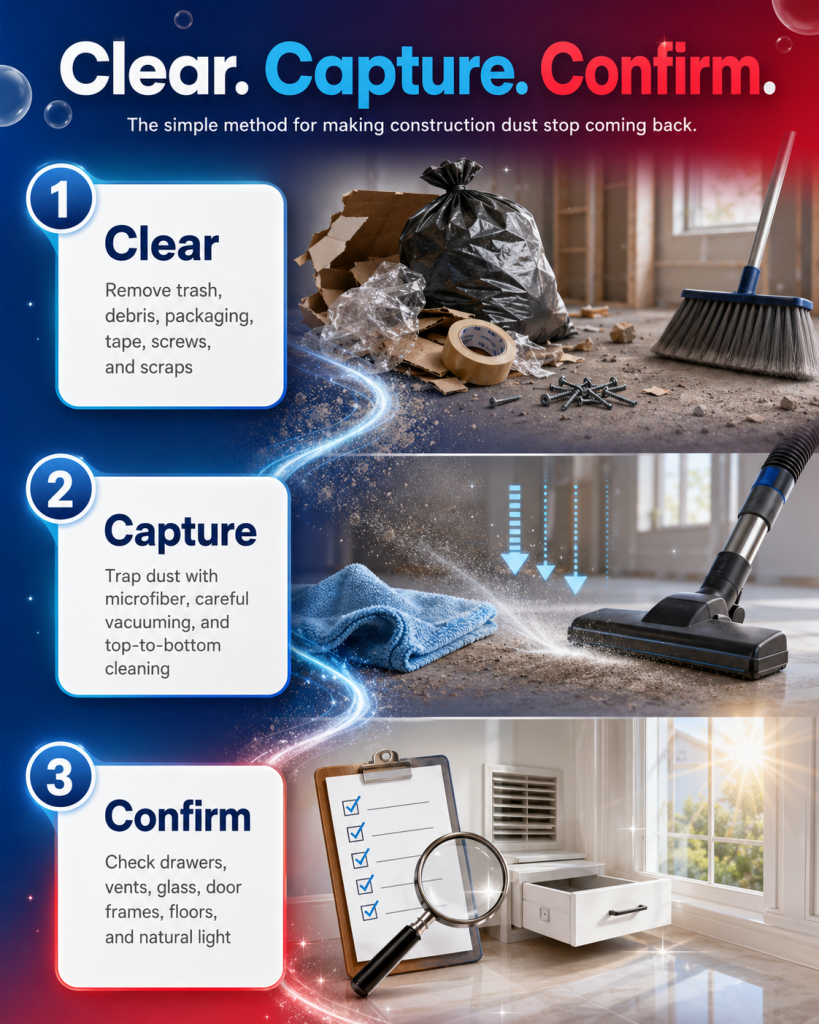
The C-C-C Method: CLEAR, CAPTURE, CONFIRM
Here is an easy framework that makes post-construction cleaning less overwhelming.
1. Clear
Remove what does not belong. Trash, debris, packaging, leftover tape, loose screws, cardboard, plastic wrap, and scraps should go first.
2. Capture
Remove dust from top to bottom. Use microfiber cloths, proper vacuums, damp wiping where appropriate, and careful floor cleaning. The goal is to trap dust, not spread it.
3. Confirm
Walk the property slowly. Open drawers. Check vents. Run a finger along the top of door frames. Look at the floors in natural light. Inspect windows from more than one angle.
Charles Eames once said, “The details are not the details. They make the product.” That line fits construction cleanup perfectly. The details are what make a new space feel complete.
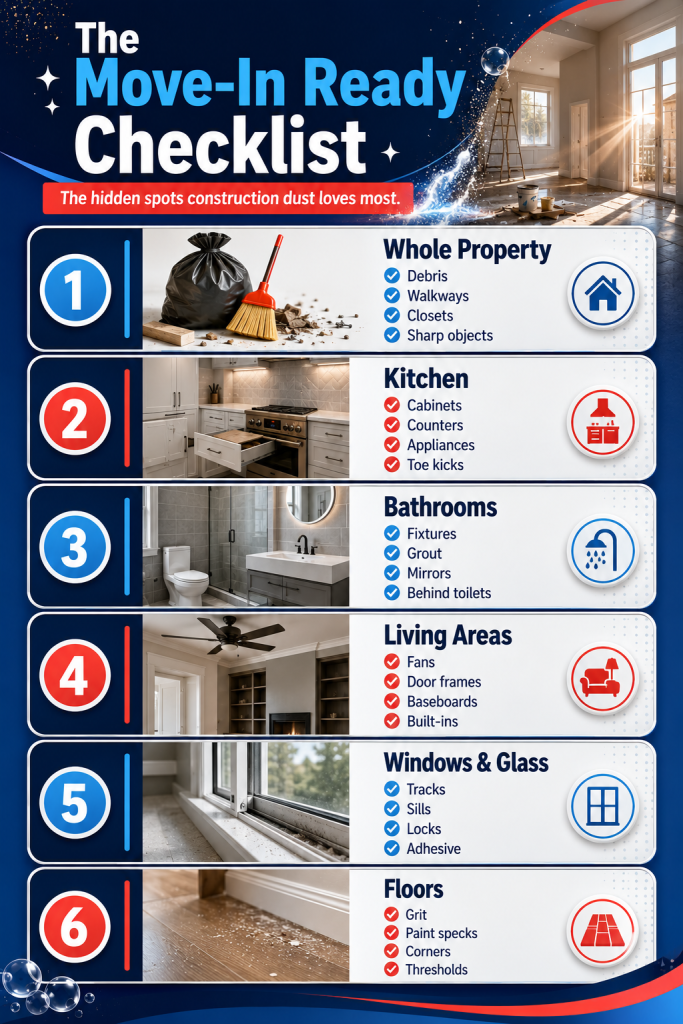
Room-by-Room Post Construction Cleaning Checklist
This room-by-room checklist works for homes, offices, apartments, rentals, and small commercial spaces.
Whole Property
Start with the full space before going room by room.
- Remove trash, debris, and leftover materials.
- Clear stairs, hallways, entries, and exits.
- Vacuum or sweep heavy dust carefully.
- Check closets, utility rooms, garages, and storage rooms.
- Replace trash liners.
- Remove labels, tape, and protective plastic where safe.
- Check for nails, screws, and sharp objects.
Kitchen
Kitchens collect dust in places people do not notice until they start unpacking dishes.
Clean:
- Inside and outside cabinets
- Drawer corners
- Countertops
- Sink and faucet
- Backsplash
- Appliance fronts and handles
- Inside empty appliances if needed
- Cabinet hardware
- Pantry shelves
- Toe kicks and baseboards
- Floors and corners
Use the right cleaner for the surface. Stone, stainless steel, painted cabinets, and luxury vinyl flooring do not all want the same product.
Bathrooms
Bathrooms need both detail cleaning and sanitation.
Clean:
- Sinks and countertops
- Toilets
- Tubs and showers
- Glass shower doors
- Mirrors
- Faucets and fixtures
- Vanity drawers
- Tile and grout
- Exhaust fan covers if accessible
- Baseboards and floor edges
Look behind the toilet and under the vanity. Those areas often catch drywall dust, hair, packaging bits, and grout residue.
Bedrooms and Living Areas
These rooms may look simple, but dust settles everywhere.
Clean:
- Ceiling fan blades
- Light fixtures
- Window sills and tracks
- Closet shelves
- Doors and frames
- Switch plates and outlet covers
- Baseboards
- Built-ins
- Floors and floor edges
If carpet was installed or exposed during construction, vacuum slowly and thoroughly. If dust is heavy, professional carpet cleaning may be the better choice.
Windows and Glass
Windows can make or break the final look of a new space.
Clean:
- Glass
- Frames
- Tracks
- Locks
- Sills
- Stickers and adhesive residue
- Patio door glass
- Interior glass panels
Be careful with scraping. A razor or scraper used the wrong way can scratch glass. If there is paint overspray, silicone, mortar, or stubborn adhesive, it may be safer to bring in a professional.
Floors
Floors take the most abuse during construction.
Clean:
- Dust and grit
- Paint specks
- Adhesive residue
- Grout haze
- Footprints
- Baseboard edges
- Corners
- Transitions and thresholds
Use a neutral cleaner when appropriate and always follow flooring care instructions. Hardwood, tile, laminate, carpet, polished concrete, and vinyl all need different handling.
Post-Construction Cleaning Priorities by Area
| Area | What to Check | Best Cleaning Cue | Common Mistake |
| Cabinets and drawers | Dust inside corners and shelf edges | Open everything before calling it done | Only wiping the outside |
| Windows and tracks | Adhesive, grit, paint marks, dust | Vacuum tracks before washing glass | Cleaning glass while tracks stay dirty |
| Floors | Fine dust, residue, scuffs, edges | Vacuum before mopping | Mopping dust into a cloudy film |
| Bathrooms | Grout, fixtures, mirrors, behind toilets | Clean high-touch and hidden areas | Treating it like a quick wipe-down |
| Vents and returns | Dust on covers and nearby walls | Replace filters after dusty work | Forgetting the HVAC system |
| Baseboards and trim | Dust, scuffs, caulk marks | Check in natural light | Missing top edges |
What Most People Get Wrong
The biggest mistake is thinking one cleaning pass will do the job.
Construction dust is stubborn. It settles. It hides. It reappears after the air moves or the HVAC system kicks on.
Another mistake is using too much water too soon. Drywall dust mixed with water can turn into a chalky paste. That paste can leave streaks on floors, trim, and counters.
A third mistake is using harsh products on new finishes. New does not mean indestructible. Fresh paint can scuff. Stone can etch. Stainless steel can scratch. Wood can dull. Always test a cleaner in a hidden spot before using it widely.
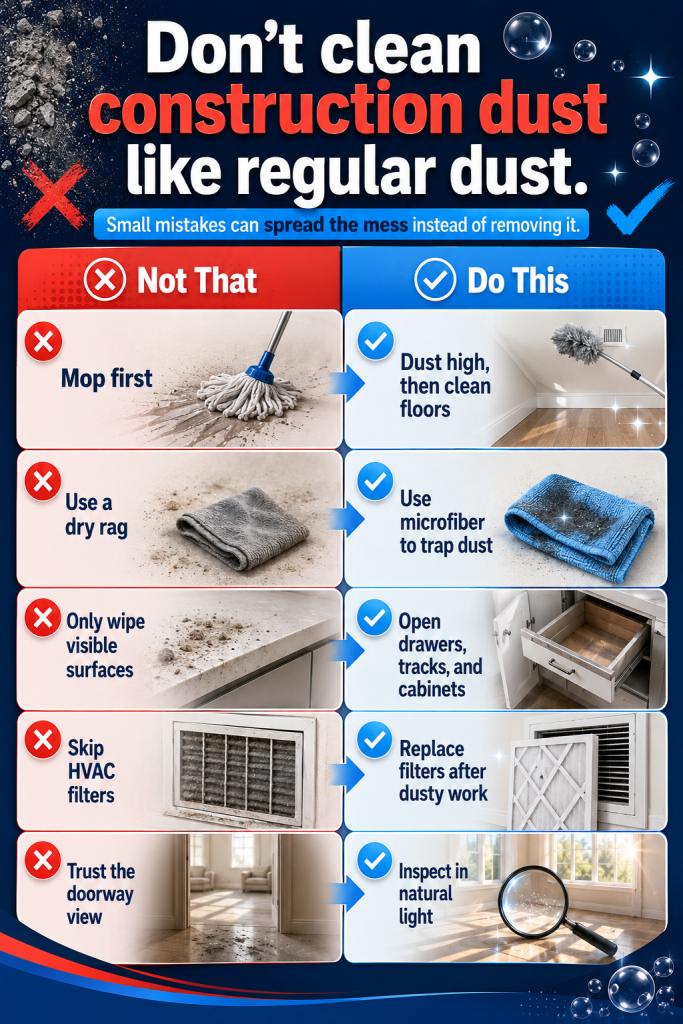
Do This, Not That
Do this: Work from ceiling to floor.
Not that: Mop first, then dust the room.
Do this: Use microfiber cloths to trap fine dust.
Not that: Push dust around with a dry rag.
Do this: Vacuum tracks, corners, and cabinet interiors.
Not that: Only clean visible surfaces.
Do this: Replace HVAC filters after construction.
Not that: Assume the air system stayed clean.
Do this: Use a post construction cleaning inspection checklist before move-in.
Not that: Trust the room because it looks good from the doorway.
Special Safety Notes for Older Homes and Heavy Dust
If a home was built before 1978, renovation work may involve lead-based paint concerns. The EPA’s Lead Renovation, Repair and Painting Program explains when lead-safe certified firms are required, especially for rental properties, child-occupied facilities, property managers, and house flippers.
For cleaning products, the EPA’s Safer Choice program can help homeowners and businesses find products that perform and use ingredients that are safer for people and the environment.
These links are not meant to scare readers. They are reminders that cleaning after construction is not only about appearances. It is also about protecting surfaces, reducing residue, and using the right level of care for the project.
DIY or Hire Professional Post-Construction Cleaners?
Some projects are fine for DIY cleaning.
A small backsplash update, simple repainting project, or minor fixture replacement may only need careful wiping, vacuuming, and mopping.
Professional post-construction cleaners make more sense when:
- Drywall sanding created heavy dust.
- Concrete, tile, stone, or mortar work was involved.
- Dust spread through several rooms.
- The property has expensive finishes.
- Windows need adhesive or paint residue removed.
- The space must be ready for tenants, clients, employees, or guests.
- A contractor or property manager needs a cleaner final handoff.
- The building is an office or commercial space.
Commercial spaces often need more than a one-time cleanup. After the construction dust is gone, businesses may need office cleaning, restroom cleaning, high-touch surface cleaning, waste removal, and recurring service to keep the space ready for employees and visitors. A commercial cleaning plan can help keep the office clean after the build-out is complete.
A Real-Life Move-In Scenario
Picture a family walking into a newly remodeled home on a Saturday morning.
The kitchen looks perfect from the doorway. The counters shine. The floors look smooth. Then they start unpacking.
The first plate goes into a dusty cabinet. A child opens a closet and finds sawdust on the shelf. Someone slides open the patio door and hears grit in the track. A sock turns gray after walking across the bedroom floor.
Nothing is wrong with the remodel. The space simply has not had a true move-in clean yet.
That is why a move-in cleaning checklist after construction should include both obvious tasks and hidden details. A home should not just look finished. It should feel ready for daily life.
Final Walkthrough Checklist Before You Move In
Before furniture, boxes, desks, or equipment arrive, walk the space slowly.
Use this quick final check:
- Look high: fans, lights, shelves, door frames, cabinet tops.
- Look inside: drawers, closets, cabinets, pantry shelves.
- Look low: baseboards, floor edges, corners, thresholds.
- Look at air movement: vents, returns, filters, dusty wall areas.
- Look at glass: windows, tracks, mirrors, patio doors.
- Look at touch points: handles, switches, railings, faucets, appliance pulls.
If the property passes those checks, it is much closer to true occupancy readiness.
When the Space Needs Local Help
Post-construction cleaning can feel like the last hill after a long climb. The project is almost done, but the dust, debris, and details still need attention.
For homeowners, contractors, property managers, and local businesses that want the space cleaned without losing another weekend to dust and mopping, Lajas Cleaning Services provides post-construction cleaning and related residential and commercial cleaning support in the Chicago area and surrounding communities. To request help, email [email protected], call 1 (815) 325-2365, or use the booking page.

Conclusion
Construction creates the new space. Cleaning makes it ready to use.
A strong post construction cleaning checklist helps remove the dust, protect the finishes, and catch the little details that make a home or office feel complete. The best approach is simple: clear the debris, capture the dust, and confirm the space room by room.
When that final layer of dust is gone, the project finally feels like what everyone was waiting for: clean, comfortable, and ready for what comes next.
FAQs
What is a post construction cleaning checklist?
It is a step-by-step cleaning guide used after building, remodeling, or renovation work. It covers debris removal, dust control, windows, floors, cabinets, bathrooms, fixtures, and final walkthrough checks.
What should be cleaned after construction?
Clean high surfaces, walls, baseboards, cabinets, drawers, appliances, windows, vents, bathrooms, floors, doors, frames, and touch points like handles and switches.
How do you clean a newly built house?
Start by removing debris. Then clean from top to bottom, vacuum dust, wipe surfaces with microfiber, clean cabinets and bathrooms, wash glass, mop floors, and replace HVAC filters.
How do you remove construction dust?
Avoid dry sweeping fine dust. Use a careful top-to-bottom process, microfiber cloths, proper vacuuming, light damp wiping where appropriate, and filter replacement after dusty work.
What is the difference between rough clean and final clean?
Rough clean removes large debris, trash, and first-layer dust. Final clean handles detailed cleaning such as glass, bathrooms, cabinets, fixtures, floors, and move-in-ready finishing.
What belongs on a post renovation cleaning checklist?
A post renovation cleaning checklist should include debris removal, dusting, cabinet cleaning, window tracks, appliance detailing, bathroom cleaning, floor care, and a final inspection.
Should homeowners hire post construction cleaners?
Hiring help is a smart choice when the dust is heavy, the project involved drywall or concrete, the property is large, or new finishes need careful handling.
How much does post construction cleaning cost?
Post construction cleaning pricing depends on square footage, dust level, number of rooms, floor types, windows, debris, and whether the space is residential or commercial.
How does move-in cleaning after construction help?
Move-in cleaning after construction removes hidden dust and residue before furniture, dishes, clothing, employees, or tenants enter the space.
What should businesses consider after construction cleanup?
Businesses should think beyond the first cleanup. After a build-out, recurring office cleaning can help keep restrooms, floors, desks, shared areas, and high-touch surfaces ready for daily use.