


Most office cleaning problems do not appear all at once.
They show up slowly. The entryway starts tracking in salt and dust. The break room sink gets a little dull. The restroom needs attention before the day is over. A client walks in, and the space feels less polished than the business behind it.
That is usually when office managers and business owners ask the practical question: how often should an office be cleaned?
The answer depends on how the office is used. A small private office may only need professional cleaning a few times per week, while a busy office with shared restrooms, daily visitors, and an active break room may need cleaning every workday. The right schedule should protect the workplace, support employee comfort, and keep the business looking ready for anyone who walks through the door.
Key Takeaways
- Busy offices usually need daily cleaning in restrooms, break rooms, trash areas, floors, and high-touch surfaces.
- Smaller offices may stay in good shape with cleaning two or three times per week.
- Deep cleaning should happen monthly, quarterly, seasonally, or whenever buildup starts showing.
- The best office cleaning schedule matches the way the space is actually used.
How Often Should an Office Be Cleaned? The Honest Answer
Most offices should be cleaned at least several times per week, while high-traffic offices often need daily cleaning. Restrooms, break rooms, trash bins, entryways, and high-touch surfaces usually need the most frequent attention.
That answer may sound simple, but the details matter.
A small insurance office with six employees does not need the same commercial office cleaning schedule as a busy real estate office with walk-ins, vendor visits, client meetings, and shared desks. A quiet back-office space may need lighter weekly care. A customer-facing office may need cleaning every workday because people notice the little things quickly.
CDC guidance says high-touch surfaces are more likely to spread germs, and high-traffic areas may need more frequent cleaning or disinfection in addition to cleaning.
That is the most practical rule: clean based on use, not just habit.
The Five Things That Decide Office Cleaning Frequency
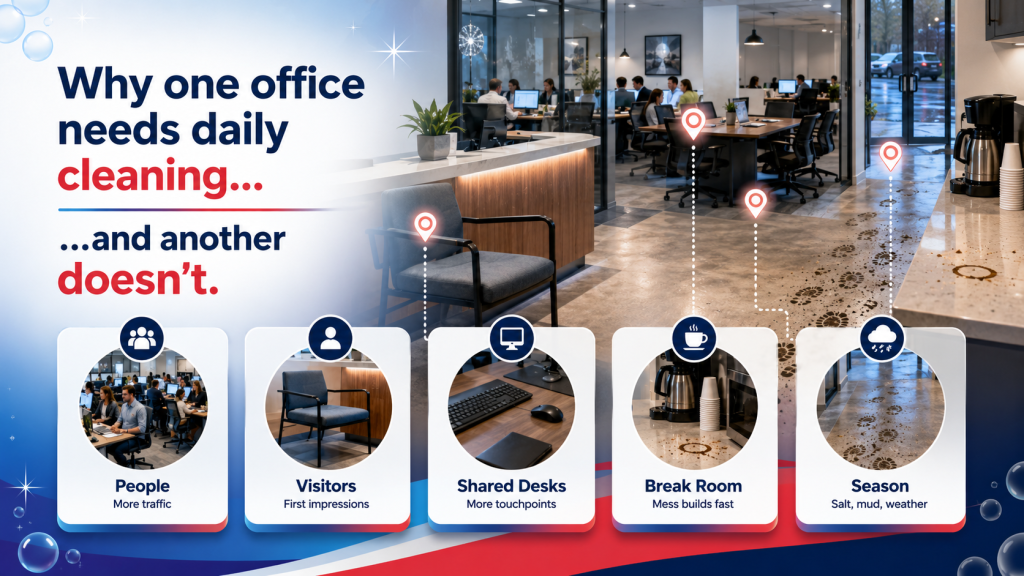
Before choosing a cleaning plan, a local business should look at five simple factors.
1. How many people use the office?
More people means more fingerprints, dust, trash, restroom use, crumbs, and floor wear. An office with three employees can often manage with a lighter schedule. An office with 30 employees needs more consistent care.
2. How often do visitors come in?
A client-facing space needs a higher standard. Reception areas, waiting rooms, conference rooms, and guest restrooms shape first impressions. If customers, patients, tenants, vendors, or job candidates walk through the door, the office should look ready before they arrive.
3. Are there shared desks or shared equipment?
Shared workstations, phones, keyboards, printers, coffee stations, and conference tables need extra attention. High-touch surface cleaning is one of the easiest places for offices to fall behind.
4. Does the office have a break room?
Break rooms work hard. Coffee spills, microwave splatter, sink buildup, refrigerator handles, crumbs, and trash can turn a tidy office into a “what is that smell?” situation by midweek.
5. What season is it?
In Joliet, Plainfield, Naperville, Shorewood, Minooka, Romeoville, Mokena, Channahon, Aurora, Lemont, Lockport, and nearby areas, winter salt and spring mud can change floor care needs fast. Entryways and hallways often need more attention during messy weather.
Daily Office Cleaning: What Should Be Done Every Day?
Daily office cleaning is not about scrubbing every corner from top to bottom. It is about keeping the most-used areas from slipping.
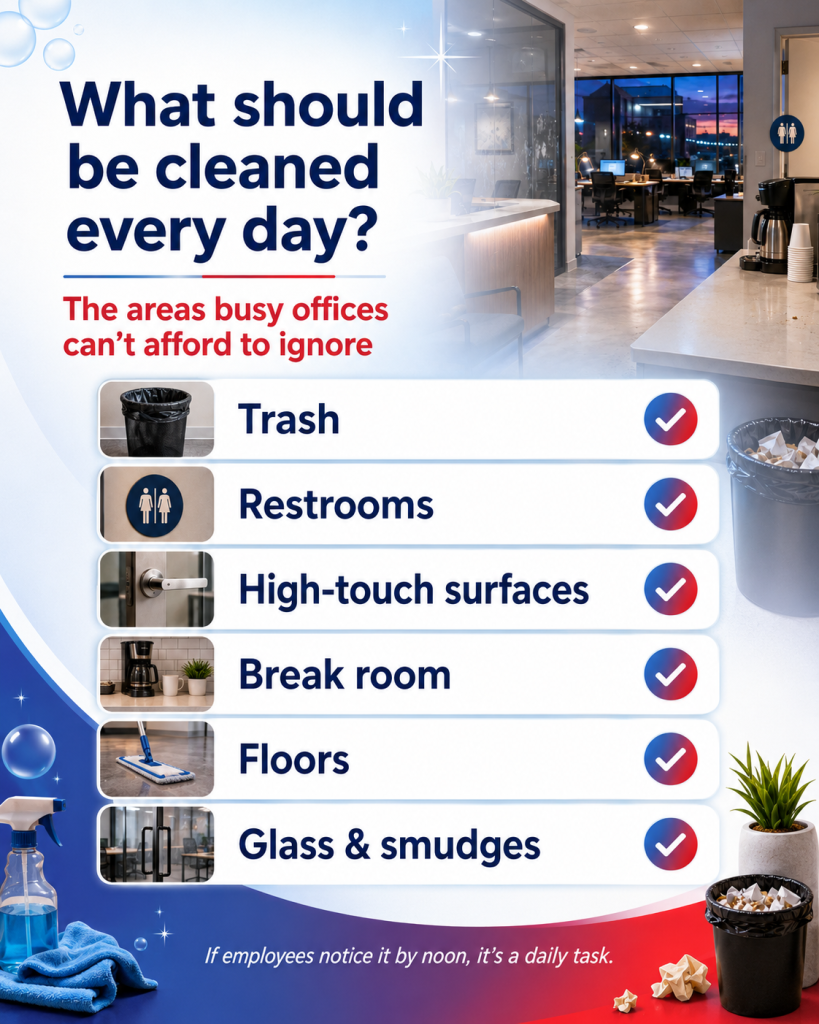
A daily office cleaning checklist usually includes:
- Empty trash and replace liners
- Clean and restock restrooms
- Wipe high-touch surfaces
- Clean break room counters, sinks, tables, and appliance handles
- Vacuum or sweep high-traffic floors
- Mop hard floors where needed
- Spot-clean glass doors, reception counters, and visible smudges
This is especially important for offices with shared restrooms, steady foot traffic, open workstations, or frequent visitors.
Restroom cleaning frequency should never be treated as an afterthought. If soap runs out, trash fills up, odors appear, or employees start mentioning the restroom, the schedule is already too light.
Break room cleaning matters for the same reason. A coffee station can look harmless in the morning and tired by 3 p.m. The microwave handle, sink, refrigerator door, and tables should not be skipped.
Weekly Office Cleaning Tasks That Keep the Space Under Control
Weekly office cleaning tasks add the detail that daily cleaning may not cover fully.
These tasks often include:
- Dusting desks, shelves, ledges, and flat surfaces
- Vacuuming less-used rooms
- Cleaning interior glass and partitions
- Wiping chair arms and conference room furniture
- Mopping secondary hard-floor areas
- Dusting baseboards in visible spaces
- Cleaning behind small bins or movable items
- Checking corners, vents, and overlooked surfaces
This is where many small offices find their balance. A business with fewer employees and limited visitor traffic may not need full daily service, but it may still need professional cleaning two or three times per week, plus weekly detail work.
The danger is waiting too long. Once dust, odors, stains, and clutter become noticeable, the office is no longer just “due for cleaning.” It is sending the wrong message.
Benjamin Franklin said, “An ounce of prevention is worth a pound of cure.” That line fits office cleaning perfectly. Small, steady cleaning prevents big, frustrating cleanups later.
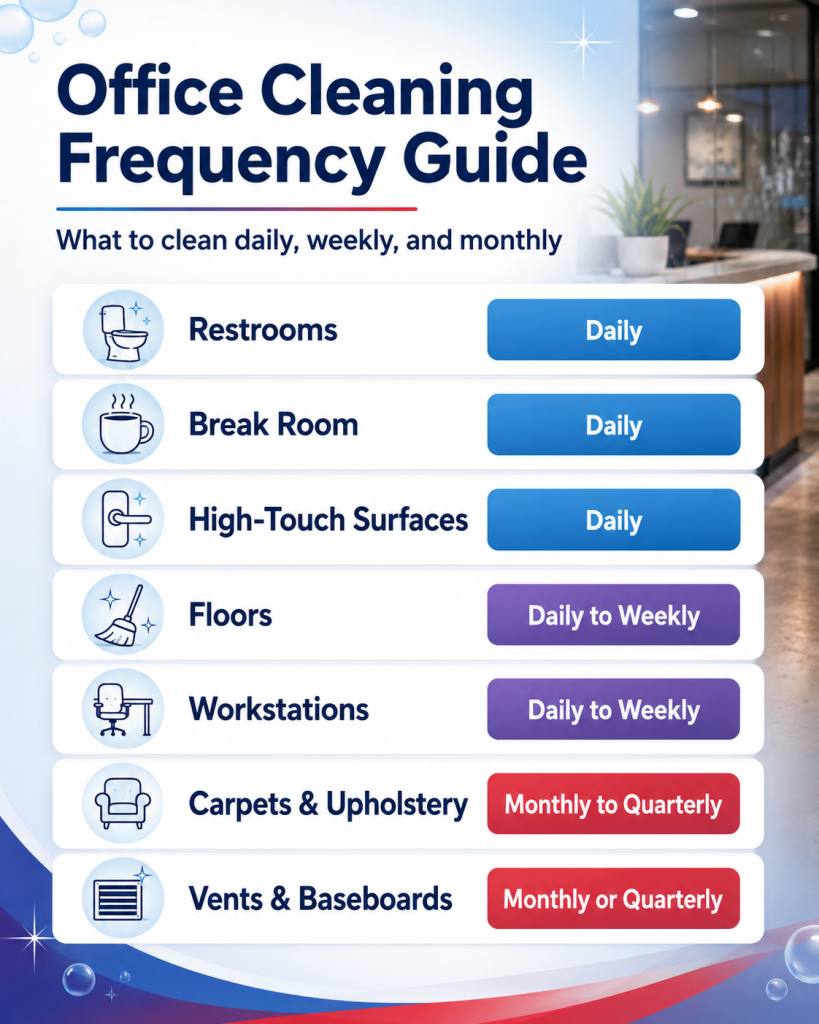
Office Cleaning Frequency Guide by Area
| Office Area | Suggested Frequency | Simple Cue | Common Mistake |
| Restrooms | Daily, or more for heavy use | Odor, low supplies, visible marks | Waiting for complaints |
| Break room / kitchen | Daily in active offices | Crumbs, spills, sticky handles | Cleaning counters but skipping appliances |
| Desks and workstations | Daily to weekly | Shared desks need more care | Using harsh products on delicate surfaces |
| High-touch surfaces | Daily in busy offices | Smudges on handles, switches, railings | Treating touchpoints like regular dusting |
| Reception / lobby | Daily or every service visit | First thing visitors see | Ignoring glass doors and entry mats |
| Floors | Daily to weekly | Salt, mud, dust trails, stains | Letting grit wear down surfaces |
| Carpets and upholstery | Monthly to quarterly as needed | Odors, spots, dull traffic lanes | Waiting until stains settle |
| Vents, blinds, baseboards | Monthly or quarterly | Dust lines and stale air | Forgetting hidden dust collectors |
This office cleaning frequency guide is not a rigid rule. It is a starting point. If trash overflows before the next visit, increase trash service. If floors look rough by Wednesday, adjust floor care. If restrooms need help before closing time, they need more frequent attention.
Good cleaning plans are practical. They respond to real life.
Cleaning, Sanitizing, and Disinfecting Are Not the Same
A lot of people use these words as if they mean the same thing. They do not.
Cleaning removes dirt, dust, oils, crumbs, and many germs from surfaces. Sanitizing reduces germs after cleaning. Disinfecting uses products made to kill certain germs on surfaces after those surfaces have been cleaned.
CDC guidance says surfaces should be cleaned before sanitizing or disinfecting because dirt can make those products less effective.
For everyday offices, routine cleaning is often enough for many areas. Disinfecting may make sense for certain high-touch surfaces, after illness, in higher-risk settings, or when the business has specific health or industry requirements.
For offices that care about safer product choices, EPA Safer Choice can be a helpful reference. EPA says the program helps consumers, businesses, and purchasers find products that perform and contain ingredients safer for human health and the environment.
Why Office Cleaning Affects More Than Appearance
A clean office is not just about looking polished. It affects comfort, safety, and how people feel in the space.
EPA states that Americans spend about 90% of their time indoors. That makes indoor air quality and indoor surfaces worth taking seriously, especially in offices where people sit for long stretches.
Dust, dirt, pollen, and tracked-in debris do not stay in one spot. They move from entryways to hallways, meeting rooms, carpets, and workstations. In colder Illinois months, snow, moisture, and salt can also wear down flooring faster if they are not cleaned regularly.
OSHA requires places of employment, passageways, service rooms, and walking-working surfaces to be kept clean, orderly, and sanitary. It also says floors should be kept clean and, as far as feasible, dry. OSHA walking-working surfaces standard
That does not mean every office needs extreme cleaning every day. It means cleanliness supports a safer, more comfortable workplace.
How Often Should an Office Be Deep Cleaned?
Most offices should be deep cleaned monthly, quarterly, seasonally, or when visible buildup appears. Heavy-use offices, client-facing spaces, and offices with carpets or upholstered furniture may need deeper cleaning more often.
A practical office deep cleaning schedule may include:
- Carpet extraction or shampooing
- Upholstery cleaning
- Floor scrubbing, polishing, stripping, or waxing
- Detailed dusting of vents, blinds, ledges, and baseboards
- Interior glass and partition cleaning
- Detailed restroom cleaning
- Cleaning around furniture legs, corners, and edges
- Post-renovation or post-event cleaning when needed
Deep cleaning helps reset the space. It catches what daily and weekly cleaning cannot always reach.
Spring is a smart time for deeper care because winter often leaves salt, grit, and moisture behind. Fall can also be useful before colder weather pushes people indoors for longer stretches.
Daily vs Weekly Office Cleaning: Which One Is Better?
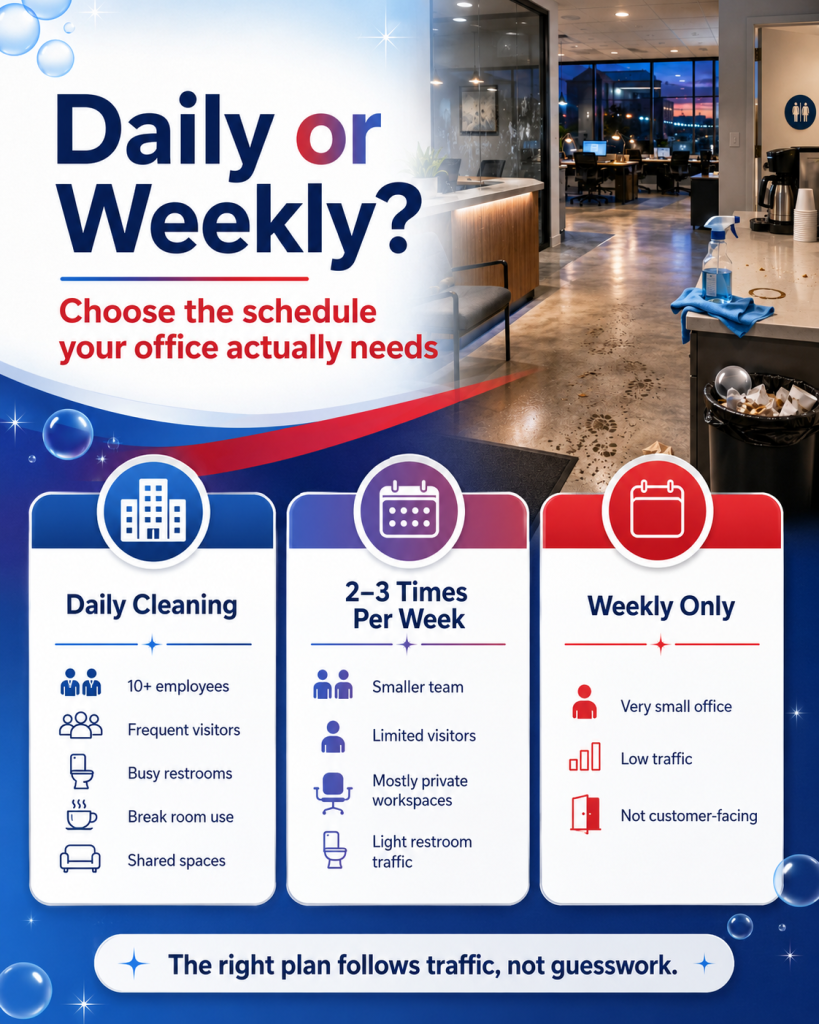
Daily cleaning is better for offices with steady traffic, shared restrooms, shared desks, break rooms, and client-facing areas. Weekly cleaning may work for very small, low-traffic offices, but it can become too light if employees use shared areas often.
Here is a simple way to decide:
Choose daily cleaning if the office has:
- More than 10 employees
- Frequent visitors
- Shared desks or shared equipment
- Busy restrooms
- A used break room or kitchenette
- Client-facing reception areas
- Heavy floor traffic
Choose two or three times per week if the office has:
- Fewer employees
- Limited visitors
- Mostly private workspaces
- Light break room use
- Low restroom traffic
- Employees who keep personal areas tidy
Choose weekly cleaning only if the office is very small, low-traffic, and not customer-facing. Even then, restrooms, trash, and break room areas may need extra attention.
What Most Businesses Get Wrong
The biggest mistake is thinking “it looks fine” means “it is fine.”
Dust can settle before anyone notices. Carpet traffic lanes can slowly darken. Restroom odors can build between visits. Break room appliances can collect grime even when counters look clean.
Another mistake is asking employees to “just handle it.” Employees can clean up after themselves, of course. They can throw away trash, wipe a spill, or keep a desk organized. But they should not have to manage restroom sanitation, floor care, trash rotation, supply checks, and office-wide cleaning on top of their actual jobs.
That is when a janitorial cleaning service or recurring office cleaning plan makes sense.
A professional commercial cleaning plan should be clear, simple, and tailored. It should explain what gets cleaned, how often, what supplies are used, and which areas need special attention.
Industry standards can also help businesses understand what professional cleaning operations look like. ISSA describes the Cleaning Industry Management Standard, or CIMS, as a global benchmark for operational excellence in cleaning.
A Realistic Local Scenario
Picture a small office near Joliet with eight employees, one reception desk, two restrooms, a conference room, and a break room that sees a lot of coffee traffic.
At first, weekly cleaning sounds fine. Then winter arrives. Salt shows up near the entry. Trash fills faster than expected. The restroom needs attention before Friday. The break room sink starts looking tired by midweek.
The better plan might be three professional visits per week, with restrooms, trash, touchpoints, break room surfaces, and main floors handled each visit. Then the business adds quarterly carpet care and seasonal deep cleaning.
Nothing fancy. Nothing excessive. Just a schedule that matches the office.
That is what good local office cleaning service should do. It should fit the building instead of forcing the building into a generic checklist.
When Should a Business Hire Professional Office Cleaners?
Professional office cleaners make sense when the cleaning routine starts pulling attention away from the actual work. If employees are taking turns emptying trash, wiping restrooms, or trying to keep floors presentable before visitors arrive, the office probably needs a more consistent plan.
It may also be time to bring in help when restrooms need attention before the day ends, break room mess builds up quickly, or floors and carpets need equipment the team does not have. A professional cleaning schedule keeps those jobs from becoming last-minute problems.
Professional cleaning can be especially helpful for offices that need:
- After-hours office cleaning
- Recurring cleaning
- Restroom and break room care
- High-touch surface cleaning
- Floor, carpet, and entryway maintenance
- A simple daily, weekly, and monthly cleaning plan
The goal is not to overclean the space. It is to create a steady routine that fits the office, keeps the workplace comfortable, and helps the business look ready every day.
Conclusion
So, how often should an office be cleaned?
A busy office usually needs daily cleaning in restrooms, break rooms, trash areas, floors, and high-touch surfaces. A smaller office may do well with cleaning two or three times per week, plus monthly or quarterly deep cleaning.
The best schedule is not the strictest schedule. It is the one that fits how the office is used. When the cleaning routine matches the people, traffic, floors, restrooms, and shared spaces, the whole workplace feels easier to manage.
For a custom office cleaning schedule, contact Lajas Cleaning Services at [email protected] or 1 (815) 325-2365.
FAQ
1. How often should an office be cleaned?
Most offices should be cleaned several times per week. Busy offices with shared restrooms, break rooms, and visitor traffic usually need daily cleaning.
2. What is a simple office cleaning frequency guide?
Daily cleaning should cover trash, restrooms, break rooms, high-touch surfaces, and main floors. Weekly and monthly tasks should cover dusting, glass, carpets, vents, upholstery, and deeper buildup.
3. How often should office bathrooms be cleaned?
Office bathrooms should usually be cleaned daily. High-traffic offices may need restroom checks or touch-up cleaning more than once per day.
4. How often should office desks be cleaned?
Shared desks should be cleaned daily or after each use. Private desks can often be cleaned weekly, with employees handling personal clutter and light wipe-downs.
5. What belongs on a daily, weekly, monthly office cleaning checklist?
Daily tasks include trash, restrooms, break rooms, floors, and touchpoints. Weekly tasks include detail dusting, glass, and fuller floor care. Monthly tasks may include carpets, vents, upholstery, and baseboards.
6. How often should an office be deep cleaned?
Most offices benefit from deep cleaning monthly or quarterly. Heavy-traffic, client-facing, or seasonal spaces may need deeper cleaning more often.
7. Is daily vs weekly office cleaning better?
Daily cleaning is better for busy offices with shared areas and visitors. Weekly cleaning may work for very small offices with low traffic, but it can be too light for restrooms and break rooms.
8. What is the best office cleaning schedule for small businesses?
Small businesses often do well with cleaning two or three times per week, plus monthly or quarterly deep cleaning. The schedule should change if odors, dust, stains, or overflowing trash appear.
9. How should a business choose a professional cleaning company?
Look for trained staff, insurance, clear communication, flexible scheduling, proper supplies, and a practical plan for commercial office cleaning frequency.
10. Can local businesses request recurring office cleaning service?
Yes. Many local businesses choose recurring service so restrooms, floors, trash, break rooms, and high-touch surfaces stay on a consistent schedule.