

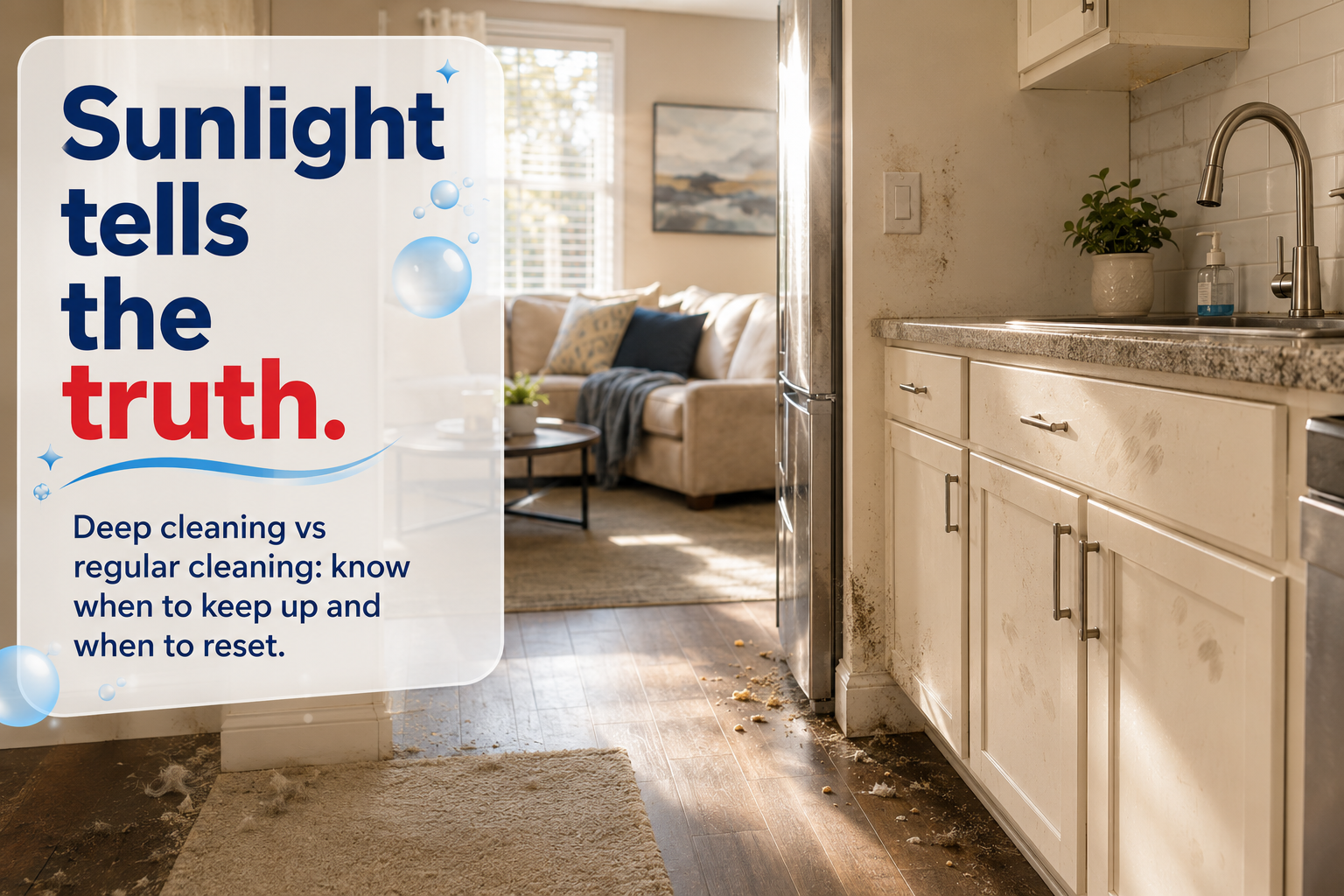
Sunlight tells the truth.
The kitchen may look clean at night. Then morning hits the cabinets, the baseboards, the light switches, and that one mysterious corner near the fridge. Suddenly, the house does not look dirty exactly. It just looks tired.
That is where deep cleaning vs regular cleaning becomes more than a service comparison. It becomes the difference between keeping up and catching up.
For busy homeowners in Joliet, the Chicago suburbs, and nearby Illinois communities, this question usually comes up at the same moments: before guests arrive, after a rough week, during a move, after construction dust settles, or when regular wiping and vacuuming no longer make the home feel fresh.
The good news is simple. Most homes do not need deep cleaning all the time. They need the right cleaning at the right time.
Key Takeaways
- Regular cleaning keeps a home tidy, comfortable, and maintained.
- Deep cleaning handles buildup, hidden dust, grime, and detail areas.
- A deep clean is often the smartest first step before recurring cleaning.
- The right choice depends on the home’s condition, schedule, pets, traffic, and goals.
Deep Cleaning vs Regular Cleaning: The Simple Answer
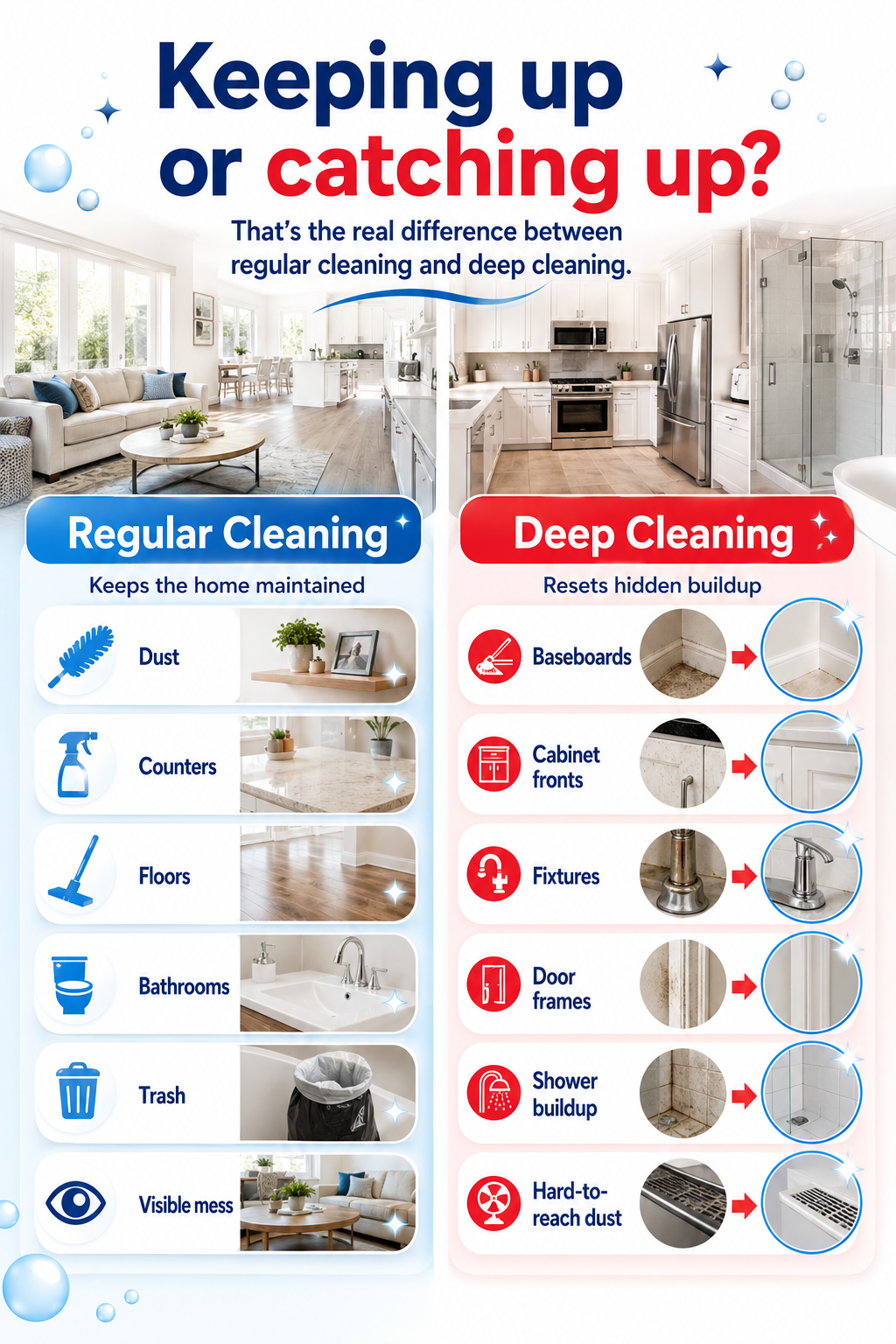
Regular cleaning is routine upkeep. It handles the visible messes that come with everyday life, like dust, crumbs, bathroom surfaces, floors, trash, and kitchen counters.
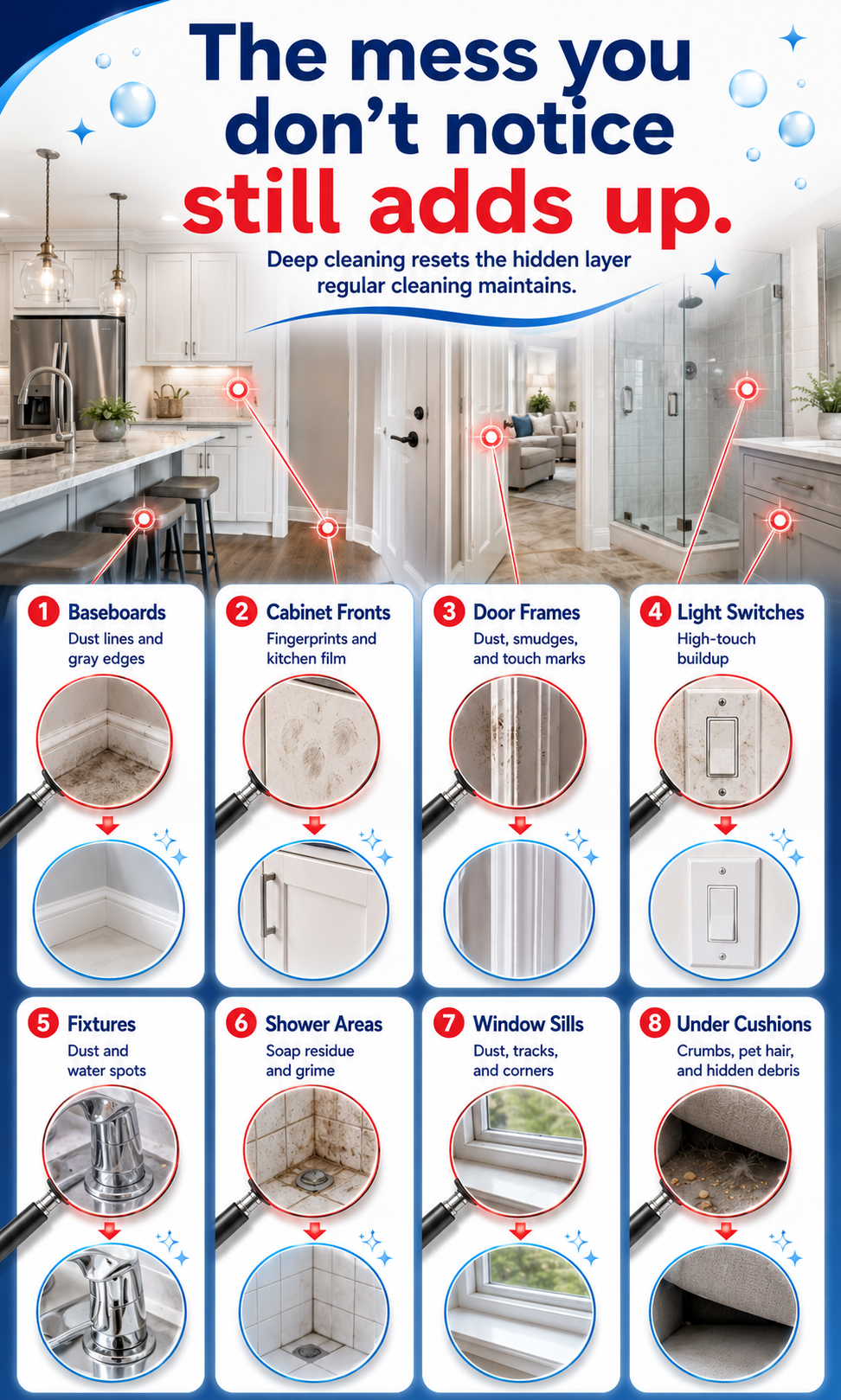
Deep cleaning is a more detailed reset. It targets the areas that are easy to miss during routine cleaning, including baseboards, cabinet fronts, fixtures, door frames, buildup around sinks, shower residue, and hard-to-reach dust.
Regular cleaning keeps the home from slipping. Deep cleaning brings the home back to a cleaner baseline.
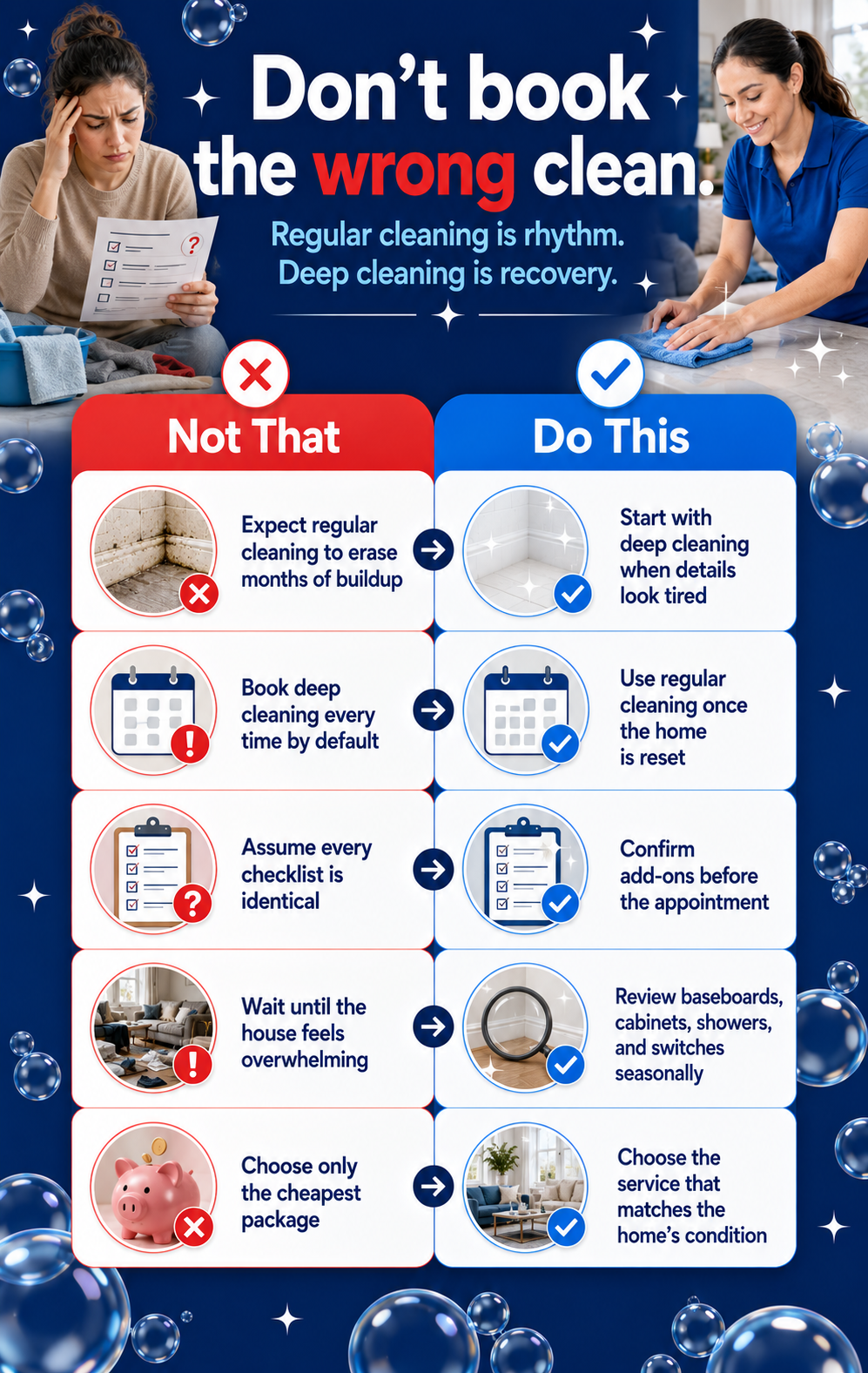
That is the main difference, and it matters because choosing the wrong service can lead to frustration. A homeowner may book regular cleaning and expect months of grime to disappear. Or they may book deep cleaning services when the home only needs steady maintenance.
Neither choice is bad. It just has to match the home.
What Is Routine Cleaning?
Routine cleaning is the “keep life moving” clean.
It is what most people mean when they think of standard cleaning, general house cleaning, maintenance cleaning, housekeeping services, or recurring cleaning. It focuses on the surfaces and rooms that get used every day.
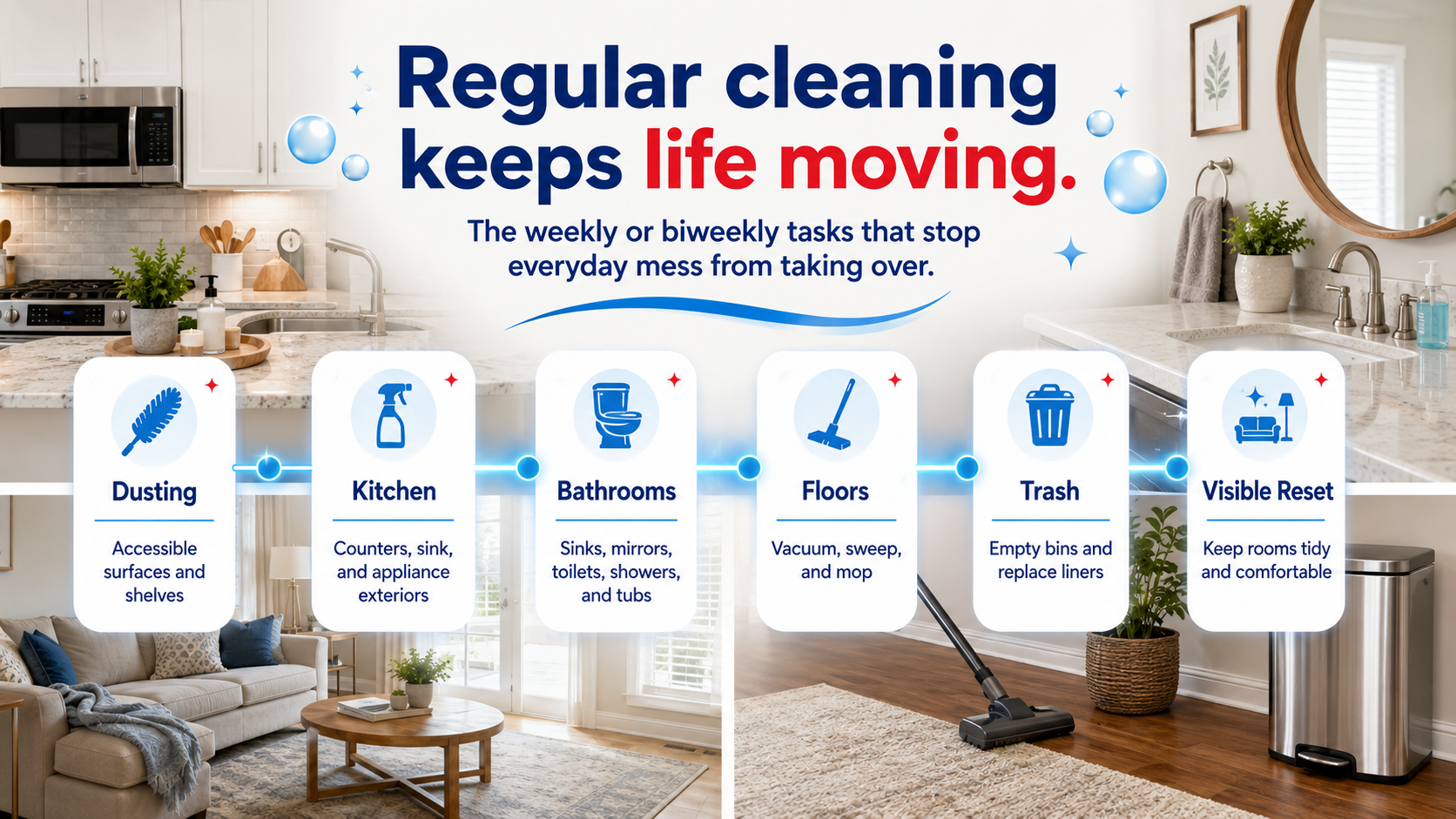
A regular cleaning visit usually includes:
- Dusting accessible surfaces
- Vacuuming carpets and rugs
- Sweeping and mopping hard floors
- Wiping kitchen counters and appliance exteriors
- Cleaning bathroom sinks, mirrors, toilets, showers, and tubs
- Emptying trash and replacing liners
This service is best when the home is already in decent shape. It is not designed to scrub every inch of trim or chase every dust line behind furniture. It keeps the house clean enough that weekends do not disappear into chores.
For families with pets, kids, visitors, or full work schedules, recurring cleaning can make the home feel calmer.
The sink does not pile up as quickly. The floors do not collect as much pet hair. The bathroom stays guest-ready without the usual Friday night panic-clean.
What Is Deep Cleaning?
Deep cleaning is the reset.
It is more detailed than routine cleaning and usually takes more time because the goal is not just to tidy. The goal is to remove buildup from places regular cleaning may only maintain.
A deep cleaning checklist often includes:
- Hand-wiping baseboards, reachable trim, and door frames
- Cleaning light switches, fixtures, and reachable ceiling fans
- Wiping cabinet fronts and hardware
- Cleaning the outside of appliances
- Cleaning inside and outside the microwave
- Scrubbing showers, tubs, faucets, and bathroom detail areas
- Cleaning around and behind toilets
- Wiping window sills and frames
- Removing dust from hard-to-reach areas
- Cleaning under cushions and under furniture where safe
Deep cleaning is especially useful for first-time cleaning, seasonal cleaning, spring cleaning, move-in cleaning, move-out cleaning, post-construction cleaning, and homes that have gone a few months without detailed attention.
Here is the clearest way to think about it:
Regular cleaning handles this week’s mess. Deep cleaning handles the mess that has been quietly building for weeks or months.
Deep Cleaning vs Regular Cleaning: Side-by-Side Comparison
| Cleaning Factor | Regular Cleaning | Deep Cleaning |
| Main purpose | Maintain a clean home | Reset the home |
| Best for | Weekly, biweekly, or monthly upkeep | First-time, seasonal, move-in, move-out, or buildup |
| Kitchen focus | Counters, sink, stovetop, outside appliances | Cabinet fronts, microwave detail, grease buildup, fixtures |
| Bathroom focus | Sink, mirror, toilet, shower, tub | Grout lines, buildup, fixtures, base areas, detailed scrubbing |
| Dusting | Accessible surfaces | Baseboards, door frames, high and low detail areas |
| Time needed | Usually shorter | Usually longer |
| Cost | Usually lower | Usually higher |
| Best follow-up | Keep recurring cleaning going | Start a maintenance cleaning schedule |
The table makes one thing clear. Deep cleaning is not just “regular cleaning, but faster.” It is more detailed work with a different purpose.
When Should a Homeowner Book Regular Cleaning?
Regular cleaning is the right fit when the home already feels manageable.
It works well when:
- The floors need routine care
- The bathrooms need weekly or biweekly cleaning
- Kitchen counters and surfaces need upkeep
- Dust appears on shelves and furniture
- The home had a deep clean recently
- The goal is consistency, not a full reset
This is where maintenance cleaning programs make sense. A home with two adults, a dog, and a busy school schedule may do well with biweekly cleaning. A smaller household may prefer monthly service. A home with children, pets, or frequent guests may need weekly care.
The goal is not to make the house look staged. The goal is to make it easier to live in.
When Should a Homeowner Book Deep Cleaning?
Deep cleaning is the better choice when the home feels like it needs a fresh start.
It is a smart option when:
- The home has not been professionally cleaned in a while
- Baseboards, cabinet fronts, and trim show buildup
- Bathrooms need more than a quick wipe
- Kitchen grease has settled onto surfaces
- The home is being prepared for move-in or move-out
- Construction dust is still showing up
- Guests, holidays, or a special event are coming
- A homeowner wants to begin recurring cleaning on the right foot
This is also where many people misunderstand the process. Regular cleaning is great after the reset. It is not always the best first step before the reset.
A deep clean creates the clean baseline. Regular cleaning protects it.
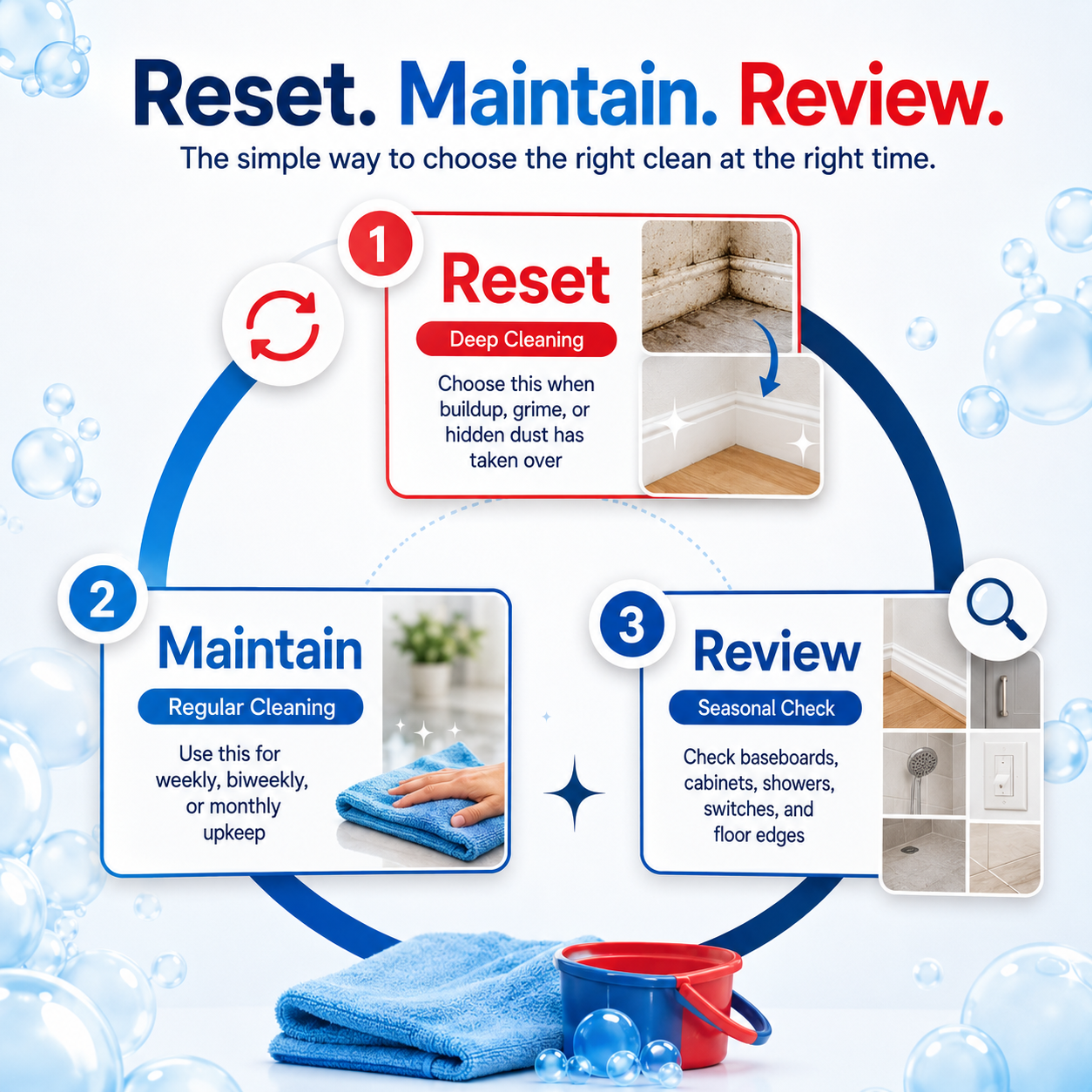
The 3-Step Cleaning Choice Framework
A homeowner does not need a complicated plan. This simple framework works well.
1. RESET
Choose deep cleaning when the house has visible buildup, hidden dust, dull bathroom areas, sticky kitchen residue, or neglected details.
2. MAINTAIN
Choose regular cleaning once the home is back to a comfortable baseline. This keeps the home from sliding back into heavy-cleaning territory.
3. REVIEW
Every season, check the areas that tell the truth: baseboards, cabinet fronts, shower corners, window tracks, oven exterior, microwave, light switches, and floor edges.
If those areas still look good, regular cleaning is doing its job. If they look tired, it may be time for another detailed clean.
That is cleaning frequency optimization in plain language. Clean smarter, not harder.
What Does Cleaning Mean in 2026?
In 2026, homeowners are thinking about more than shine.
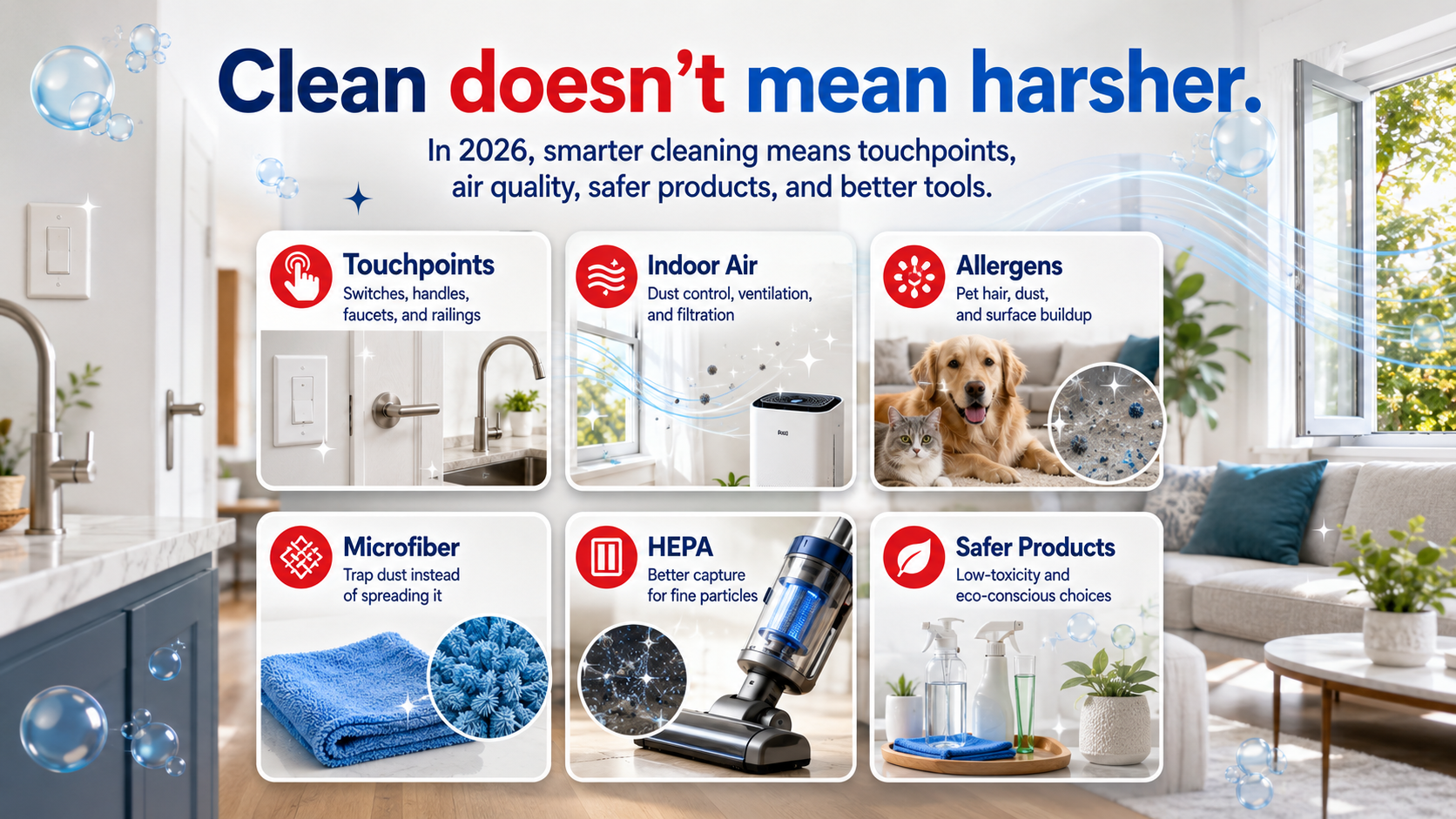
They are thinking about touchpoint hygiene, indoor environmental quality, allergen management, pet-safe cleaning, child-safe cleaning, eco-conscious cleaning, and low-toxicity product choices.
That does not mean every home needs heavy disinfecting every week. The Centers for Disease Control and Prevention says that in most situations, cleaning regularly is enough to help prevent the spread of germs at home. Disinfecting may be considered more when someone is sick, when someone recently visited while sick, or when household members are more likely to get sick.
That distinction matters. Cleaning removes dirt and many germs from surfaces. Disinfecting uses products made to kill germs, and those products should be used according to label directions.
The Environmental Protection Agency also notes that people spend about 90% of their time indoors, which makes indoor air quality a real home comfort issue, not just a technical topic.
This is why modern cleaning often includes smarter tools and habits, such as microfiber technology, HEPA filtration, careful product selection, ventilation awareness, and eco-certified cleaning products.
EPA Safer Choice is one program that helps consumers and businesses identify products made with safer ingredients while still performing well.
What Affects Cleaning Service Pricing?
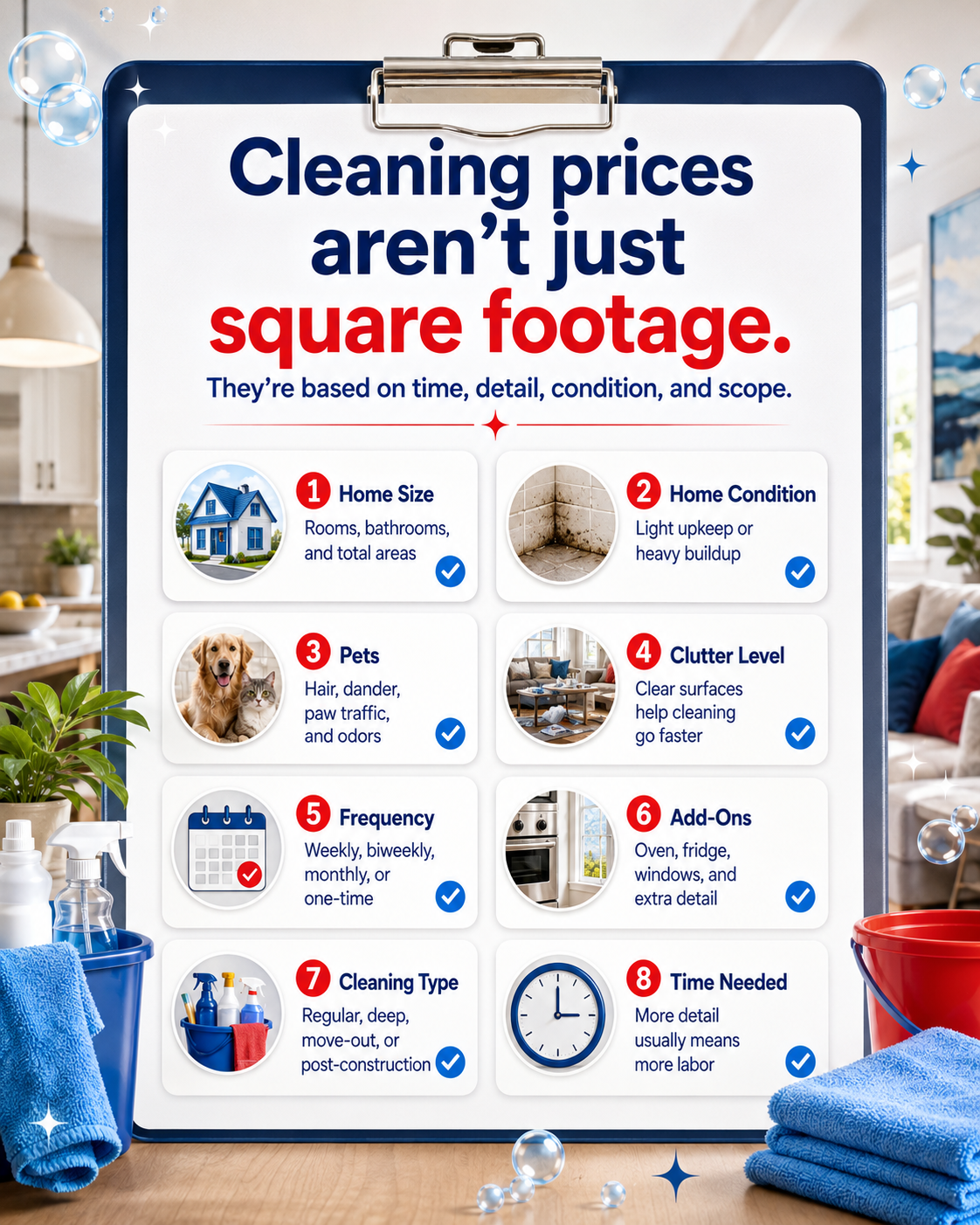
Cleaning service pricing usually depends on effort, not just square footage.
A regular cleaning may cost less because the crew is maintaining surfaces that are already under control. A deep cleaning may cost more because it requires more time, detail, product use, and labor.
Common pricing factors include:
- Home size
- Number of bedrooms and bathrooms
- Home condition
- Amount of buildup
- Pets and pet hair
- Clutter level
- Frequency of service
- Add-ons such as inside oven, inside refrigerator, windows, or heavy detail work
- Move-in, move-out, post-construction, or special event needs
The best house cleaning package is not always the cheapest one. It is the one that matches the home’s real condition.
If a house needs detailed cleaning, booking the lowest-level standard cleaning may leave the homeowner disappointed. If the home is already clean, booking deep cleaning every time may be more than needed.
What Most People Get Wrong
The biggest mistake is treating deep cleaning and regular cleaning like two sizes of the same thing.
They are not.
Regular cleaning is about rhythm. Deep cleaning is about recovery.
Another common mistake is waiting until the home feels overwhelming. By then, the baseboards, bathroom edges, cabinet fronts, and kitchen surfaces may need more time than expected.
One more mistake is assuming every cleaning checklist is the same. Some companies include microwave interiors. Some treat inside ovens and refrigerators as add-ons. Some move small items but do not move heavy furniture for safety. This is normal, but it should be clear before the appointment.
The Occupational Safety and Health Administration also points out that cleaning work involves real safety considerations, including chemical handling, protective equipment, ventilation, and worker training.
A good cleaning plan is not just about sparkle. It is about clear scope, safe work, and realistic expectations.
A Familiar Joliet-Area Scenario
Picture a family getting ready for relatives to visit.
The floors are vacuumed. The kitchen looks fine from the doorway. The bathroom is usable. No one is panicking yet.
Then someone notices fingerprints on the cabinet fronts. The guest bathroom has buildup around the faucet. The ceiling fan has a dust line. The baseboards look gray instead of white. The microwave has become a small museum of last week’s leftovers.
That home does not need judgment. It needs the right service.
A deep clean would reset the details. After that, recurring cleaning could keep the home comfortable without turning every weekend into a cleaning marathon.
That is the real value of professional house cleaning. It gives the home back to the people who live there.
As William Morris famously said, “Have nothing in your houses that you do not know to be useful, or believe to be beautiful.” The same idea applies to cleaning. A home should feel useful, comfortable, and easy to enjoy.
Conclusion: Which Cleaning Is Better?
The answer to deep cleaning vs regular cleaning is not “one is better.”
It is this: deep cleaning is better when the home needs a reset. Regular cleaning is better when the home needs maintenance.
A deep clean is ideal for first-time service, seasonal cleaning, move-in cleaning, move-out cleaning, post-construction cleaning, special event cleaning, and homes with visible buildup. Regular cleaning is ideal for weekly, biweekly, or monthly upkeep once the home is already in good shape.
For homeowners and businesses in Joliet and surrounding Illinois communities, Lajas Cleaning Services offers recurring cleaning, deep cleaning, residential cleaning, commercial cleaning, move-in cleaning, move-out cleaning, post-construction cleaning, special event cleaning, and new home pre-delivery cleaning. The company is locally owned, established in April 2008, fully insured, professionally staffed, and offers customized cleaning plans with no long-term contracts. To schedule a cleaning or request an estimate, call 1 (815) 325-2365 or email [email protected].
FAQ
What is routine cleaning?
Routine cleaning is regular upkeep for the home. It usually includes dusting, vacuuming, mopping, kitchen surface cleaning, bathroom cleaning, and trash removal.
What is deep cleaning?
Deep cleaning is a detailed cleaning service that targets buildup, grime, baseboards, fixtures, cabinet fronts, bathroom residue, and hard-to-reach dust.
What is the difference between deep cleaning and regular cleaning?
Regular cleaning maintains a home that is already in decent shape. Deep cleaning resets a home that needs more detailed attention.
What does a deep cleaning include?
A deep cleaning may include detailed kitchen cleaning, bathroom scrubbing, baseboard cleaning, cabinet front wiping, fixture cleaning, microwave cleaning, and dust removal.
What is included in standard house cleaning?
Standard house cleaning usually includes accessible dusting, floor cleaning, counter wiping, bathroom cleaning, kitchen surface cleaning, and general tidying.
How often should a house be deep cleaned?
A house should be deep cleaned when buildup becomes visible, before recurring service, during seasonal cleaning, after construction, or before moving in or out.
Is deep cleaning worth it?
Deep cleaning is worth it when regular cleaning no longer makes the home feel fresh. It helps create a cleaner baseline that is easier to maintain.
Does deep cleaning remove allergens?
Deep cleaning can help reduce dust, pet hair, and surface allergens. It works best when combined with regular cleaning, proper vacuuming, and good ventilation.
Is deep cleaning necessary before recurring service?
It is often recommended because recurring cleaning works best after the home has been reset. That way, future visits maintain the clean instead of fighting old buildup.
What is the best house cleaning package for a busy household?
For many busy homes, the best option is a first-time deep clean followed by weekly, biweekly, or monthly recurring cleaning based on pets, traffic, and schedule.