

The cleanest-looking room can still be hiding a mess.
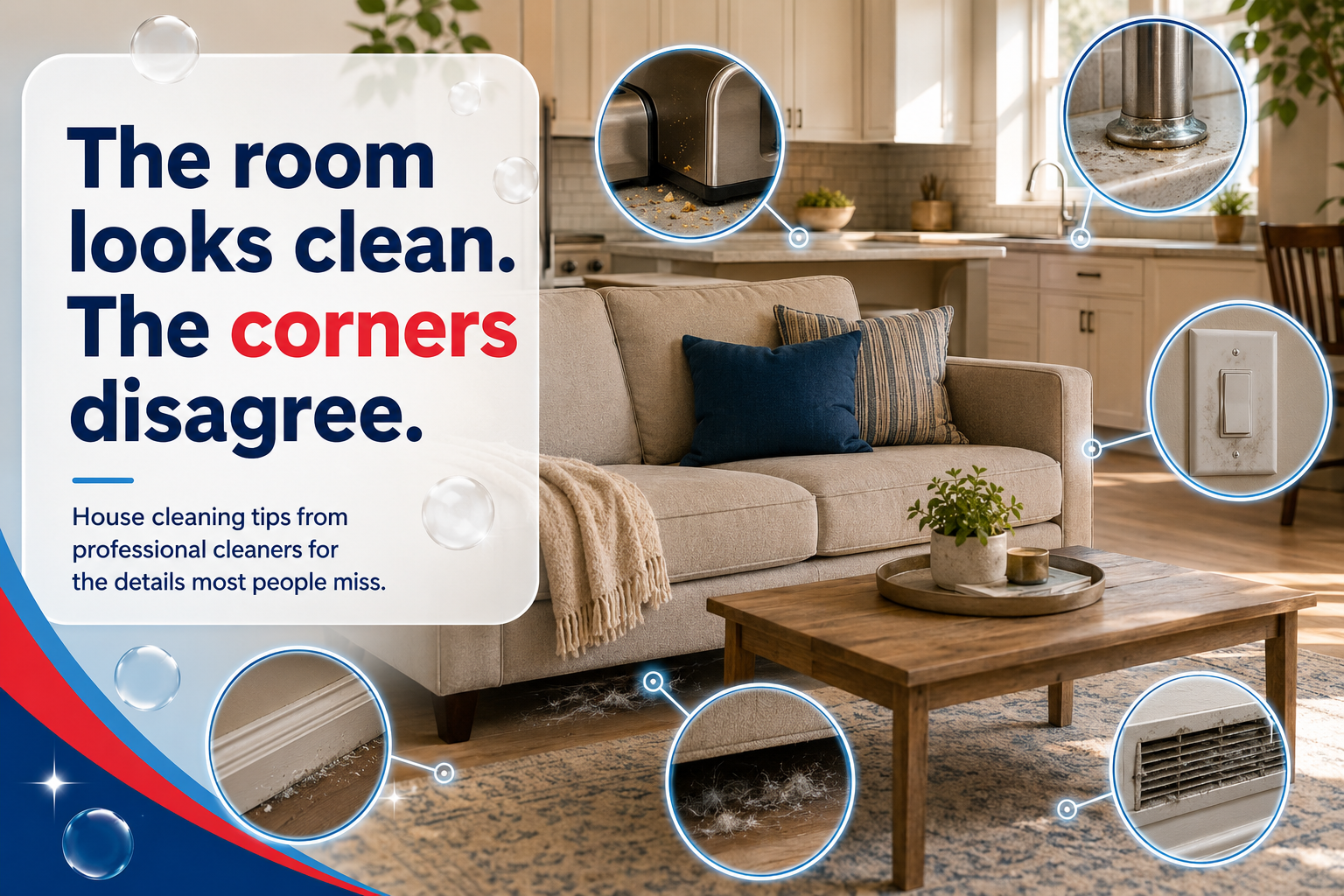
Not the dramatic kind. No mystery stains. No cartoon dust cloud. Just the quiet buildup that sneaks into corners, around faucet bases, behind small appliances, along baseboards, and under the couch where the pet hair holds secret meetings.
That is why good house cleaning tips are not only about wiping harder. They are about noticing better.
Professional cleaners do not walk into a room and guess where to start. They follow a rhythm. They clear the space, work from top to bottom, clean in a path, and finish with the details most people skip when life gets busy. For homeowners, renters, families, pet owners, and local Joliet-area households, those small changes can make cleaning feel less like a weekend punishment and more like a plan that actually works.
The American Cleaning Institute’s 2026 Spring Cleaning Survey found that 80% of Americans spring clean at least once a year, which shows how many people still feel the need for a deeper reset beyond everyday tidying.
Key Takeaways
- Professional cleaners rely on systems, not random effort.
- Most homes lose their fresh feeling because of missed details, not just visible mess.
- Cleaning and disinfecting are different, and both should be used correctly.
- Deep cleaning is not a failure of routine cleaning. It is the reset routine cleaning cannot always cover.
What Do Professional Cleaners Notice First?
Professional cleaners usually notice what blocks the cleaning before they notice the dirt.
A cluttered counter. Shoes in the entryway. Laundry on the chair. Mail on the table. Bottles around the bathroom sink. These are not moral failures. They are just obstacles. When surfaces are crowded, cleaning becomes slower, less thorough, and more frustrating.
That is why the first professional move is simple: clear the space.
Before the spray bottle comes out, trash goes in the bag. Dishes move to the sink or dishwasher. Random items go into a basket. Laundry gets gathered. Once the room is open, the real cleaning can begin. That same idea is why professional residential cleaning works best when surfaces are easy to reach and the team can focus on detailed cleaning instead of moving clutter around.
This is also where many people confuse tidying with cleaning. Tidying puts things back. Cleaning removes dust, grime, residue, and buildup. Both matter, but they are not the same job.
A helpful rule is this: tidy first, clean second, finish last.
That one sentence can save a lot of backtracking.
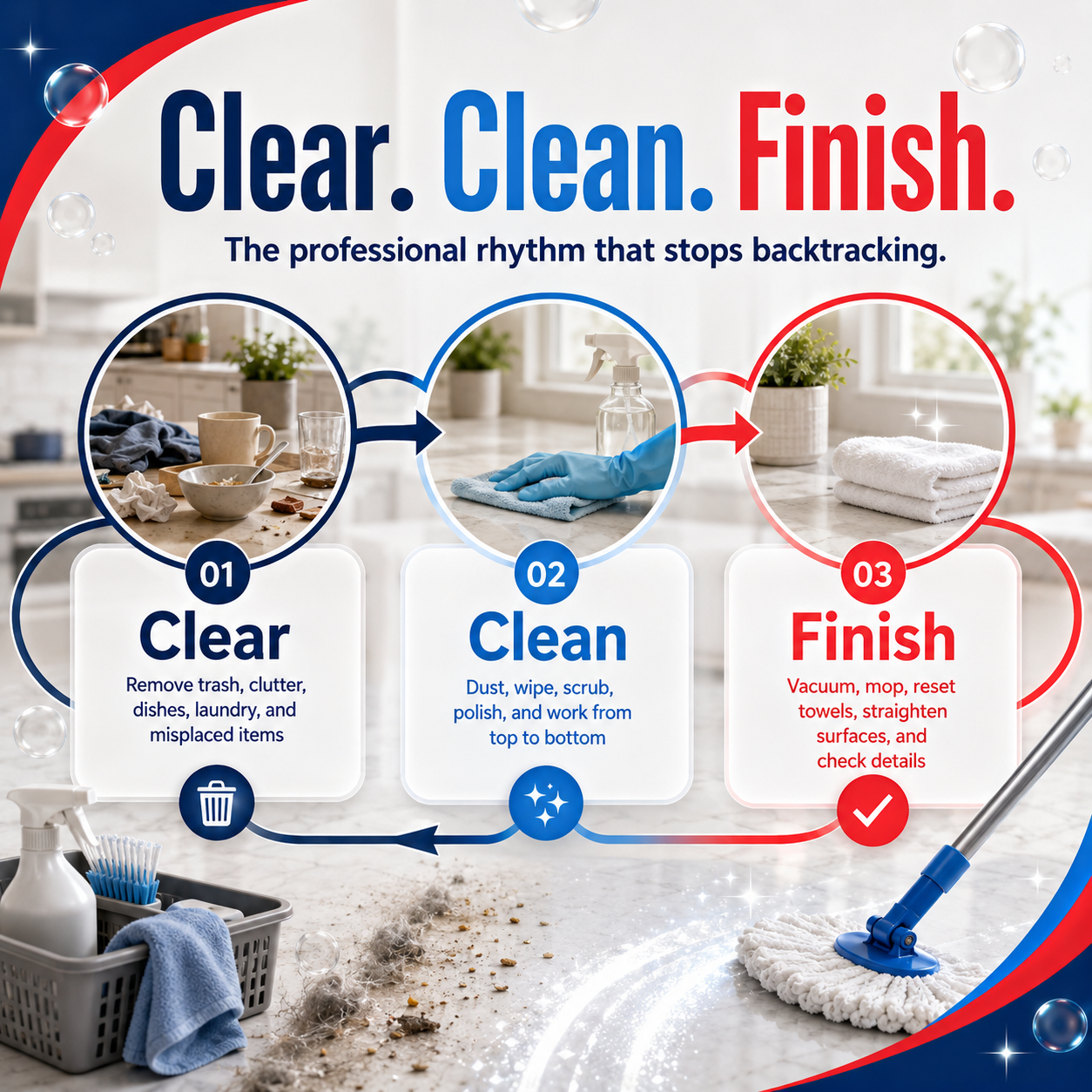
The Professional Cleaning Rhythm: Clear, Clean, Finish
The best house cleaning tips from professional cleaners usually sound simple because they are built for repeatable work. A professional does not want to clean the same spot three times. Neither does a busy parent trying to get the house ready before guests arrive.
Use this three-part method:
- Clear: remove trash, clutter, dishes, laundry, and misplaced items.
- Clean: dust, wipe, scrub, polish, and treat buildup from top to bottom.
- Finish: vacuum, mop, reset towels, straighten surfaces, and check details.
The order matters. Dust falls. Crumbs scatter. Wet surfaces drip. If floors come first, they often get dirty again before the room is finished.
A cleaner path works better: start high, move low, and back out of the room as the floor is cleaned. It is not fancy. It is just smart.
For surfaces like counters, tables, mirrors, and cabinet fronts, an S-shaped wiping motion often works better than circles. Circles can move grime around. A steady side-to-side pattern helps cover the full surface without missing patches.
House Cleaning Tips That Make the Biggest Difference
Most people want dramatic cleaning hacks. Professionals usually trust boring habits that work every time.
Here are the habits that make the biggest difference:
- Keep basic supplies together in a cleaning caddy.
- Use separate cloths for bathroom, kitchen, glass, and dusting.
- Work clockwise around each room so nothing gets skipped.
- Dust first, then clean wet areas, then do floors.
- Let cleaning products sit for the time listed on the label.
- Use detail brushes around faucets, drains, grout, and tracks.
- Dry shiny surfaces after wiping to avoid streaks.
- Clean high-touch surfaces like handles, switches, remotes, and railings.
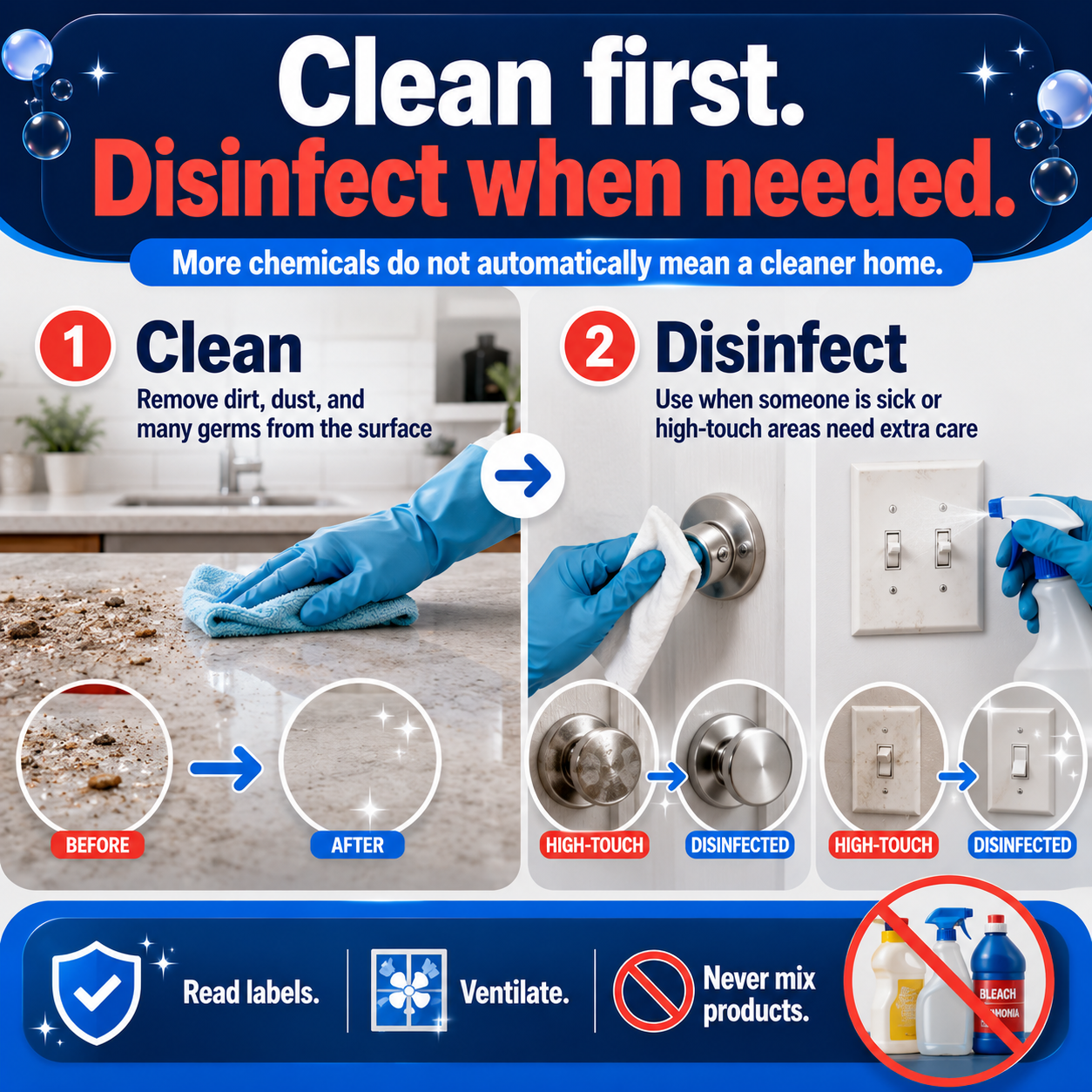
The CDC explains that cleaning removes most germs, dirt, and impurities from surfaces, while disinfecting kills most remaining germs after cleaning. For most home situations, cleaning with soap and water is enough unless someone is sick or has recently been sick.
That matters because more chemicals do not automatically mean a cleaner home. Good cleaning is about the right product, the right surface, and the right amount of time.
What Are the Spots Most People Forget?
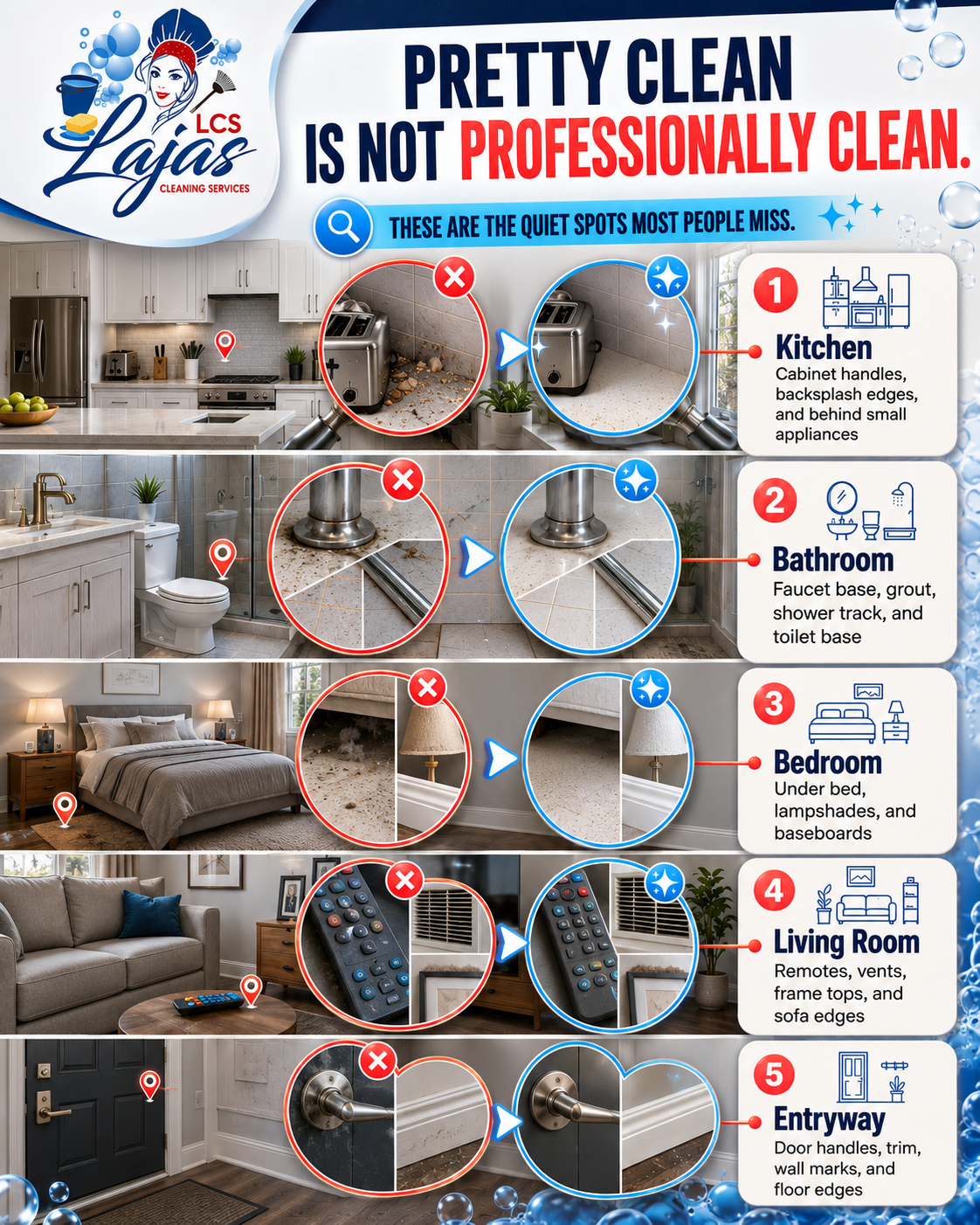
The difference between “pretty clean” and “professionally cleaned” often lives in the edges.
These are the areas that quietly collect grime:
| Area | What people usually clean | What often gets missed | Pro-style cue |
| Kitchen | Counters and sink | Cabinet fronts, handles, backsplash edges | Pull small appliances forward |
| Bathroom | Toilet, mirror, shower | Faucet base, grout, shower track, toilet base | Use a detail brush before wiping |
| Bedroom | Bed and open floor | Under bed, lampshades, baseboards | Dust before vacuuming |
| Living room | Coffee table and sofa | Remote controls, vents, frame tops | Clean what hands touch |
| Entryway | Floor and shoes | Door handles, trim, wall marks | Wipe the path people use |
This is where a room by room house cleaning checklist helps. It keeps the person cleaning from relying on memory, especially when the house is busy, pets are shedding, or guests are coming soon.
How Do Professionals Clean Faster Without Cutting Corners?
Professional cleaners are faster because they reduce decisions.
They do not stop in every room wondering what to do next. They carry supplies with them. They clean in zones. They repeat the same pattern until it becomes natural.
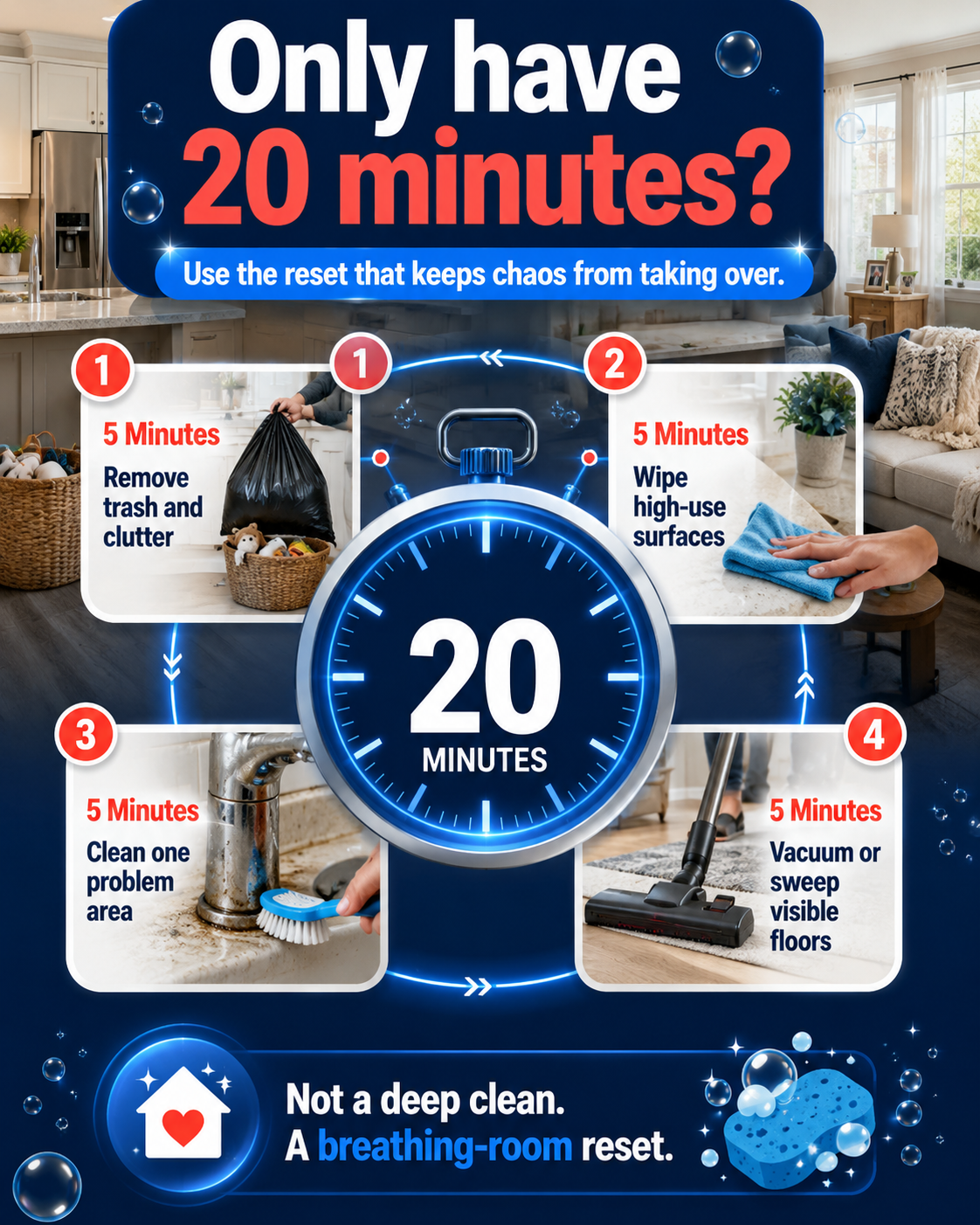
For a practical home version, try the 20-minute reset:
- Spend five minutes removing trash and clutter.
- Spend five minutes wiping high-use surfaces.
- Spend five minutes cleaning one problem area.
- Spend five minutes vacuuming or sweeping visible floors.
This will not replace deep cleaning, but it keeps a home from slipping into chaos. For working families, it is often the difference between “we need a whole Saturday” and “we can breathe again.”
The best house cleaning schedule for working families is not the most intense one. It is the one people can repeat.
Daily tasks should stay small: dishes, counters, trash, quick bathroom wipe, and floor touch-ups where needed. Weekly tasks can include bathrooms, bedding, dusting, vacuuming, and mopping. Monthly tasks can include baseboards, vents, cabinet fronts, under furniture, appliance fronts, and closet edits.
Kitchen and Bathroom Cleaning Tips from Pros
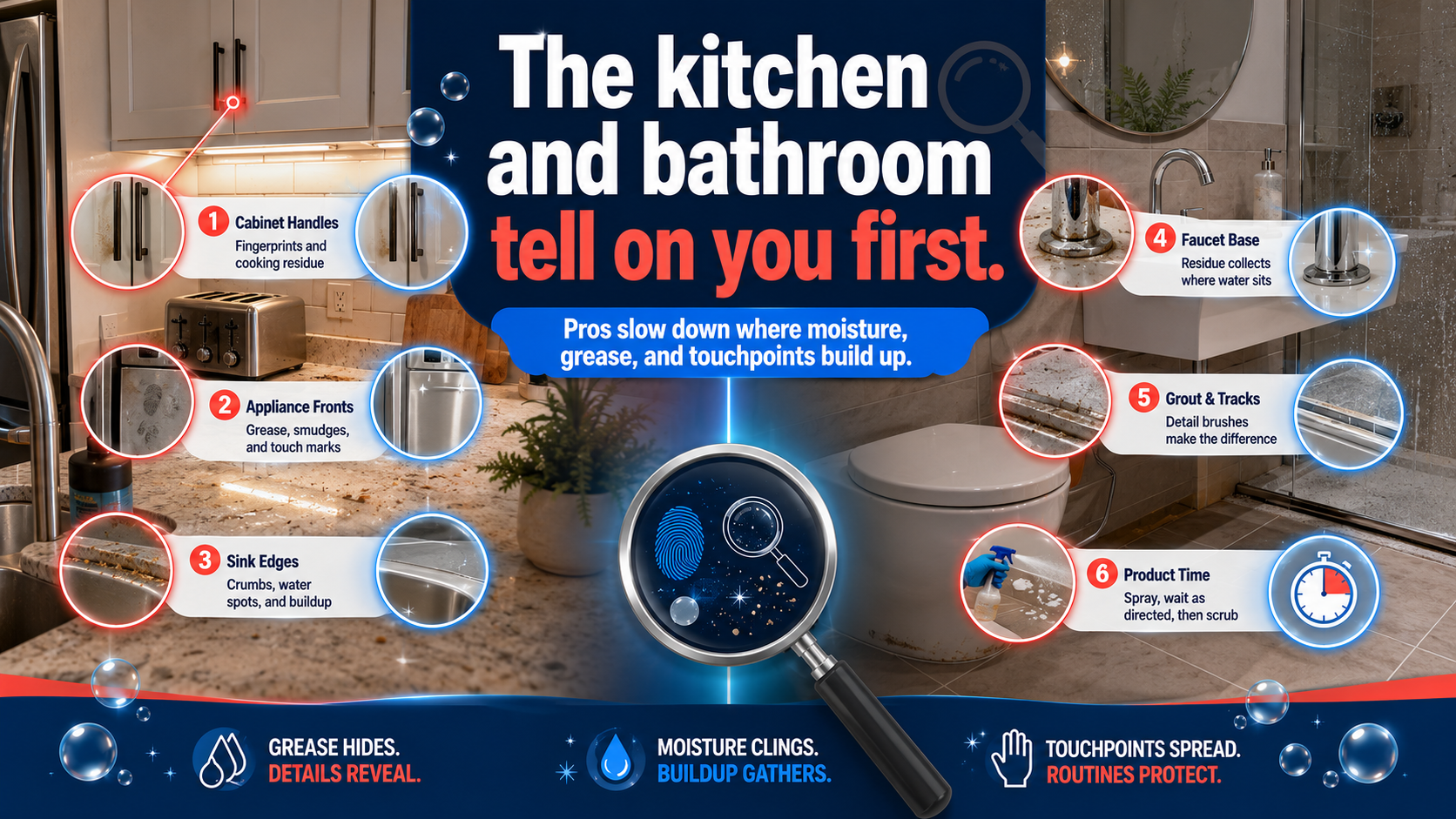
Kitchens and bathrooms need more attention because they deal with moisture, oils, food residue, soap scum, and high-touch surfaces.
In the kitchen, start by clearing counters. Then clean from dry to wet. Crumbs and dust should be removed before sprays and damp cloths come out. Wipe cabinet handles, appliance handles, sink edges, and the front of the dishwasher or oven. These areas collect fingerprints and cooking residue faster than people realize.
In the bathroom, give products time to work. Spray, wait as directed on the label, then scrub. Many people spray and wipe too quickly, which leaves buildup behind and makes the job harder next time.
Bathroom cleaning mistakes to avoid include:
- Mixing cleaning products.
- Using too much product.
- Forgetting ventilation.
- Scrubbing with dirty cloths.
- Cleaning mirrors before dusty surfaces.
- Ignoring grout, tracks, and faucet bases.
OSHA warns that different cleaning chemicals should not be mixed because dangerous gases can be released, especially when bleach and ammonia are involved.
Simple safety is part of professional cleaning. Open a window when needed. Wear gloves when appropriate. Read the label. Keep products away from children and pets.
What About Dust, Pet Hair, and Odors?
Dust is sneaky because it rarely stays where people expect it.
It collects on vents, blinds, lampshades, ceiling fan blades, electronics, baseboards, fabric, and under furniture. If someone only wipes tabletops, the room may look better for a day, then feel dusty again.
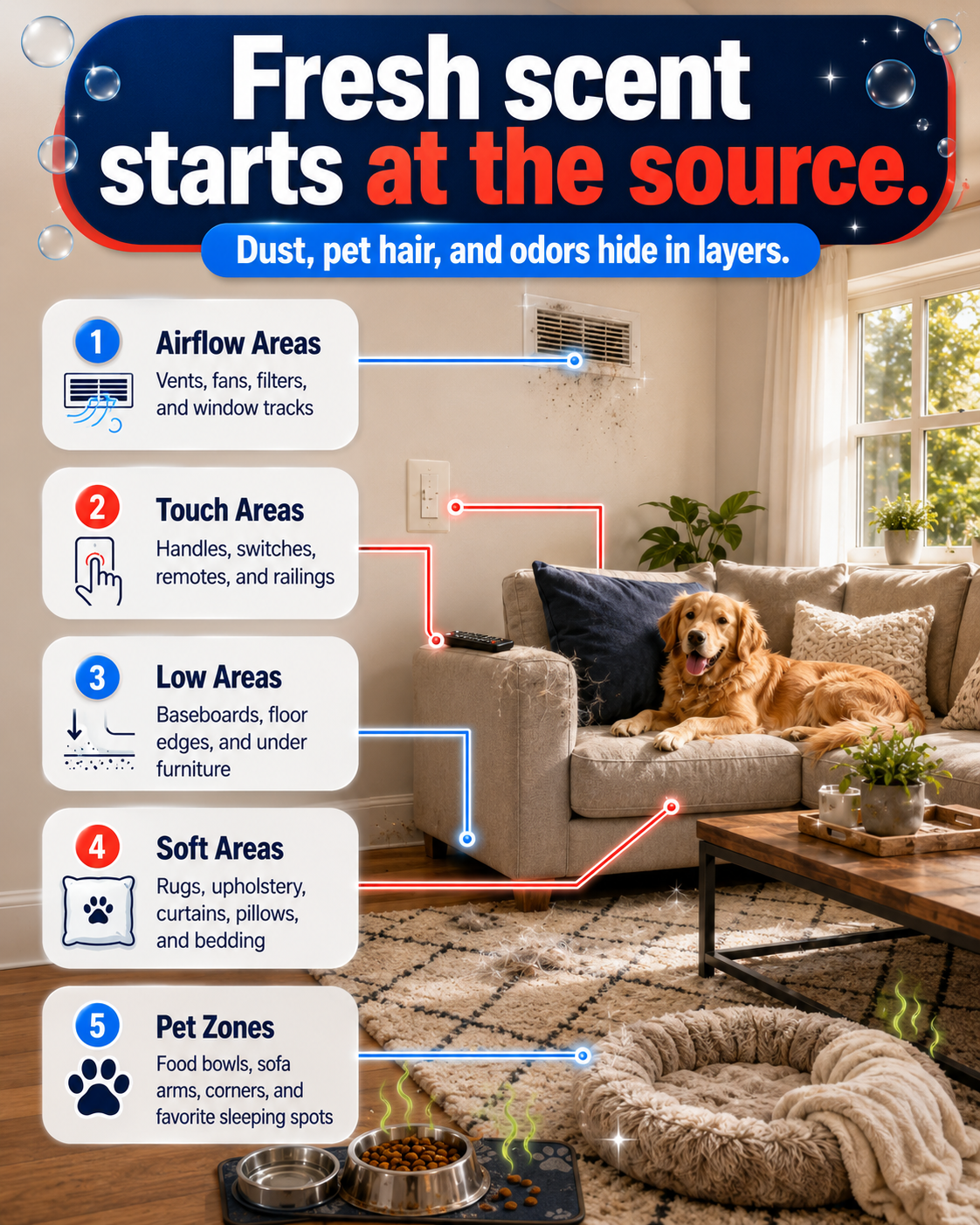
For dust, grime, and hidden buildup, think in layers:
- Airflow areas: vents, fans, filters, and window tracks.
- Touch areas: handles, switches, railings, remotes, and chair backs.
- Low areas: baseboards, under furniture, floor edges, and pet zones.
- Soft areas: rugs, curtains, upholstery, pillows, and bedding.
For pet hair and odors, clean where the pet actually lives, not just where the mess is visible. Favorite sleeping spots, corners near food bowls, sofa arms, rugs, and entry areas usually need more frequent attention.
Fresh scent should come after the source is cleaned. A candle cannot fix a damp towel, a dirty trash can, or a forgotten spill in the fridge.
When Is Routine Cleaning Not Enough?
Routine cleaning keeps life manageable. Deep cleaning resets the areas that daily and weekly cleaning do not fully reach.
A deeper clean may be needed when:
- The bathroom still feels dull after regular cleaning.
- Kitchen surfaces feel sticky or greasy.
- Grout lines stay dark.
- Dust returns quickly.
- Baseboards and vents look gray.
- Pet odors linger.
- A move, event, renovation, or new baby is coming.
- The home has not had a detailed cleaning in months.
This is where deep cleaning tips for a healthier home become useful. Deep cleaning is less about scrubbing everything with stronger products and more about reaching the buildup that normal routines miss.
A professional deep cleaning checklist for homeowners may include baseboards, trim, cabinet fronts, reachable vents, detailed bathrooms, kitchen buildup, appliance exteriors, door frames, light switches, corners, and floor edges.
For bigger transitions, a move in and move out cleaning checklist should also include inside cabinets and drawers, closets, appliance areas, bathroom details, trash removal, and floors after furniture is moved.
Post-construction cleaning needs extra care because fine dust settles everywhere. It can land on walls, trim, vents, shelves, windowsills, and floors. A quick vacuum is rarely enough.
Cleaning vs. Disinfecting: What Should Homeowners Know?
Cleaning removes dirt, dust, and many germs from a surface. Disinfecting uses chemicals to kill many germs that remain after cleaning.
The important part is the order. Clean first. Disinfect only when needed.
Disinfecting may be helpful when someone in the home is sick, after certain high-risk messes, or on specific high-touch surfaces. For everyday messes, regular cleaning with soap or detergent is often enough. The CDC also recommends cleaning high-touch surfaces regularly, including doorknobs, light switches, and countertops.
For eco-conscious households, the EPA Safer Choice label can help people find products that perform and use ingredients considered safer for human health and the environment.
That does not mean every home must use only one type of product. It means homeowners should choose thoughtfully, follow labels, and avoid turning routine cleaning into a chemistry experiment.
The “Do This, Not That” Cleaning Reset
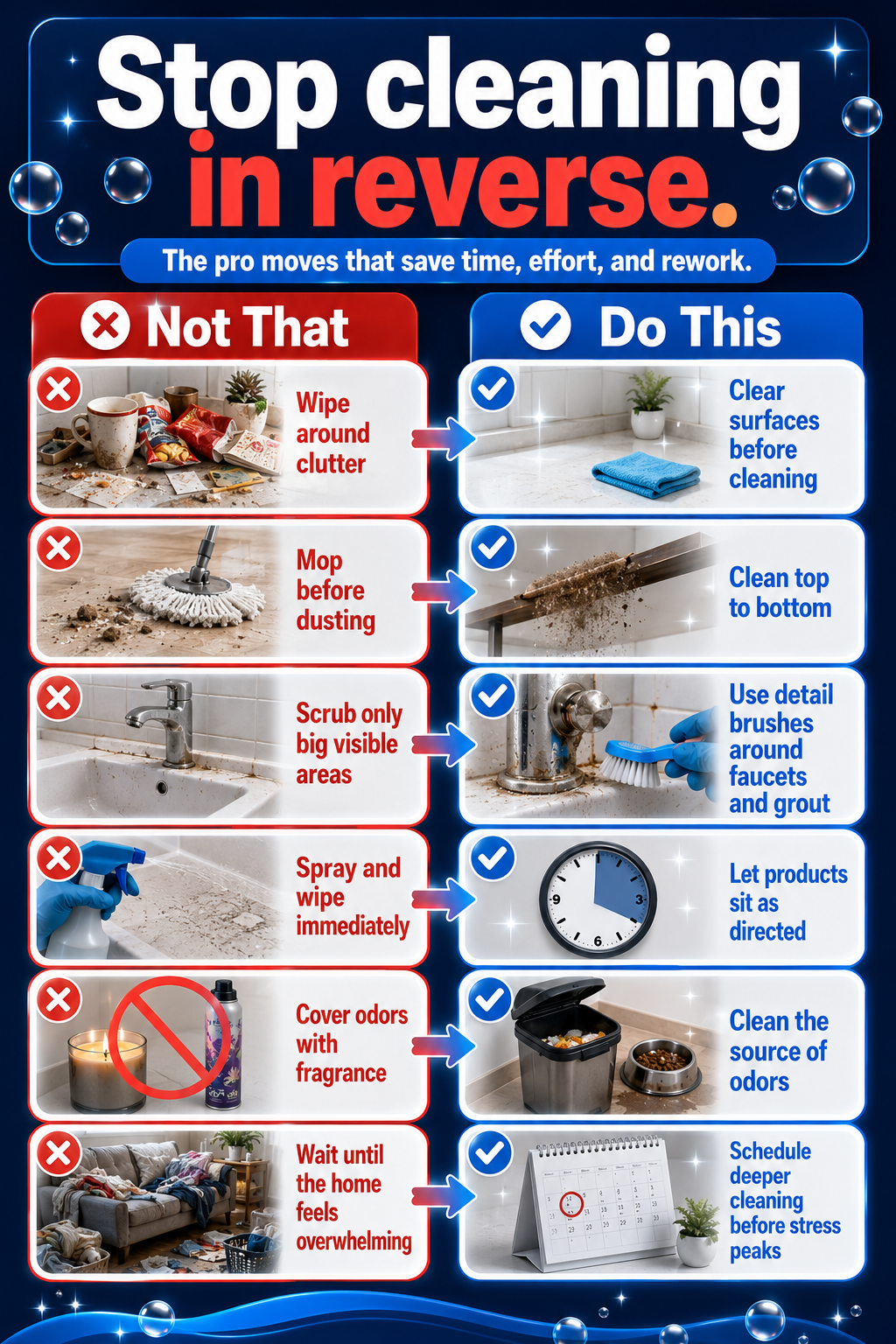
Do this: clear surfaces before cleaning.
Not that: wipe around clutter and hope for the best.
Do this: clean top to bottom.
Not that: mop first, then dust shelves.
Do this: use a detail brush around faucets and grout.
Not that: scrub only the big visible areas.
Do this: let products sit as directed.
Not that: spray and wipe immediately every time.
Do this: clean the source of odors.
Not that: cover odors with fragrance.
Do this: schedule deeper cleaning before stress peaks.
Not that: wait until the house feels overwhelming.
William Morris said, “Have nothing in your houses that you do not know to be useful, or believe to be beautiful.” That line still fits because clutter does not just take space. It slows down every cleaning task that follows.
A Real-Life Cleaning Scenario Most Families Know
Imagine a family expecting relatives for the weekend.
The living room looks fine from the doorway, but the baseboards are dusty. The bathroom mirror shines, but the faucet base has buildup. The kitchen counters are wiped, but crumbs sit behind the toaster. The floors were mopped, but pet hair remains along the sofa legs.
This is when people often say, “I cleaned all day, so why doesn’t it feel clean?”
The answer is detail and order.
A professional-style reset would start with clutter. Then the family would work one room at a time: top surfaces, detail areas, wet cleaning, then floors. In the bathroom, the cleaner would sit before scrubbing. In the kitchen, small appliances would move forward. In the living room, edges and high-touch items would get attention.
The room does not need a miracle. It needs a method.
When Should Someone Hire a Professional House Cleaner?
Hiring a cleaner is not only for people who dislike cleaning. It is often for people who have too much life happening at once.
Professional help can make sense before guests arrive, after construction, during a move, before selling a home, after a busy season, or when recurring upkeep would save time and stress.
It is also helpful when the home needs a level of detail that is hard to fit into a normal week. Corners, baseboards, bathrooms, cabinet fronts, floor edges, and buildup take time. A trained team can often move through those tasks with better rhythm and consistency.
For local homeowners and businesses, Lajas Cleaning Services offers customized cleaning packages, supplies and equipment, trained staff, and options such as recurring, deep, residential, commercial, move-in, move-out, post-construction, special event, and new home pre-delivery cleaning. To schedule or ask a question, call 1 (815) 325-2365 or email [email protected].
Conclusion
The best house cleaning tips do not make cleaning complicated. They make it clearer.
Clear the space. Clean from top to bottom. Follow a path. Give products time to work. Do not ignore corners, handles, grout, vents, baseboards, and floor edges. Know when routine cleaning is enough and when deep cleaning is the smarter choice.
A clean home should feel comfortable, healthy, and easy to enjoy. Not perfect. Not staged. Just cared for in the places that matter most.
FAQ
1. How to clean a house like a professional?
Start by clearing clutter, then clean from top to bottom in one room at a time. Finish with floors so dust and crumbs do not fall onto areas already cleaned.
2. What house cleaning tips do professionals use most?
Professionals work in a pattern, carry supplies with them, clean high-touch surfaces, let products sit as directed, and pay close attention to corners and edges.
3. What do professional cleaners clean first?
They usually remove trash, clutter, dishes, and anything blocking surfaces. After that, they dust, wipe, scrub, and finish with the floors.
4. What are the things people forget to clean at home?
Common missed spots include baseboards, light switches, door handles, vents, faucet bases, shower tracks, cabinet fronts, remote controls, and the tops of appliances.
5. How often should a home be deep cleaned?
Many homes benefit from deep cleaning every few months, but homes with pets, children, heavy traffic, allergies, or upcoming events may need it more often.
6. What should busy families include in a simple cleaning checklist?
A practical checklist should include dishes, counters, trash, bathroom surfaces, laundry zones, high-touch areas, vacuuming, mopping, and one rotating deep-clean task.
7. What is the difference between recurring cleaning and deep cleaning?
Recurring cleaning maintains the home on a set schedule. Deep cleaning focuses on buildup, detail areas, and spots that regular weekly cleaning may not fully cover.
8. What should be included in a move-out cleaning checklist?
A move-out checklist should include cabinets, drawers, appliances, bathrooms, closets, baseboards, doors, floors, trash removal, and spot cleaning after furniture is moved.
9. When should someone hire a professional house cleaner?
It makes sense before guests arrive, during a move, after construction, before selling a home, or when keeping up with detailed cleaning becomes difficult.
10. What should someone look for in a residential cleaning service near Joliet, IL?
Look for trained staff, insurance, clear service options, reliable communication, supplies provided, flexible scheduling, and cleaning packages that match the home’s needs.